
Middle East crisis live: Rubio says US-Iran agreement ‘pretty solid’ as oil price falls amid optimism for deal
Secretary of state says a deal could materialise ‘today’, while Trump says talks with Iran proceeding constructively as he faces criticism from within his own party Hello and welcome to the Guardian’s continuing coverage of the crisis in the Middle East. US secretary of state Marco Rubio said on Monday that a deal to end the war with Iran could materialise “today”.
Trump suggests Saudi Arabia and Qatar sign Abraham accords as part of Iran peace deal
In a new post on Truth Social, the US president, Donald Trump, said that talks with Iran are “proceeding nicely” but reiterated his earlier warning that it will either be a “great deal for all” or there will be no deal at all, raising the prospect of a resumption of attacks on Iran if the peace talks fail.
He went on to say that it should be “mandatory” for certain countries in the region – Saudi Arabia, Qatar, Egypt, Jordan, Turkey and Pakistan – to sign up to the Abraham accords as part of US efforts to reach a deal with Iran.
All of these countries have, to various extents, helped facilitate mediation efforts between Washington and Tehran in the current conflict, with Pakistan taking the lead.
Trump, who said he spoke to mediating regional powers on Saturday, wrote:
It may be possible that one or two have a reason for not doing so, and that will be accepted, but most should be ready, willing, and able to make this Settlement with Iran a far more Historic Event than it would, otherwise, be.
The Abraham Accords have proven to be, for the Countries involved (The United Arab Emirates, Bahrain, Morocco, Sudan, and Kazakhstan), a Financial, Economic, and Social BOOM, even during this time of Conflict and War, with the current Members never even suggesting leaving, or taking so much as even a pause.
The UAE and Bahrain signed the Abraham accords during Trump’s first term in 2020, breaking a longstanding taboo to become the first Arab states to recognise Israel in a quarter century.
Morocco and Sudan followed, although in Sudan they were not ratified because of internal instability caused by conflict and political turmoil. Kazakhstan said last year it was joining the accords even though it had already established diplomatic relations with Israel in 1992.
Since the signing of the historic agreement, Israel and the UAE in particular have developed close economic and security ties, including defence cooperation and a free trade pact, although there are significant strains in the relationship.
Saudi Arabia’s Crown Prince Mohammed bin Salman has previously expressed a potential willingness to normalise relations with Israel, but Saudi Arabia has said recognition of Israel is conditional on the establishment of a Palestinian state.
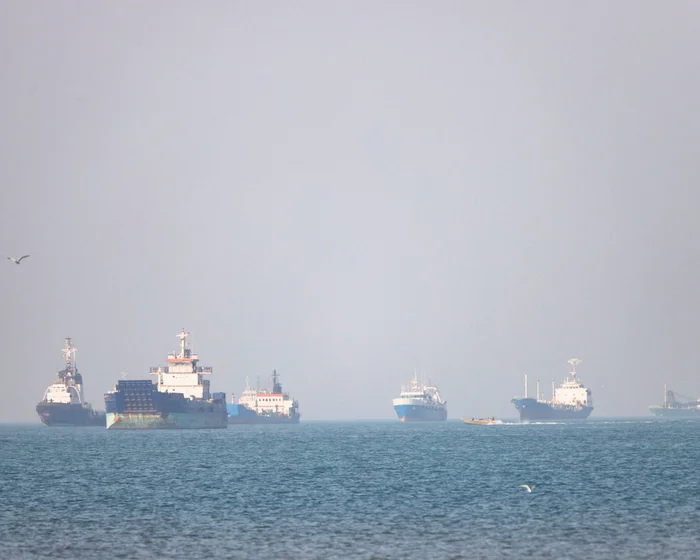
Strait of Hormuz could open within 30 days of deal - report
The strait of Hormuz could open about 30 days after a peace deal is struck between the US and Iran, Tokyo-based financial newspaper the Nikkei is reporting.
Citing a Middle East diplomatic source, the newspaper reports that Washington and Tehran are discussing a plan that would see the critical waterway open 30 days after an agreement is made, during which Iran would clear mines from the area.
Ships from all countries would be able to navigate freely, and Iran would stop collecting transit fees, according to the report. Meanwhile, US sanctions would be lifted and Iranian assets unfrozen in stages, and April’s ceasefire would be extended for 60 days to allow for talks on Iran’s nuclear programme.
This comes after the Iranian foreign ministry said earlier that a conclusion had been reached “on a large portion of the issues under discussion”, but denied that an agreement was imminent.
The deal has to be approved by Iran’s leadership, including the apparently hard to reach supreme leader Mojtaba Khamenei, which could take some time.
A regional diplomat has told Al Jazeera, “The focus of the [Iranian] delegation’s visit to Doha is on issues relating to the strait of Hormuz and highly enriched uranium.”
“The governor of the [Iranian] central bank is part of the delegation to discuss the issue of frozen funds, which is addressed in the [memorandum of understanding] as part of an eventual final deal,” they added. Reuters hears the same, citing an official briefed on the visit.
As we’ve been reporting, Iran’s top negotiator and its foreign minister have been in Doha for talks with Qatar’s prime minister on a potential deal with the US to end the war, after Washington and Tehran played down hopes for an imminent breakthrough.
US secretary of state Marco Rubio told reporters in New Delhi earlier that the US would give diplomacy every chance to succeed before considering whether to deal with Iran in “another way”.
There was a “pretty solid thing on the table in terms of their ability to open up the strait, get the strait open, enter into a very real, significant, time-limited negotiation on the nuclear matter, and hopefully we can pull it off,” he said.
In a lengthy post on Truth Social earlier on Monday, DonaldTrump said talks with Iran were going “nicely“, but again warned of fresh attacks if they failed. It “will only be a Great Deal for all, or no Deal at all”, he wrote.
Reuters reports that Iran’s foreign ministry spokesperson Esmaeil Baghaei said in a briefing that conclusions had been reached on many topics but that did not mean the sides were close to agreement.
He said earlier that nuclear issues would only be negotiated on if the framework accord is agreed first.
Iran’s sports minister has said that Fifa has promised that the country’s men’s football team will receive visas to play in the US at the World Cup this summer despite the ongoing Middle East war, local media reported on Monday.
As we’ve been reporting, Iran’s participation at the global spectacle has been in question for months because it is being co-hosted by the US, which along with Israel began bombing Iran on 28 February, sparking a wider regional conflict.
“The Fifa president promised us that all our players would receive visas. There is no reason why our players should not receive visas,” said minister AhmadDonyamali, quoted by local news agency ISNA.
“I hope that all the conditions will be met so that the national team can participate in the tournament in a calm and orderly manner,” he added.
Per our previousposts, the Iranian squad will now be based in Tijuana on the Mexican border with the United States during the tournament.
Mexican president Claudia Sheinbaum on Monday confirmed that the Iranian can be based there to avoid US visa restrictions.
Donyamali said the World Cup hosts had an obligation to provide visas to all participating countries, including for players and backroom staff.
“In Mexico, the Iranian national team is expected to obtain multiple-entry visas issued by the United States,” he said.
Lebanon’s public health ministry has said a total of 3,185 people have been killed by Israel since it renewed its offensive against Hezbollah on 2 March. A further 9,633 people have been wounded, it said.
A bit more on that news regarding Iran’s participation at next month’s World Cup finals in North America.
Mexican president Sheinbaum said football’s governing body Fifa approached her government after the US said it did not want Iran’s squad to stay in the country throughout the tournament, despite Iran playing all three of its group matches there.
“We have no reason to deny them the possibility of staying in Mexico,” Sheinbaum said during her daily press conference.
The White House and the State Department did not immediately respond to a request for comment, Reuters reported. Mehdi Taj, head of Iran’s football federation, said on Saturday the team’s base would be moved from Arizona to the Mexican border city of Tijuana during the tournament.
Taj added that the move would help avoid visa-related complications and that the squad would be able to travel directly to Mexico aboard Iran Air flights.
The Iranian team’s participation in the tournament had been in question since the US and Israel attacked Iran in late February.
Mexican president Claudia Sheinbaum said on Monday her government agreed to allow the Iranian national soccer team to stay in Mexico during the World Cup, adding that the United States did not want to host the team.
The head of Iran’s soccer federation said on Saturday the team’s base will be in the Mexican border city of Tijuana during the tournament.
The shock of the Iran war and its fallout has driven rivals in the Middle East to get behind a peace deal, pushing the Trump administration to accept a tentative agreement in the face of furious opposition from Israel and its supporters in Washington.
The diplomatic efforts come as the region is reshaping to adapt to diminished US power after Washington’s inability to land a knockout blow on Iran, force the opening of the strait of Hormuz or safeguard its Gulf allies. Tehran has few friends in the region, but the regime’s survival has meant that its neighbours have had to find an accommodation.
Andreas Krieg, an associate professor at Kings College London, said the Gulf was shocked at the degree to which Washington protected Israel first against Iranian drones and missiles, despite the trillions of dollars of Gulf investment pouring into the US.
“We’re probably seeing the final days of American empire in the Middle East,” he said. “Across the Gulf, there is complete disillusionment with American influence and the ability of America to lead.”
The provisional deal was agreed at the end of last week after Pakistani and Qatari officials travelled to Iran in a final push for an outline agreement between Tehran and Washington. In a call with Trump on Saturday, leaders from a group of eight Muslim-majority nations urged him to accept a deal that would end the war, reopen the strait of Hormuz, and relaunch negotiations on Iran’s nuclear programme.
In the lengthy Truth Social post, Donald Trump said the process should start with the “immediate signing” of the Abraham accords by Qatar and Saudi Arabia, and then “everybody else should follow suit”. He continued:
If they don’t, they should not be part of this Deal in that it shows bad intention. In speaking to numerous of the Great Leaders mentioned above, they would be honored, as soon as our Document is signed, to have the Islamic Republic of Iran as part of the Abraham Accords.
Wow, now that would be something special! This will be the most important Deal that any of these Great, but always in Conflict Countries, will ever sign.
Nothing in the past, or in the future, will surpass it. Therefore, I am mandatorily requesting that all Countries immediately sign the Abraham Accords, and that, if Iran signs its Agreement with me, as President of the United States of America, it would be an Honor to have them also be part of this unparalleled World Coalition.
The Middle East would be United, Powerful, and Economically Strong, like perhaps no other area, anywhere in the World! By copy of this TRUTH, I am asking my Representatives to begin, and successfully complete, the process of signing these Countries into the already Historic Abraham Accords.
Trump suggests Saudi Arabia and Qatar sign Abraham accords as part of Iran peace deal
In a new post on Truth Social, the US president, Donald Trump, said that talks with Iran are “proceeding nicely” but reiterated his earlier warning that it will either be a “great deal for all” or there will be no deal at all, raising the prospect of a resumption of attacks on Iran if the peace talks fail.
He went on to say that it should be “mandatory” for certain countries in the region – Saudi Arabia, Qatar, Egypt, Jordan, Turkey and Pakistan – to sign up to the Abraham accords as part of US efforts to reach a deal with Iran.
All of these countries have, to various extents, helped facilitate mediation efforts between Washington and Tehran in the current conflict, with Pakistan taking the lead.
Trump, who said he spoke to mediating regional powers on Saturday, wrote:
It may be possible that one or two have a reason for not doing so, and that will be accepted, but most should be ready, willing, and able to make this Settlement with Iran a far more Historic Event than it would, otherwise, be.
The Abraham Accords have proven to be, for the Countries involved (The United Arab Emirates, Bahrain, Morocco, Sudan, and Kazakhstan), a Financial, Economic, and Social BOOM, even during this time of Conflict and War, with the current Members never even suggesting leaving, or taking so much as even a pause.
The UAE and Bahrain signed the Abraham accords during Trump’s first term in 2020, breaking a longstanding taboo to become the first Arab states to recognise Israel in a quarter century.
Morocco and Sudan followed, although in Sudan they were not ratified because of internal instability caused by conflict and political turmoil. Kazakhstan said last year it was joining the accords even though it had already established diplomatic relations with Israel in 1992.
Since the signing of the historic agreement, Israel and the UAE in particular have developed close economic and security ties, including defence cooperation and a free trade pact, although there are significant strains in the relationship.
Saudi Arabia’s Crown Prince Mohammed bin Salman has previously expressed a potential willingness to normalise relations with Israel, but Saudi Arabia has said recognition of Israel is conditional on the establishment of a Palestinian state.
The Israeli military has issued a forced evacuation order for some residents of southern Lebanon’s Tyre city and its surroundings ahead of imminent attacks, claiming it is responding to Hezbollah violations of the US-brokered ceasefire with the Lebanese state last month.
Iran's top envoys discussing potential peace deal with Qatar prime minister
Iranian top negotiator Mohammad Bagher Qalibaf and foreign minister Abbas Araqchi are in Doha for talks with Qatar’s prime minister on a potential US-Iran deal to end the conflict, an official briefed on the visit said on Monday.
The discussions are focused primarily on the strait of Hormuz and Iran’s stockpile of highly enriched uranium, the official told Reuters.
Iran’s central bank governor is also part of the delegation to discuss the potential release of frozen Iranian funds as part of a final agreement, according to the official.
Russian president Vladimir Putin and Bahrain’s King Hamad bin Isa Al Khalifa discussed by phone the need to find a rapid diplomatic resolution to the Iran crisis, the Kremlin said on Monday.
It comes as Iran warned on Monday that, while some progress had been made, it was not yet close to striking a deal with the United States to end the Middle East war.
World oil prices tumbled on renewed optimism about an agreement, after top US diplomat Marco Rubio suggested a deal could be reached within the day – but Iran’s foreign ministry spokesman responded: “No one can make such a claim.”
Donald Trump said on his Truth Social platform on Saturday that the agreement would include opening of the strait of Hormuz, a crucial chokepoint for global trade, which Iran has effectively shut since the US and Israel started the war in February.
But the US president did not mention Iran’s nuclear program and highly enriched uranium, despite repeatedly insisting that Tehran renounce any nuclear ambitions was a “red line” in negotiations to end the war. Iranian officials have sought to negotiate those matters at a later date.
The peace draft includes a 60-day ceasefire extension, during which the strait of Hormuz would be reopened, according to Axios.
Iran would agree to clear mines it deployed in the strait and allow ships to pass freely, and in exchange, the US would lift its naval blockade on Iranian ports. During that time Iran would also be able to freely sell oil and negotiations would be held on the nuclear issue.
The apparent concessions from Washington have triggered alarm among several Republican foreign policy hawks.
Senator Lindsey Graham, a close ally of Trump, warned: “If a deal is struck to end the Iranian conflict because it is believed that the strait of Hormuz cannot be protected from Iranian terrorism and Iran still possesses the capability to destroy major Gulf oil infrastructure, then Iran will be perceived as being a dominate force requiring a diplomatic solution.”
The perception of Iran being able to “terrorize” the strait of Hormuz, and its ability to damage oil infrastructure across the Gulf, amounts to a “major shift of the balance of power in the region and over time will be a nightmare for Israel”, Graham argued.
“If the result of all that is to be an Iranian regime – still run by Islamists who chant ‘death to America’ – now receiving billions of dollars, being able to enrich uranium & develop nuclear weapons, and having effective control over the strait of Hormuz, then that outcome would be a disastrous mistake,” Texas senator Ted Cruz wrote on X.
Iran deal will either be 'great and meaningful' or there will 'be no deal' at all, Trump says
In a post on Truth Social, the US president, Donald Trump, has again hit out at US lawmakers who reacted furiously to reports that a proposed deal with Iran contained major concessions from Washington.
“I laugh at all of the Dumocrats, RINOS, and Fools who know nothing about the potential deal I am making with Iran, things that haven’t even been negotiated yet,” Trump wrote.
“The deal with Iran will either be a great and meaningful one, or there will be no deal. It will be the exact opposite of the JCPOA disaster negotiated by the failed Obama Administration, which was a direct and open path to a Nuclear Weapon for Iran,” he said, referring to the 2015 deal, known as the Joint Comprehensive Plan of Action, to limit Iran’s nuclear enrichment in return for sanctions relief.
Trump withdrew from that international deal in 2018, saying the agreement was “rotten” and complaining it only limited Iran’s nuclear activities for a fixed period. He has claimed the new deal will be far superior, without saying how.
Israel issues more forced evacuation orders for Lebanese towns and villages
The Israeli military issued an evacuation order for 10 Lebanese towns and villages this morning as it continues displacing residents ahead of attacks it says are targeting Hezbollah although many civilians are being killed in them. You can read more information about the latest evacuation order in this post on X.
Israel has continued striking Lebanon regularly, both south and north of the Litani River in south Lebanon, despite a US-brokered ceasefire coming into effect last month. It says it is targeting Hezbollah sites including weapons storage facilities and command centres.
Hezbollah, the Iranian-backed Lebanese militant group, has fired rockets and drones into northern Israel and against Israeli troops in southern Lebanon as it rejects pushes for its disarmament and Israeli occupation of some of southern Lebanon.
According to the Lebanese health ministry, at least 3,111 people have been killed in Israeli attacks since Israel’s renewed war on Lebanon started on 2 March.
Israel’s deadly air assault – and ground invasion – were in response to Hezbollah firing rockets at northern Israel after the US and Israel killed the former Iranian supreme leader in Tehran on 28 February.
Iran is pushing for an and to Israel’s war on Lebanon as part of its negotiations with the US. As part of the emerging US-Iran deal, Israel could reportedly be allowed to strike Hezbollah if the militant group instigates or carries out attacks, giving the Israeli military large scope going forward.
Despite a ceasefire between Lebanon and Israel being signed last month, regular Israeli airstrikes on southern Lebanon have continued unabated.
Lebanon’s state-run National News agency (NNA) reported this morning that the Israeli army carried out airstrikes in towns in the Bint Jbeil district, and the towns of al-Mansouri, al-Qulaylah and al-Haniyeh were hit by Israeli airstrikes and phosphorus shelling in the Tyre district.
The NNA also reported that three people were killed after Israeli warplanes carried out three drone attacks this morning, targeting a vehicle on the Kfar Rumman-Jarmaq highway, another on the Jarmaq-Khardali road, and a motorcycle near the Usersif Hotel.
We have not yet been able to independently verify these reports.
In a social media update, the IDF said that a drone was forced to perform an emergency landing in an “open area” in central Israel earlier today due to a technical malfunction.
“The aircraft was collected by IDF forces, there is no damage and no casualties,” it wrote in a short statement.
Iran’s foreign minister, Abbas Araghchi, will not participate in the UN security council meeting in New York due to issues related to a US visa, Al Jazeera quoted the Iranian foreign ministry spokesperson, Esmaeil Baghaei, as having said earlier.
Coverage from 7 sources
- Middle East crisis live: Rubio says US-Iran agreement ‘pretty solid’ as oil price falls amid optimism for dealGuardian - World · Adam Fulton · May 25, 2026, 6:58 AM
- Middle East crisis live: Iran says progress made on many issues with US but warns deal not ‘imminent’Guardian - World · Yohannes Lowe (now) and Adam Fulton (earlier) · May 25, 2026, 9:16 AM
- Middle East crisis live: Trump insists any Iran deal will be ‘great and meaningful’ amid criticism from fellow RepublicansGuardian - World · Yohannes Lowe (now); Tom Ambrose and Adam Fulton (earlier) · May 25, 2026, 12:42 PM
- Middle East crisis live: Trump suggests Gulf countries should sign Abraham accords recognising Israel under any deal
Coverage by lean
- Unknown7
Comments
Sign in to join the discussion.
Sign in with SpryLogin