
It’s not just kids: Trump’s crackdown on trans healthcare extends into adulthood
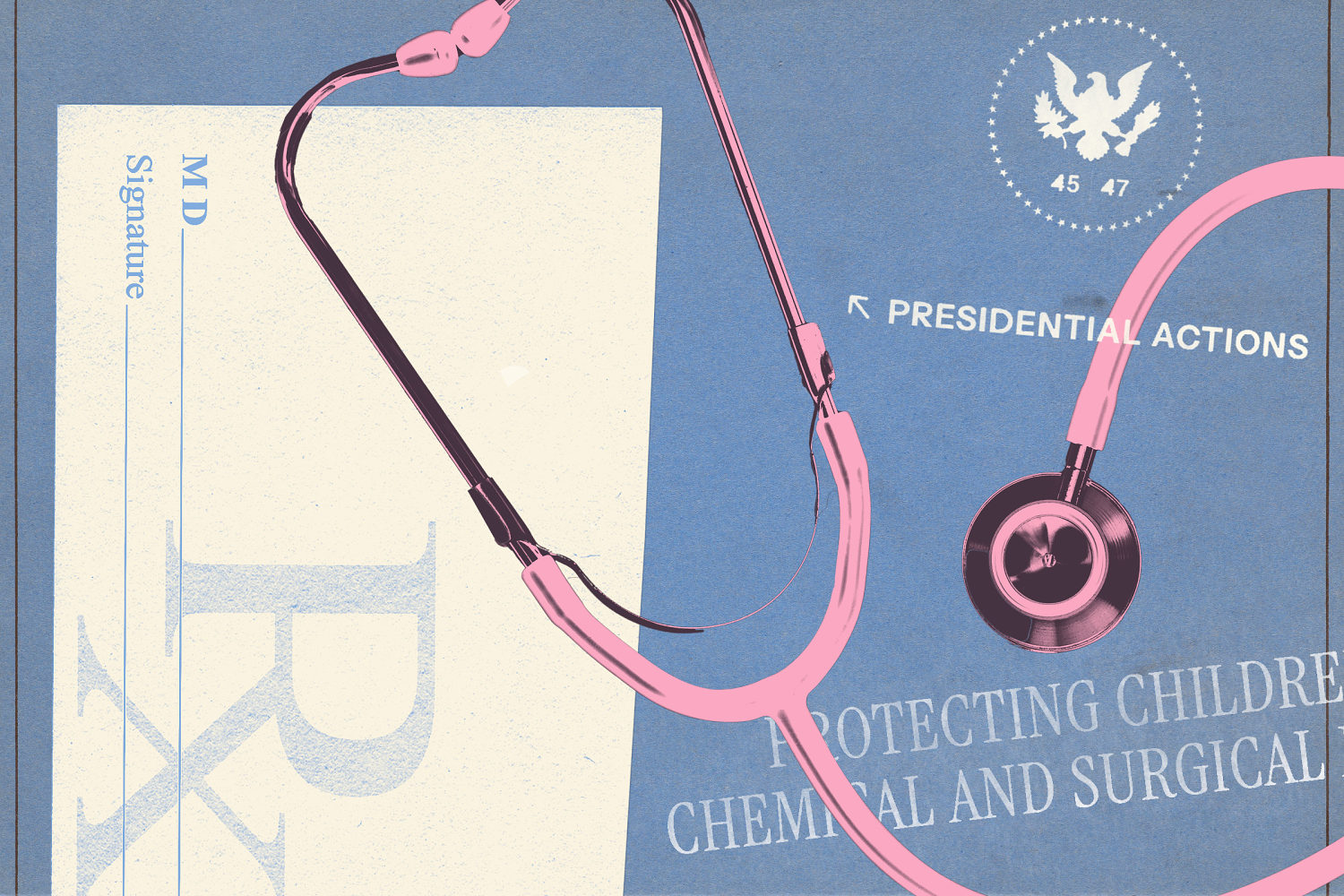
Since President Donald Trump re-entered office, his administration has taken several steps to dismantle trans health care for adults.
An 18-year-old transgender college student tried to refill her estrogen prescription at Northwestern Medicine in Chicago. She was told she needed to wait until her 19th birthday.
Get unlimited access to ad-free articles and exclusive content.
In Texas, a 37-year-old U.S. Army veteran regularly went to a Department of Veterans Affairs hospital for gender-affirming care, including therapy, wigs and prosthetics. Staff suddenly cut the services.
And in Colorado, a 37-year-old scientist for the federal government planned to undergo transition surgery. She discovered her insurance would no longer cover it.
A decade ago, these denials wouldn’t have been allowed. The federal government widely supported access to transition care.
That changed last year when the Trump administration began issuing sweeping directives across the government banning or limiting treatments for people with gender dysphoria, which is the distress felt from a mismatch between birth sex and gender identity.
Those who back restrictions on transition care — including conservatives such as President Donald Trump — say they are focused on protecting trans youth who can’t consent to or understand the long-term effects of treatments like puberty blockers, hormone therapy and surgeries.
But the administration’s actions and the resulting impacts have been far broader, blocking thousands of adults — including veterans, longtime government employees and older teens — from getting healthcare they need.
Since Trump re-entered office, he has signed an executive order prohibiting hospitals that receive federal funding from providing transition services to “children,” but the directive includes a broad definition of child: anyone under 19. The Department of Veterans Affairs has ended transgender care at the agency’s hospitals for anyone who wasn’t already receiving hormone therapy. The Department of Health and Human Services has enacted a rule that prohibits gender-affirming care from being covered as an essential health benefit under the Affordable Care Act — reversing an Obama administration expansion of trans care access. Federal officials have scrapped coverage of transition treatment for federal and Postal Service employees unless they are “mid-treatment.” Next year, the administration will end their coverage entirely .
What trans people are asking for isn’t extraordinary, advocates say. Nearly everyone, at some point in their lives, receives medical care related to their gender expression: taking estrogen or testosterone during menopause or treating erectile dysfunction. Many private insurance plans also cover gender-affirming care.
Tell us about your access to transition care as a transgender adult — Fill out form
To understand the effects of the Trump administration policies, NBC News conducted more than 30 interviews with trans adults, treatment providers across the country, conservative activists and lawmakers as well as advocates and lawyers from the nation’s largest trans rights groups.
Trans adults from Florida to Washington state said they’ve lost access to treatment or had procedures canceled because hospitals and clinics opted to roll back transition care amid the crackdowns. They’ve started saving money and setting up online fundraisers to pay out of pocket for gender-affirming surgeries. And they’ve faced long wait times and lengthy drives to see doctors who still offer care.
Academic research has shown that access to such treatment improves the mental health of trans patients , including reducing suicidal thoughts .
Those who have already faced barriers to care said they’ve experienced depression and anxiety affecting their ability to feel comfortable in public or perform well at work. Half said they have been stockpiling hormones in fear of further restrictions.
Come June, Kacey Garner, a 25-year-old Postal Service clerk in Mackinac Island, Michigan, will no longer be eligible to remain on her parents’ health insurance. She spent months worrying about switching to work benefits, since her transition care wouldn’t be covered.
She stressed about the need to pay $170 out of pocket every three months for hormone therapy. She didn’t know whether she’d be able to afford facial feminization surgery, which can cost as much as $50,000.
Without it, she spends hours on her makeup to alleviate constant worry about not “passing” as a woman.
“I have not felt relaxed in a very long time,” she said. “Actually, I don’t even know if I’ve ever been relaxed.”
She ultimately left the Postal Service job this month after her hours were cut, and she is now looking for work with more health insurance benefits.

Advocates say the federal restrictions stem from a yearslong effort backed by the country’s largest conservative groups, including the American Principles Project and the Alliance Defending Freedom, to paint being trans as an emerging political ideology rather than an inherent human trait. The push has resulted in policies at the federal level and in 17 states that reject trans people’s gender identities by making sex assigned at birth legally unchangeable.
The conservative Heritage Foundation has been a major driver behind the federal changes, which it outlined in its Project 2025 policy road map. Jay Richards, the organization’s vice president of social and domestic policy, said the foundation also authored model bills used in state policies redefining sex.
He said the organization doesn’t have “a settled position” on adult transition care but supports banning public funding for the treatment, regardless of age.
“We think restrictions, for instance, on the use of federal funds — Medicare, Medicaid, and things like that — that’s perfectly within the jurisdiction, in terms of constitutional questions, of the federal government,” Richards said. Any further restrictions, he said, should be left to states.
During a podcast interview in February , foundation President Kevin Roberts went further. He claimed transition and violent extremism are linked, suggesting that gender-affirming surgeries be outlawed.
Beyond federal restrictions, more than a dozen conservative states have targeted transition care for adults — and at least one has proposed outlawing it altogether. States like Florida and Texas have led the charge, implementing policies restricting care that the Trump administration is now matching on the federal level.
The tactics that federal and state governments are using have been adapted from the “abortion playbook,” said Elizabeth Gill, senior counsel at the American Civil Liberties Union.
“This looks very similar to what anti-abortion activists did over a range of years, which is passing all kinds of laws that make accessing the care more difficult,” she said.
Gill said the restrictions on trans care aren’t merely about whether procedures or medications are safe.
“The Trump administration has been clear in its intent from basically day one of this administration — that a priority of the administration is to push trans people, both youth and adults, out of public life,” Gill said.
The White House did not respond to requests for comment or answer written questions.
In public appearances and online, Trump often rails against what he calls “transgender mutilation” of children, often repeating a vague pledge to stop “transgender for everybody.”
‘Redefinding the word child’
Days after his inauguration, Trump took aim at transition care.
His executive order barred federal funding from hospitals that provide the treatment to “children.” But — in a short yet significant definition — it included 18-year-olds as kids, prohibiting many legal adults from starting or continuing treatment. Eighteen-year-olds enjoy many other rights and freedoms, including the ability to drive, vote, enlist in the military and purchase a rifle.
Aleksandra Vaca was caught in the fallout. Last year, she moved to the Chicago area for college, making an appointment to refill her estrogen prescription at Northwestern Medicine.
Vaca had realized she was trans four years earlier, while living in Austin, Texas, just as the state declared transition care for minors to be child abuse . That meant Vaca couldn’t start hormone therapy at the time — a delay that she said triggered severe depression and led her to contemplate suicide.
Most days, she struggled to get out of bed. Once she turned 18, she started treatment. Getting up became easy. The brain fog she’d experienced for years vanished.

She’d hoped to get a fresh start in Illinois. But hours before her appointment, Northwestern called and informed her that doctors wouldn’t prescribe her estrogen until her 19th birthday, citing Trump’s order. The denial, she said, felt especially ridiculous: Her birthday was later that week.
She immediately thought about her time in Texas. “It just brought it all back,” she said.
Northwestern Medicine declined to comment on Vaca’s case, citing privacy laws, but said the hospital “does adhere to the executive order.”
Denials and delays take heavy tolls on trans people, often because they have already waited years to access care, said Ash Orr, press relations manager at Advocates for Trans Equality, a prominent trans rights organization.
“That emotional toll isn’t just about healthcare access — it’s about having your stability and your livelihood constantly undermined,” Orr said.
Other policies defining children as 18 and under are rare. Two states, Alabama and Nebraska, set legal adulthood at 19. The Children’s Health Insurance Program, a joint federal-state initiative providing low-cost health insurance to kids, covers 18-year-olds.
Simone Chriss, an attorney at the Southern Legal Counsel, a nonprofit civil rights organization based in Florida, said Trump’s order sets a “terrifying” precedent.
“If we’re able to ban this care for people who are 18 years old by simply redefinding the word ‘child,’” she said, “then we can redefine it to mean under 25, or whenever they think brains are fully developed, and it’s dipping a toe into banning care for adults.”
Cutting coverage
Coverage from 1 source
Coverage by lean
- Unknown1
Comments
Sign in to join the discussion.
Sign in with SpryLogin