
It's toys vs. tech in 'Toy Story 5.' Here are 4 ways to keep tech in check this summer
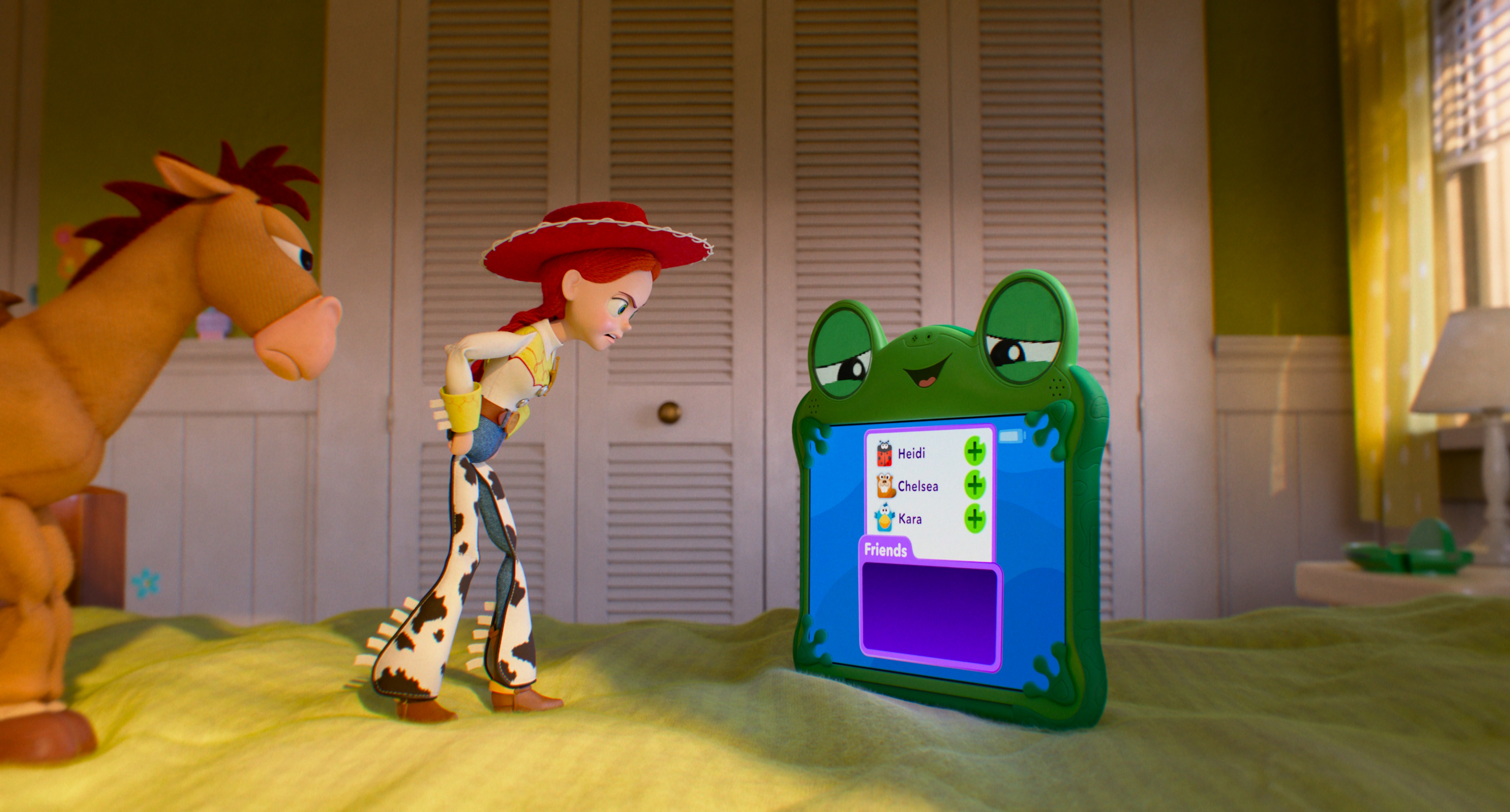
Toy Story 5 . It opens in theaters on Friday, June 19.'/> Kids' screen use goes way up in the summertime. And just as the movie Toy Story 5 portrays, that can be problematic for children. Here are tips for parents to help their kids manage screens and have fun IRL this summer. (Image credit: Disney/Pixar)
Cowgirl Jessie and her horse Bullseye face off against Lilypad in Disney and Pixar's Toy Story 5 . It opens in theaters on Friday, June 19. Disney/Pixar hide caption
The much anticipated summer movie Toy Story 5 features a battle between toys and tech — a plot likely to resonate with parents who see the pull of digital devices in their kids' lives, especially during the summer.
And that's not just a parental perception: Research clearly shows that screen time goes up dramatically during the summer.
Book Reviews
A kids' guide to phone-free fun, from the author of 'The Anxious Generation'
"For kids, 7 to 12, they are using and spending more time on their screens, about 30% more, which is equivalent to about four more hours per week compared to school time," says Lauren Lee, a psychologist at Aura, an online safety company that compiled a very detailed report about kids' online lives based on data from nearly 30,000 devices.
For the latest stories on the science of healthy living, subscribe to NPR's Health newsletter .
Aura gathered information through its parental control app that accesses children's and parents' devices and through surveys with parents and children around the country. It found that 75% of children ages 7 to 11 years old said that they would rather watch videos than play with toys.
It's a statistic at the heart of the Toy Story 5 plot, where 8-year-old Bonnie starts to ignore her beloved toys after her parents give her a "Lilypad" tablet that's the new social capital.
Bonnie's favorite toys, Jessie and Bullseye, want her to make friends. Disney/Pixar hide caption
"Summer is a particularly vulnerable period for higher screen use," says pediatrician Dr. Jason Nagata , who was not involved in the Aura study. Nagata, who researches online behaviors of children and teens at the University of California, San Francisco, says the Aura research jibes with what previous studies have shown. In the absence of the structure and routine of school days, it is easy to reach for devices.
Higher screen time during summers is the norm now
The new study gives a degree of granularity, not just on the time children and teens are spending online, but on what they are doing — scrolling, playing video games and socializing virtually. (A virtual social group is a big part of the Toy Story 5 plot — but no spoilers here!) .
Movie Reviews
'Toy Story 5' surges into the digital age — while also peering lovingly backward
For teens, screen time goes up by 15% during the summer compared to the school year, the report finds. While younger kids are spending much of their time on devices watching YouTube videos or playing on the video gaming platform Roblox, teens are spending more time on social media apps, according to the new report.
Nearly 70% of children are on their devices by mid-afternoon, and 1 in 10 remain active on their devices at midnight.
"We are seeing nighttime messaging rates more than doubling across all age groups compared to the fall," says Lee.
The new Toy Story movie also portrays this, with Bonnie, staying up late on her new tablet, and reaching for it first thing in the morning.
More screens, worse sleep and mood
Studies also illustrate the negative health impacts of such high screen time during summers. The Aura report finds that as the summer wears on, one in three children score low on Aura's Digital Wellbeing Index, which correlates digital behaviors with a range of health parameters, including sleep, mood, isolation and their ability to regulate emotions. The company scores children on this index based on surveys of kids and parents as well as their screen habits.
Health
Research points to how companies could make social media less addictive for teens
"Time that is generally spent on screens is often displacing sleep, physical activity or outdoor time," says Nagata.
And those factors — adequate sleep, time outdoors, physical activity, in-person socializing with friends and family — are really important for the health and wellbeing of children , he says, especially during the summer when they aren't at school being engaged, active and interacting with others.
Kids don't want to be stuck to their screens all summer
There's some good news, too. The Aura report shows that kids have some self-awareness around tech: More than half of the children and teens surveyed recognize that too much time on screens isn't good for them, and more ranked spending time with friends (36%) and going outside (24%) higher than using a tablet (20%).
That's been shown in other studies, too, says Nagata. "Many children and teens themselves report that they actually don't want to be glued to their phones over the summer," he says. "It's just oftentimes, they're a little bit bored."
Screens are easy to reach for when bored, and many apps are designed to keep people hooked for extended periods, with constant notifications and alerts.
So, as kids around the country start their summer vacations, how can parents ensure that they don't spend their days sucked into their devices?
1. Give them something else to do. Fun and structure are the buzzwords.
Parents should try to provide fun alternatives to screens, Nagata suggests. "If you're just saying, 'Oh, you have to limit your screen use to 1 or 2 hours a day without providing fun alternatives, it can be really hard if the kid is still stuck at home and kind of bored," he says.
Nagata suggests activities that offer a "physical barrier" to devices, like swimming.
"I try to take my daughter swimming every weekend over the summers, and the pool has become our special father-daughter place," he says. "And it's also screen free. You cannot physically bring phones or devices into the pool."
He also recommends summer camps. A 2023 survey by the American Camp Association found that 90% of summer camps banned cell phones and tablets.
"Camps that especially provide opportunities for physical activity, outdoor play and opportunities for stronger relationships and social interactions may be especially beneficial for kids," he says.
For kids less interested in sports or physical activities, there are art, music and cooking camps, too. Niki Cordell runs a summer camp in Chicago called Junior Chefs Kitchen . Kids get hands-on experience cooking two recipes every day, and go to the park for about an hour. Once a week, they visit various restaurants in the city.
"Not all kids are super sporty, so this gives them the ability to build confidence and life skills in a different setting," says Cordell. Kids in her camp often go home wanting to recreate the recipes they learned, she says.
Organizing days around trips to the library or park, and taking advantage of community organizations like the Boys & Girls Clubs of America are lower cost ways to give summer days more structure.
2. Let the kids have a say. Try a "family bingo" approach.
Engage your kids in planning for days when they don't have camp or other activities, says Merve Lapus , vice president of education, outreach and engagement for Common Sense Media , an advocacy organization.
"It's actually really important to just have that discussion with the kids and recognize that it's very easy to get lost in screens, but we want to really be in agreement that this is something we're going to try and do together," says Lapus. He also recommends that parents do activities with their children.
"For my own teenager, this is going to be the year that she learns about driving," he says. "So we're going to spend a lot of time on things that are going to be very practical for their next stage [of life]."
Cordell, who is also a mother of three, says she and her children create a "family bingo sheet," with various activities. "It could be kayaking or water balloon fight day," she says. "Then we put a bunch of different activities in a jar."
When her kids get bored, they pick out an activity from the jar and do it. For this summer, one of her children suggested creating little characters out of shaving cream, says Cordell. "I was like, 'I've never heard of that before, but let's go for it!'"
Summer lists are also important to Simmons Hanson, a teacher and mother of three children, ages 8, 11 and 13.
"For years and years we have made a summer list," says Hanson, who lives in Washington D.C. "Sometimes it's big things on the list, like camps or vacations, trips to the beach. But it's also little things like a double-ice-cream-day."
Then there are activities that Hanson's middle child thinks of when she's bored that aren't already on the family summer list. Instead of writing them down, the 11-year-old Sallie Chappell Hanson says she files away the ideas in her brain for later.
"I think that your brain is like a catalog," she says. "Instead of saving files, it can save ideas."
Coverage from 1 source
Coverage by lean
- Unknown1
Comments
Sign in to join the discussion.
Sign in with SpryLogin