
‘Canaries in the coalmine of populism’: an oral history of the Brexit campaign, told by those with a front row seat
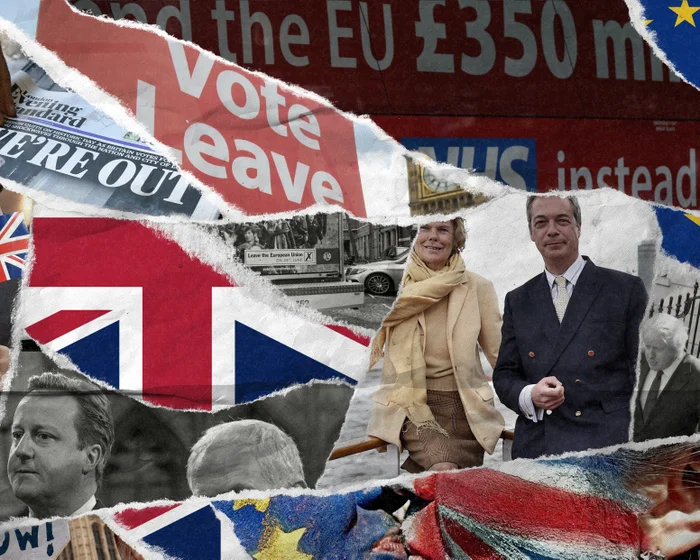
How five months in 2016 that encompassed Boris Johnson siding with Vote Leave, Jo Cox’s murder and David Cameron’s resignation shaped the UK’s future David Cameron, having promised in 2013 that a future Conservative government would offer a referendum on Britain’s membership of the EU , announces the date of the vote: 23 June 2016. The next day, Boris Johnson, then the mayor of London , says he will campaign for leave .
How five months in 2016 that encompassed Boris Johnson siding with Vote Leave, Jo Cox’s murder and David Cameron’s resignation shaped the UK’s future
20-21 February 2016
David Cameron, having promised in 2013 that a future Conservative government would offer a referendum on Britain’s membership of the EU , announces the date of the vote: 23 June 2016. The next day, Boris Johnson, then the mayor of London , says he will campaign for leave .
Bernard Jenkin , a senior Conservative backbencher, campaigned for leave: The starting gun was really fired in the [2013] speech. I went to see David Cameron after that and begged him not to hold an in/out referendum, simply because it would smash the Conservative party. He said to me: “I know 50 Conservative MPs may vote leave, but we can live with that.” And I immediately realised he didn’t really understand the Conservative party at all.
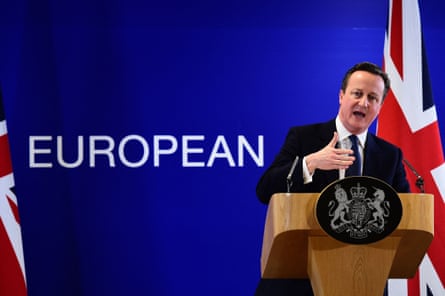
David Lidington , minister for Europe 2010-2016 and a close Cameron ally, campaigned for remain: [Holding the referendum] was very much a prime ministerial decision. I didn’t think it was the right one, but I understood David’s reasoning. He was the prime minister, and his view was that this was an opportunity to lance the boil of disaffection within the Conservative party over Europe.
I always felt that it was like chucking lumps of red meat to pursuing wolves from the sled. They would gobble up the lump, and then they would sure as hell come back for more.
Craig Oliver , director of communications for No 10 and for the official remain campaign, Britain Stronger in Europe : The feeling for me at the start of the campaign was that we were in real trouble – not because we thought we were going to lose the referendum, but because it was such a battle inside the Conservative party. The beating heart of the party felt very, very much around leave, and anybody who had fought on the side of remain was not going to be acceptable as a prime minister.
So I entered into the campaign with a fairly bleak view of our prospects. I thought we probably would just about get over the line, but very quickly after it the Conservative party would come for David Cameron.
Will Walden , director of communications for Boris Johnson : I was with [Johnson] that weekend in almost its entirety. For the vast majority of the country, people were unsure which way to go. I don’t think Boris was any different.
Was there any political calculation in his eventual decision? Probably there was, but I think the truth is he was genuinely divided. He was pro-European. He just had problems with the EU.
He spent the weekend at his Oxfordshire farmhouse, being buffeted from all sides – Cameron, [George] Osborne, family. By the time he arrived back in London to the press pack sitting outside his house, he genuinely hadn’t made up his mind. He veered all over the place like the proverbial shopping trolley. He was very stressed.
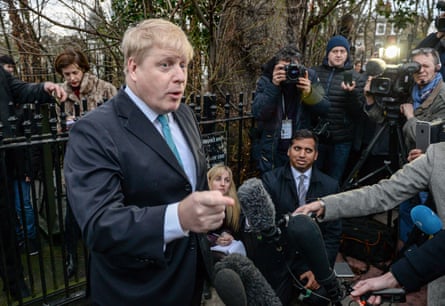
At one stage, he looked at me and said: “What should I do?” And I said to him, in fairly colourful language: “I’m not making the most consequential decision you’ll ever make. You need to make that decision.”
He went: “You’re right, let’s get on with it. Let’s make the decision.” It took him another hour of prevaricating to reach the decision. He went outside, and I think that announcement changed the course of history.
DL: David Cameron and his political team were pretty shocked and fed up at Boris Johnson’s decision. Though I think David was more upset by [justice secretary and close friend] Michael Gove’s decision to opt for leave. That represented the breach of a much closer personal friendship.
I don’t think there was ever much belief on David Cameron’s part that Boris Johnson was doing this out of some issue of high principle. I think it was recognised that ambition and a desire to position himself as the favourite son of the hard right of the Conservative party – with a view to the eventual succession – was very much in his mind.
Jess Phillips , Labour MP , campaigned for remain: I can’t say that I remember thinking that Boris Johnson was a particular danger, and that is foolishness on my part. To me, Boris Johnson was just a fool, and I genuinely couldn’t believe why anybody would think that anything he said was anything other than a lie. So, I just thought, does it really matter which [campaign] he backs?
1-13 April 2016
Campaigning begins in earnest when a government leaflet about the dangers of Brexit is sent to every household. Leave campaigners dismiss this as part of “ project fear”.
Jess Phillips: I quite quickly got involved with the remain campaign, but it wasn’t like any campaign I’d ever been part of. It was very disorganised. Trying to knock doors in my constituency, for example, became an impossibility, because you had no base to go from. We were making up what we were doing. We were [thinking], OK, we’ll go to people who are Labour [supporters], who maybe are more likely to be remain. That was absolutely not the case.
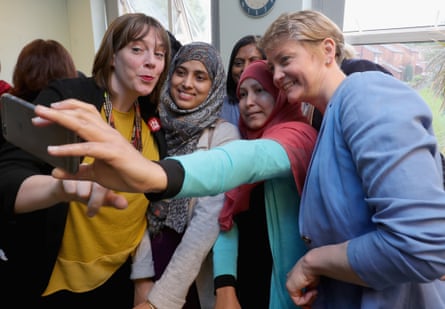
I remember feeling that the campaign was quite elitist. I thought people would have an affinity with the fact that we were going to lose the ability to have free mobile roaming when we were off to Málaga – I was trying to make it more retail, because for the people who I live among, the demonic things that were being suggested would happen in the wake of Brexit didn’t really mean anything.
Ivan Rogers , Britain’s permanent representative to the EU 2013-2017: I was probably always regarded – rightly – as the gloomiest person anywhere near Cameron and thought that leave were quite likely to win. I said repeatedly that it was an absolute knife-edge vote. And in those circumstances, the prime minister, I thought, would have to resign.
The leave campaign was very much better organised than remain. So it seemed to me the writing was on the wall quite early.
Tom Watson , Labour MP and deputy party leader, campaigned for remain: I was very fearful that the Brexit campaigners were going to win quite early on, mainly because I rang all our Labour MPs to ask what they thought the outcome would be, and they said they were certain [remain] was going to win. But then I asked them how it was going in their constituency and they said, oh no, they’re all going to vote for Brexit in my constituency.
It just seemed to me that the whole campaign was based on hope and vapours.
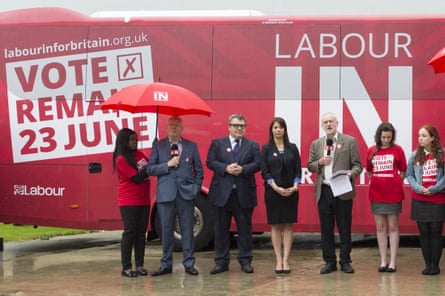
Caroline Lucas , Green MP and board member of Britain Stronger in Europe, campaigning for remain: It was very strange to be on the same side as the prime minister. I have to say, I think it was a mistake – given there is such a temptation between elections for electorates to punish whoever is prime minister – to have put David Cameron as the head of the campaign.
I think the remain side ran an absolutely awful campaign. I tried as hard as I could to ensure that we had far greater diversity of voices – it was infuriating that it was practically all white establishment men. The focus was almost exclusively on the economics, while the leave campaign was speaking quite viscerally about what it means to take back control.
22 April 2016
On a visit to London, the US president, Barack Obama, says Britain will be “at the back of the queue” when making trade deals if it leaves the EU.
Craig Oliver: Barack Obama came to Downing Street, and it was clear he thought it was a mad idea for the UK to leave the EU, so there was discussion about what he might say at his press conference with David Cameron.
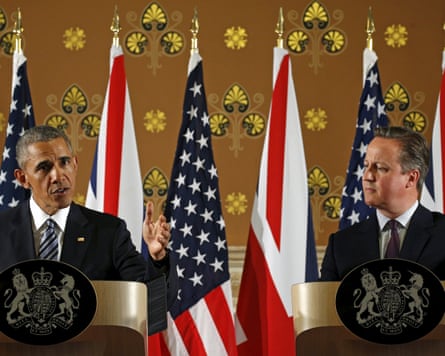
George Osborne said: “In terms of getting an international trade deal with the United States, we would have to get to the back of the queue.” And Obama said: “Would it be helpful if I said that?”, and there was a mood that broadly it would. So he used the words in the press conference, and people said: “Well, that sounds like somebody’s told you to say that because you used the word ‘queue’ instead of ‘line’.” My view is that Obama saying that had a real impact in terms of making people think twice.
Paul Stephenson , director of communications for Vote Leave: That week of Obama saying “back of the queue” was the peak of No 10’s campaign. We felt very on the back foot.
I had lots of people saying we had to get MPs out defending us against Obama, but he is the president of the US and it’s legitimate for the BBC to carry what he said. But I remember Dom Cummings [director of Vote Leave] and Dominic Raab [Eurosceptic Tory MP] saying it would play badly that people were being told what to do by a US president. Was it a strong card to play? Yes it was. It was one of the big stories of the campaign.
11 May 2016
Senior members of the Vote Leave campaign begin a tour on a red battlebus with the slogan: “We send the EU £350m a week. Let’s fund the NHS instead.” The figure has been widely debunked .
Will Walden: [Boris Johnson] has always been a great campaigner, and Vote Leave played a blinder by putting him on the bus repeatedly, sending him to places where they felt he would make a discernible difference. It was like his mobile talking shop.
On day one I remember him looking at [the £350m slogan] and sort of cocking his eye and being like: “Hang on a minute, how are we going to justify that?” Journalists spent the whole time on the bus arguing about the £350m. I think the view of Vote Leave was, let them ask the question, because even if they say it’s £170m after the rebate, people are still sitting at home thinking: “That’s a hell of a lot of money.”
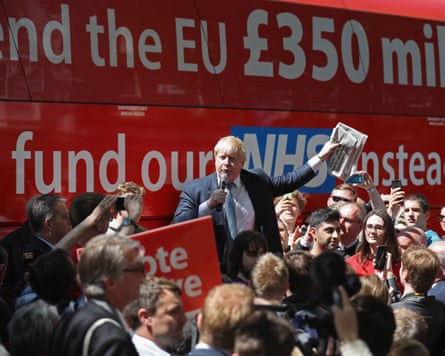
Caroline Lucas: The blatancy of the lies I found shocking, and [the fact] that there was no recourse to be able to correct some of this stuff. It was absolutely clear that the leave campaign didn’t care that they were lying, they just wanted us to be talking about it. From their point of view it was a masterstroke, but it added so much to the corrosion of politics.
Every time there was any kind of media coverage of the leave campaign, that bloody bus was in the background. You couldn’t get away from it. And it felt like we didn’t have a strong enough argument on our side.
20 May 2016
In coordinated statements and on a poster , Vote Leave state that “Turkey (population 76 million) is joining the EU” . C ritics say the claim is “complete fantasy” and appeals to prejudice.
Jonathan Faull , a senior British official in the European Commission: Penny Mordaunt [Eurosceptic Tory MP] saying on television that Turkey was going to join the European Union and we won’t be able to stop it – it’s simply a lie. Any member state can block an enlargement. I nearly threw something at the television. Probably every day I nearly threw something at the television, because somebody said something outrageous.
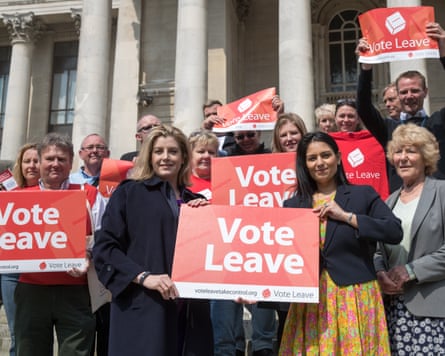
Will Walden: The [Turkey] poster was nearly a turning point for Boris on this campaign. He said himself that he, at that point, nearly considered quitting.
Coverage from 2 sources
- ‘Canaries in the coalmine of populism’: an oral history of the Brexit campaign, told by those with a front row seatGuardian - World · Esther Addley. Interviews by Pippa Crerar, Rowena Mason, Jessica Elgot, Kiran Stacey, Alexandra Topping, Ben Quinn and Jennifer Rankin · Jun 23, 2026, 4:00 AM
- ‘Geldof started flicking Vs at Farage’: the story of the Brexit campaign, told by those with a front-row seatGuardian - World · Esther Addley. Interviews by Pippa Crerar, Rowena Mason, Jessica Elgot, Kiran Stacey, Alexandra Topping, Ben Quinn and Jennifer Rankin · Jun 23, 2026, 7:52 AM
Coverage by lean
- Unknown2
Comments
Sign in to join the discussion.
Sign in with SpryLogin