
These babies are still sick after botulism outbreak. But how did it get into infant formula?
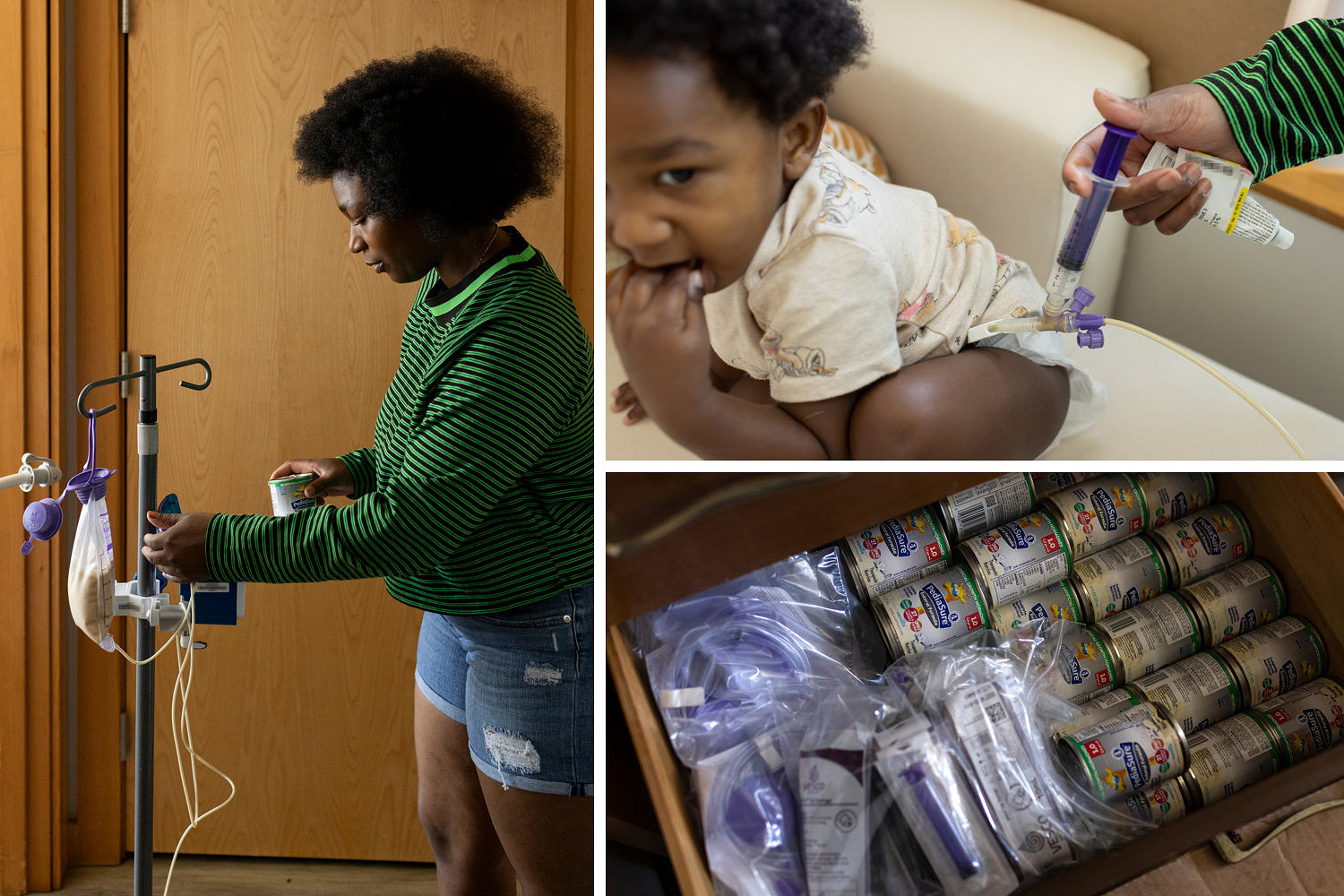
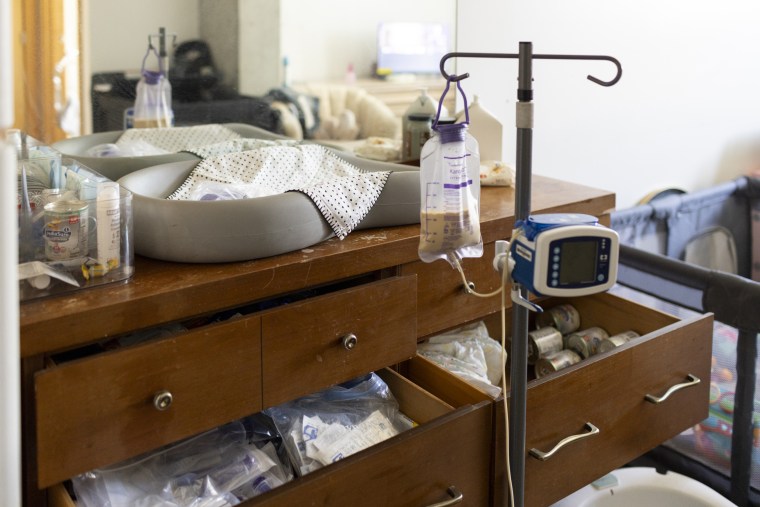
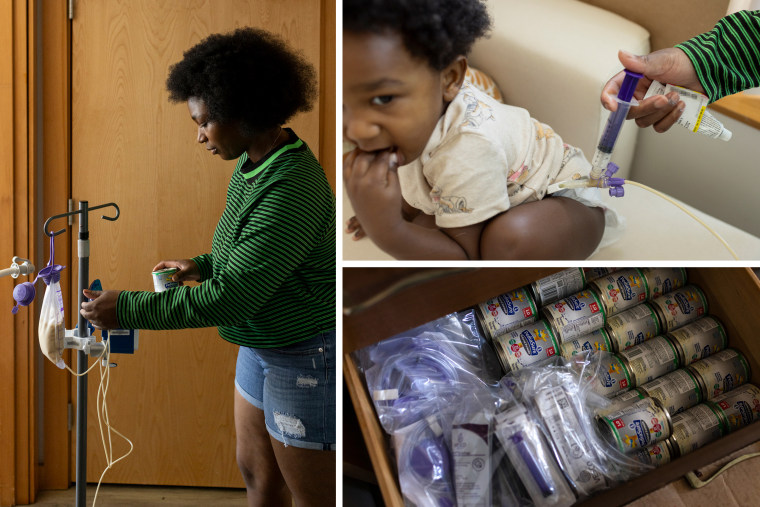
Angel Carter sets up a gastrostomy tube, or G-tube, to feed her 16-month-old son, Ashaan. The toddler is one of 48 babies sickened in a national botulism outbreak linked to infant formula.
Months after ByHeart’s recall ended, how the bacteria got in the powdered infant formula remains unknown. A separate recall by Nara Organics is now under investigation.
Angel Carter had breastfed her baby, Ashaan, exclusively from the day he was born. But last November, when Ashaan was 9 months old, it was time for Carter to transition her son to a sippy cup.
Get unlimited access to ad-free articles and exclusive content.
An Oregon Department of Human Services caseworker suggested that Carter, a single mother receiving state assistance, try ByHeart infant formula because it was “the closest thing to breast milk,” Carter recalled.
Within a week, baby Ashaan, an active, babbling little boy, had changed.
He was no longer making eye contact, instead staring off into space for 30 minutes or longer. He stopped being interested in food and wouldn’t even latch on to nurse. Once able to stand and take steps, Ashaan no longer had the strength to sit upright.
“He was turning grayish blue. He looked like a faded picture of himself,” Carter, of Portland, said. “His eyes rolled into the back of his head, and I was like, ‘Oh my God, my baby is dying.’”

Ashaan’s symptoms were classic signs of botulism. The toxin blurs vision and blocks nerves from telling muscles to contract, leaving babies floppy and constipated. Their mouths lose the ability to suck from a bottle and swallow liquids.
Doctors told Carter they needed to move quickly. “Without the right help, he could die,” she said they told her. “A chaplain even came to the hospital room.”
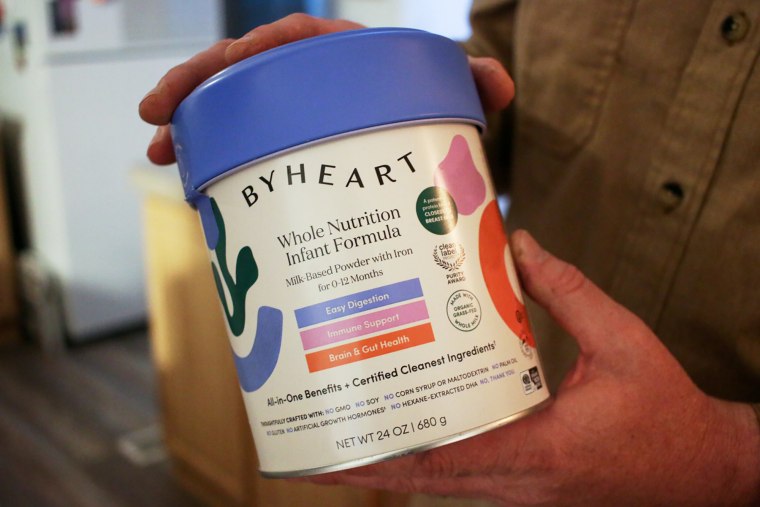
On Nov. 11, as Ashaan’s medical team was scrambling into action, New York-based organic formula maker ByHeart and the Food and Drug Administration were issuing a nationwide recall of all ByHeart infant formula products .
It was the first botulinum toxin outbreak ever associated with baby formula, a feeding alternative used by millions of parents.
In all, 48 babies in 17 states with confirmed or suspected botulism linked to the formula were hospitalized during the outbreak. No deaths were reported.
Most babies recovered, but a lawyer representing affected families said that at least six are still suffering from lingering effects of the toxin, which can cause difficulty breathing, muscle paralysis and death.
Seven months later, Ashaan, who turned 1 in February, still can’t eat on his own. He has a gastrostomy tube, or G-tube, surgically implanted through his belly into his stomach for supplemental nutrition.
“He’s just now to the point where he will suckle on something until it melts in his mouth enough for him to swallow it,” Carter said.
By the time the outbreak was declared over in February, an FDA investigation found Clostridium botulinum in a powdered milk ingredient used in ByHeart infant formula.
The bacterium that causes botulism can grow in foods that aren’t properly canned or preserved. It’s very rare for store-bought foods to be contaminated with the toxin.
How the bacteria got in the infant formula remains a mystery.
A second, separate outbreak linked to baby formula is now under investigation. On June 13, Nara Organics of New York recalled all of its Whole Milk Organic powdered formula after three babies who had consumed it developed botulism. Testing so far has not detected the bacteria in Nara’s products.
There’s no indication the outbreaks are related, but food safety experts are alarmed over back-to-back botulism-related recalls involving infant formula.
“We are no longer talking about a single event,” Darin Detwiler, food policy professor at Northeastern University, wrote in an email. “We are talking about a pattern.” Detwiler’s son died in a multistate outbreak of E. coli linked to contaminated fast-food hamburgers in 1993.


In an email, an FDA spokesperson said it’s too soon to draw conclusions about any specific ingredient, manufacturing process or other contributing factor in the Nara investigation .
Both companies said they are cooperating with health officials.
ByHeart and Nara Organics products account for a small fraction, about 1%, of the U.S. formula market, according to the FDA. Infant nutrition experts said the country’s supply is overwhelmingly safe.
“I don’t want families to think that this is something we expect to see in all powder formulas,” Dr. Sharon Nachman, chief of pediatric infectious diseases at Stony Brook Children’s Hospital in New York, said. “But to have two outbreaks come so close to each other with the same pathogen is quite worrisome.”
Monthslong recoveries
A yet-to-be-published report from the Centers for Disease Control and Prevention illustrates the severity of infant botulism, even after babies are released from the hospital. Recovery can be extremely slow, as it involves the regeneration of the signaling pathway between nerves and muscles, a process that can take months.
Myra Brooks, an epidemic service intelligence officer with the CDC, reviewed medical records for 46 of the 48 babies in the ByHeart outbreak. None of the children had a fever that would indicate a different cause for their illness, like a virus. Other symptoms were key.
More than half of the babies, 61%, needed extra oxygen to help them breathe or be fed through tubes in their noses. Eleven percent had to be intubated or have a feeding tube surgically placed in their stomachs.
Two-thirds of the infants needed special therapy to retrain their mouths to eat, Brooks said. Her findings are expected to be published in one of the CDC’s upcoming Morbidity and Mortality Weekly Reports.
For Brooks, the results of the CDC report were reassuring. “Most infants make a complete recovery from this disease,” she said.
A rapid decline
It’s been more than a year since Hank Mazziotti, now just shy of age 2, was hospitalized with infant botulism. He still can’t move his bowels without the aid of laxatives, his mother, Amy, said.
“It’s so painful for him that he’s throwing up and pooping at the same time,” she said. “That’s a weekly thing.”
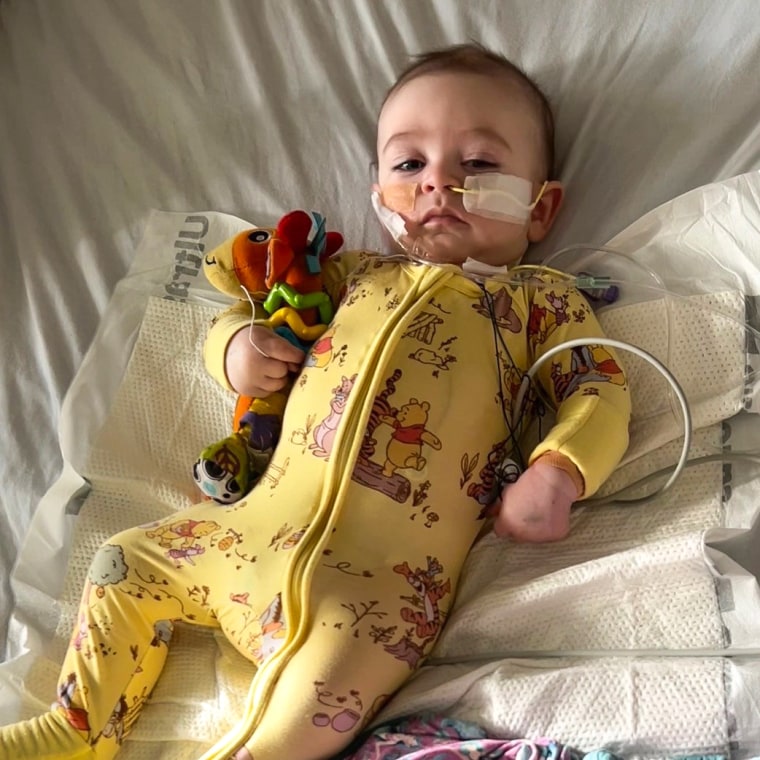
Amy Mazziotti said she bought a can of ByHeart in mid-February 2025 because she needed to supplement her breast milk supply. The formula was advertised as being made in small batches and the closest thing to breast milk. “They had good marketing, to be honest,” she said.
Hank’s constipation began within days. By early March, the 6-month-old — who’d just discovered how to roll over and was doing so nonstop — stopped performing his new trick. He barely drank from his bottle. His head flopped to one side.
“His condition declined rapidly,” Mazziotti said. “He couldn’t move. He couldn’t even cry. His whole face was just paralyzed.”
The search for answers
Tests conducted by the FDA found Clostridium botulinum in ByHeart formula as well as in a powdered milk ingredient that came from ByHeart’s milk supplier, Dairy Farmers of America, a cooperative based in Kansas City, Kansas. The agency hasn’t determined how the bacteria got in the ByHeart samples but is continuing to investigate factors related to ingredients, methods of processing and production environments, according to a spokesperson.
After the ByHeart recall, the company gave its customers a discount code for Nara Organics, a ByHeart spokesperson said in an email, to help families transition to a similar product. The companies are separate “with no corporate, financial, contractual, operational, or manufacturing relationship,” the spokesperson wrote.
A spokesperson from Nara Organics referred to an Instagram post from last week by company founder Esther Hallam, who reaffirmed that none of the products had tested positive for Clostridium botulinum and that the company voluntarily recalled its products “out of an abundance of caution.”
The post also touted Nara Organics’ use of a type of testing, called SRC, that can detect bacteria, but not necessarily Clostridium botulinum. It’s not required by the FDA.
Coverage from 1 source
Coverage by lean
- Unknown1
Comments
Sign in to join the discussion.
Sign in with SpryLogin