
How population decline is exposing Germany's old divides

Decades after the fall of the Berlin Wall, a population slump in the east lays bare the existing divisions
How population decline is exposing Germany's old divides
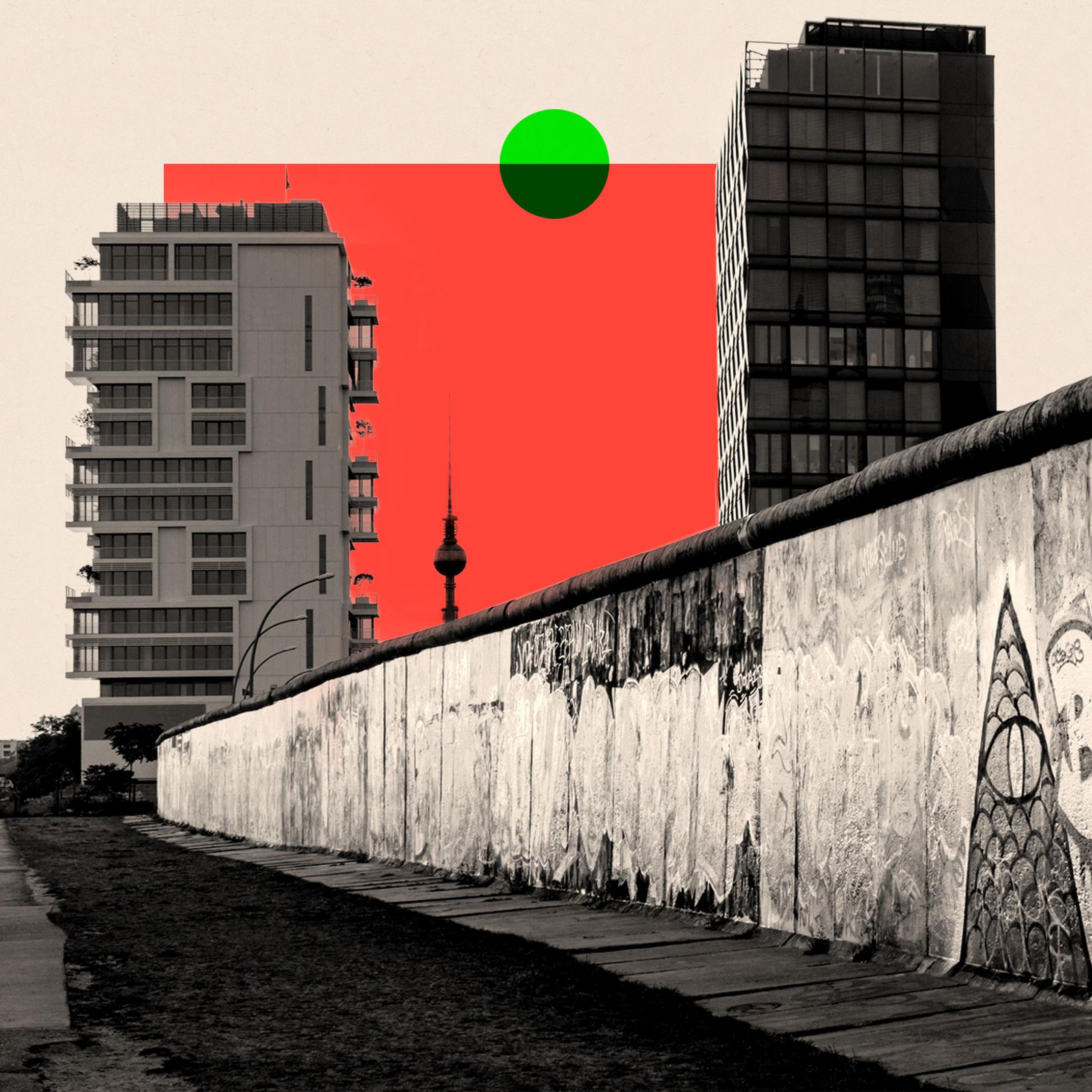
Jan-Niklas Hustedt remembers going to techno parties in the abandoned canteen of a pump factory that had drastically downsized after reunification, in his hometown of Oschersleben.
He was born in East Germany in 1989, just a few weeks before the fall of the Berlin Wall. He describes himself as a "wendekind"; a child of the turning point.
Now, at 36, he recalls how that time would change his community.
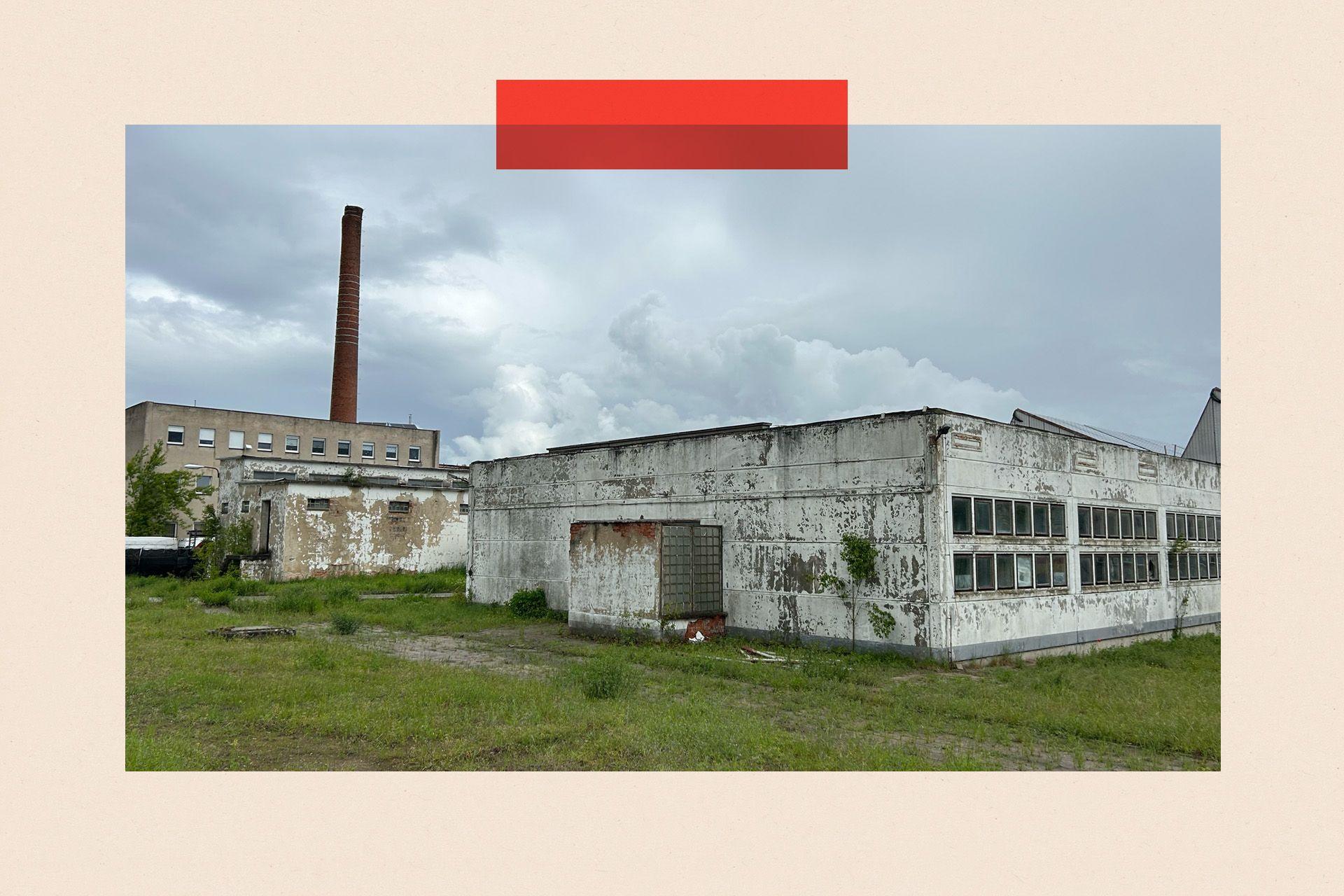
Many businesses in the communist east struggled or simply collapsed as they were thrust into a profit-driven, highly competitive, global economy.
"You hear all the stories," says Jan-Niklas. "Lots of people left because the opportunities were in the west."
In the 35 years after reunification, the country's overall population grew by 3.8 million, a 5% increase - driven by immigration.
But in the five states that were part of the eastern German Democratic Republic (GDR), the population has fallen by 16% (this figure excludes East Berlin).
The state of Saxony-Anhalt, where Oschersleben lies, recorded the most dramatic decline at 26% - according to official statistics published last year.
Now, across large swathes of the more rural east, further population falls are expected as the east's post-reunification "brain drain" combines with a national trend: low birth rates.
Look at the map by government demographers; the deep blue areas – where the starkest drops are expected – are highly concentrated in the less urbanised parts of the east.
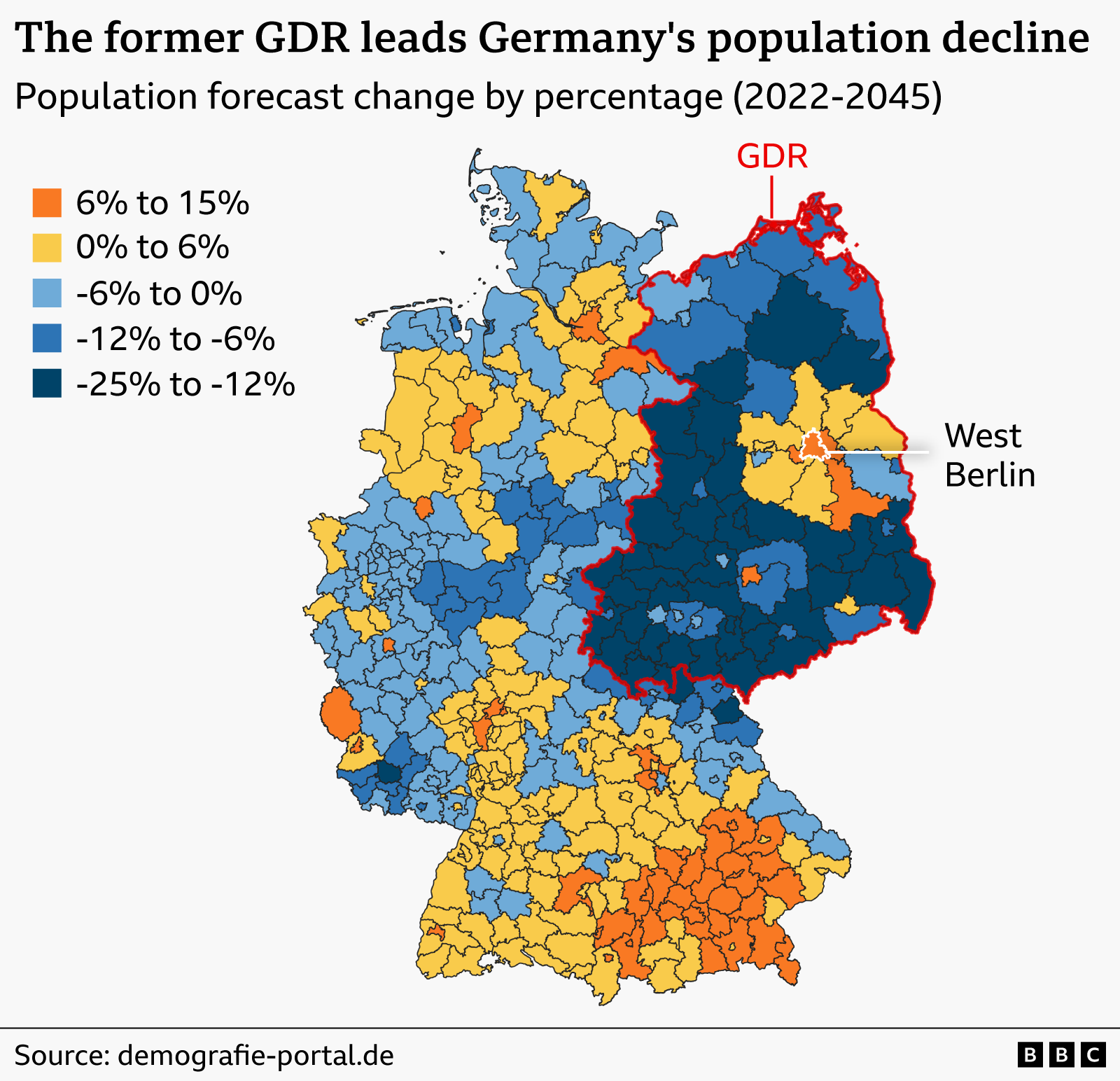
Only the state of Brandenburg, which encircles Berlin and sees spillover from the capital city, bucks the trend.
Longer term, as Germany's population ages, the country's federal statistics office says there will "in all likelihood" be fewer people by 2070. For eastern states outside of Berlin, that's projected to be the case "under all scenarios".
Such projections are based on certain assumptions and are not set in stone. But this demographic change may be helping drive up support for Alternative for Germany (AfD), a party that's classified, within Saxony-Anhalt, as right-wing extremist by domestic intelligence.
Yet it's in this state that the AfD could win power in elections later this year. It's a potentially seismic moment for Germany.
'Tear down this wall'
News footage from 1989 shows the euphoric scenes as people poured across what had, for decades, been a heavily guarded no man's land; the Berlin Wall.
Those on foot swarmed across in crowds while the sudden influx of fume-belching East German Trabant cars sparked complaints about pollution in the west.
But it would also become a time of an enormous sense of loss for people in the east who found their socialist society absorbed, almost overnight, into the capitalist west.
A satellite state of the Soviet Union, the German Democratic Republic (GDR) - as East Germany was known - was a centrally-planned, state-owned economy.
The regime relied on strict media censorship and the Stasi, a large and feared secret police force to keep citizens in line.
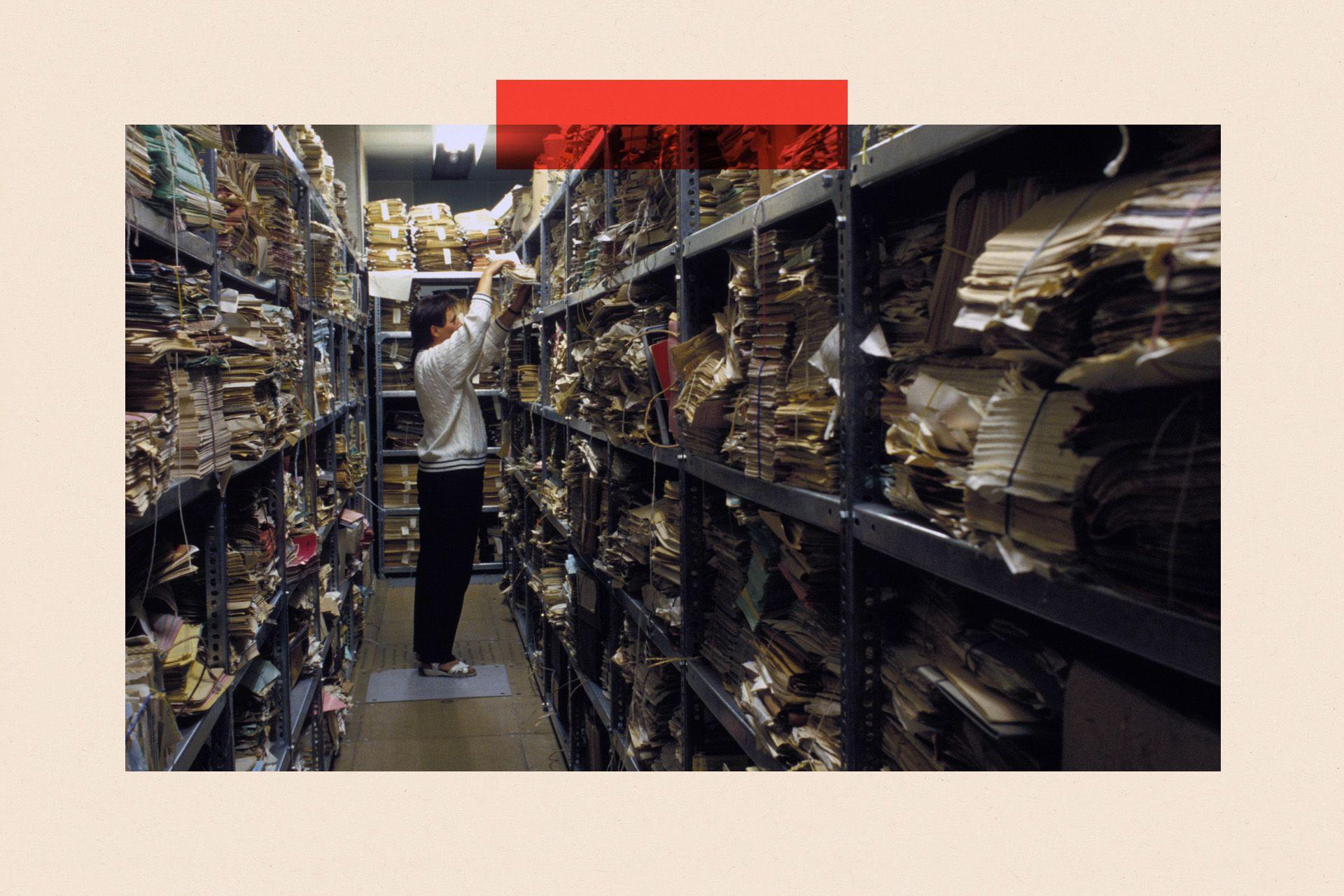
There were also heavy restrictions on people's ability to leave as the authorities tried to prevent people from fleeing west - as so many had over the decades.
East Germans did, however, get subsidised housing, generous childcare support and guaranteed employment.
But it was built on an increasingly inefficient and debt-ridden economy, which meant that the rapid process of privatisation, when it came, was brutal and led to mass unemployment.
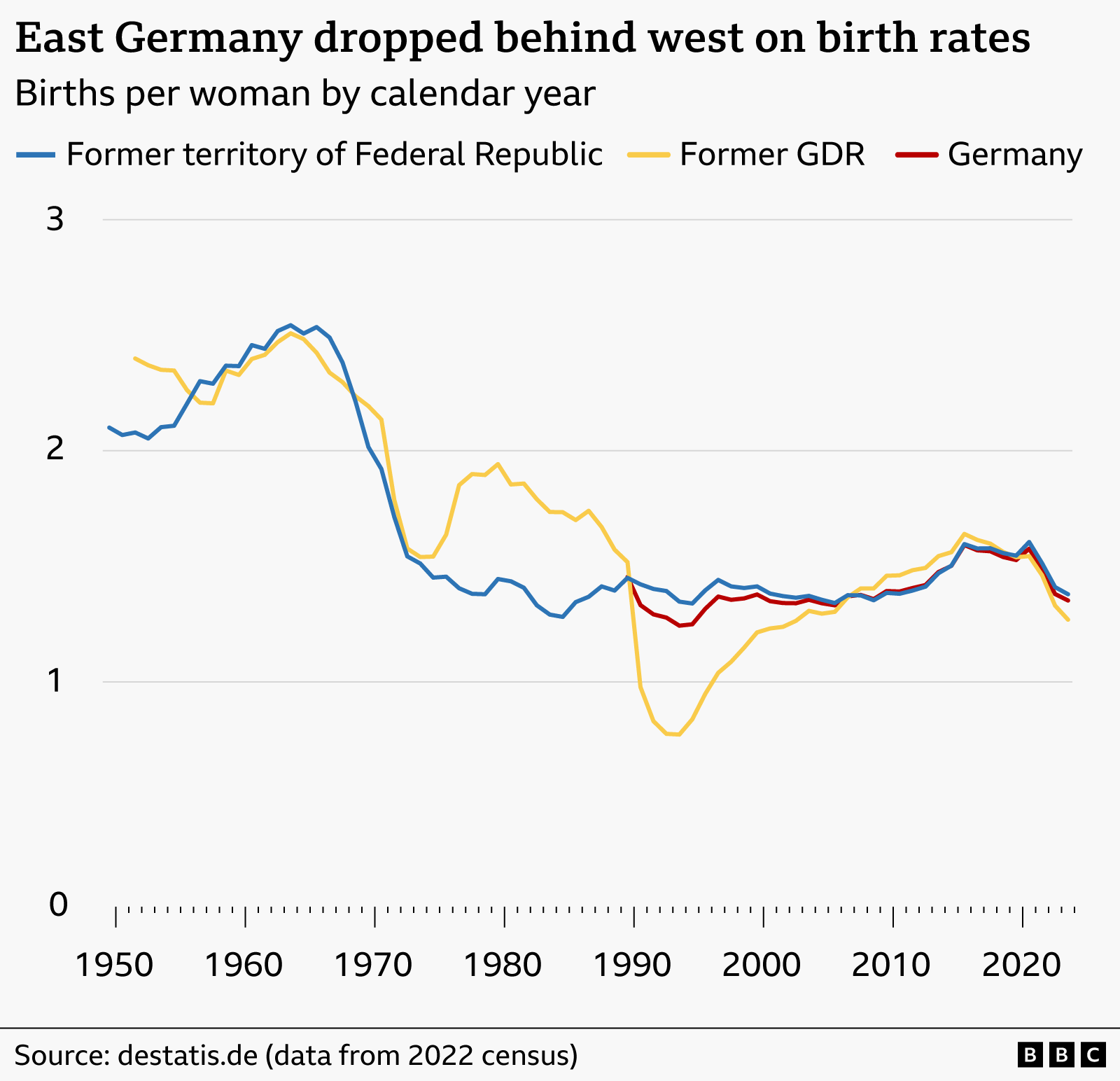
Graphs show how fertility rates in the east plummeted while there was a huge exodus west, which came in two main waves. The first began right after the wall fell, while the second peaked in the early part of this century.
That second wave was "smaller in scale but no less consequential because it was highly selective," says Dr Katja Salomo, a sociologist at the University of Kassel who grew up in a rural part of east Germany.
"Young people, highly educated people and especially women, were more likely to leave."
One reason for women leaving was that the east's female workforce was treated as an "afterthought" during the reunification process - argues Katja Salomo.
"And so they went to West Germany and got them [jobs] there."
Fewer women naturally meant fewer children. And while the big exodus ended years ago, the east still has a more pronounced shortage of young people and skilled workers than the west. As well as emptying kindergartens.
The baby bust
This is an emerging phenomenon in east Germany: "Kitasterben". It literally translates to "daycare dying".
It's driven by low birth rates within an already depleted population in regions that, during the communist era, had built up an extensive network of childcare settings.
"There are now [newspaper] articles where kindergartens [say they] need children, which is crazy," says Jan-Niklas.
He says the kindergarten his daughter goes to asked if he and his wife knew of other families needing a place.
I met Jan-Niklas in the centre of his hometown, Oschersleben. Including surrounding villages, it has a population of roughly 19,000 people.
It's a Wednesday lunchtime. The centre isn't quite deserted, but it's not busy either.
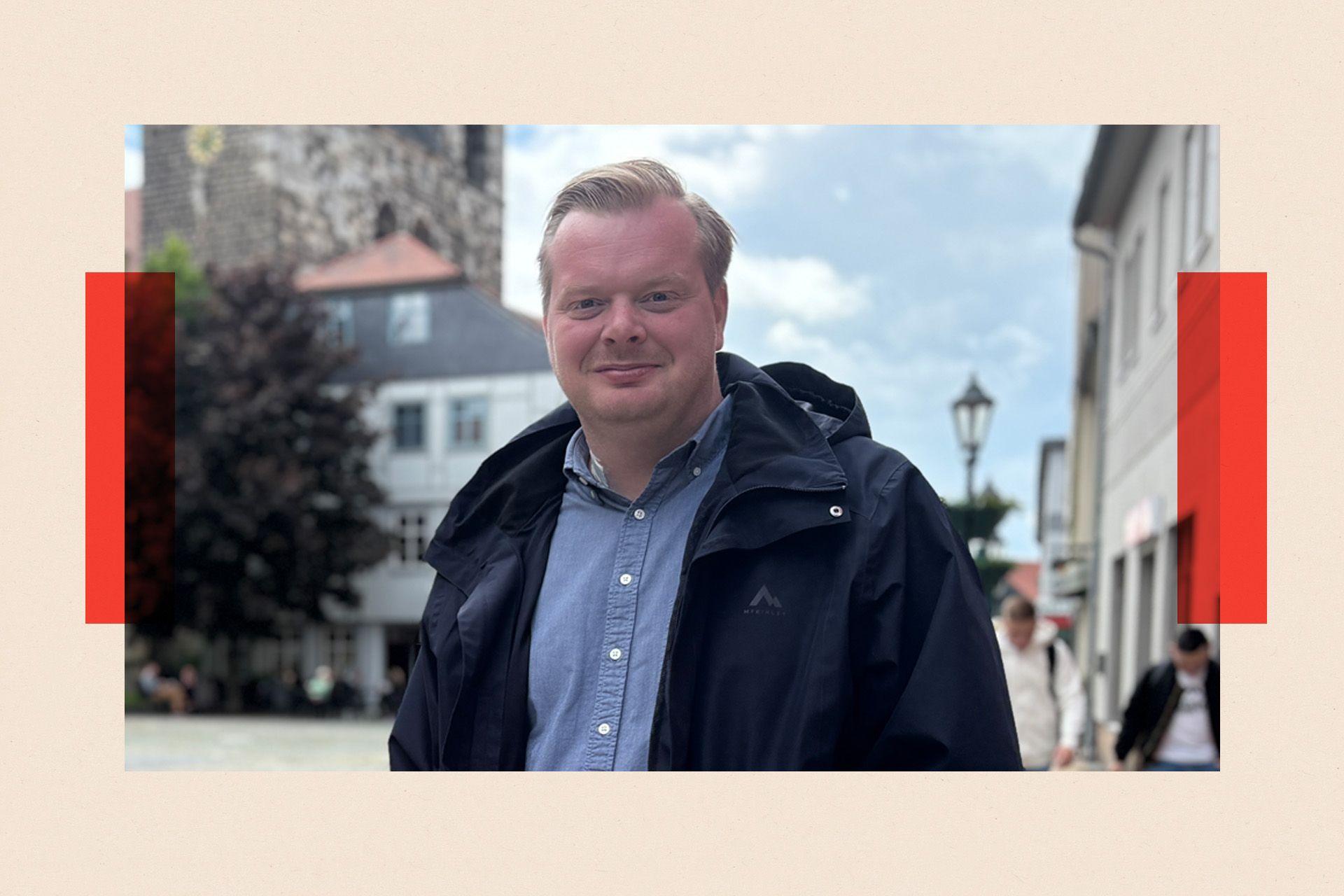
It doesn't take long to spot an empty shop front, or several of the area's growing number of elderly people.
Now Jan-Niklas, who sees reunification as a "success story" overall, is on a mission to bring younger people and families back.
It's "home", he says. "I like the people. I think they deserve [to do] well."
He left when he was in his late teens, to later return having built a career as a recruiter for a major German bank. His move home made the local news.
"Back in Oschersleben after 13 years," read the Volksstimme (People's Voice) headline. "Returnee calls for ways to combat the skilled-worker shortage."
That's just one problem with population decline; filling vacant jobs, including crucial social and healthcare roles to support the increasingly elderly population.
Fewer people can also lead to fewer services, such as shops, maternity wards, and schools.
Coverage from 1 source
Coverage by lean
- Unknown1
Comments
Sign in to join the discussion.
Sign in with SpryLogin