
‘They said: wear angelic white’: British women who accused US airman of rape tell of American military trial
Two women who alleged they were raped by Tyrion Davis in Suffolk had to testify at an invasive court martial on a US base Minutes after fleeing the home of an American airman, Rebecca called 999 in tears to report that he had raped her. She recalls vomiting at a police station in Suffolk as she described being repeatedly and violently attacked. Officers took her to a sexual assault referral centre for an intimate examination. There, a nurse measured and photographed her injuries, including bruis
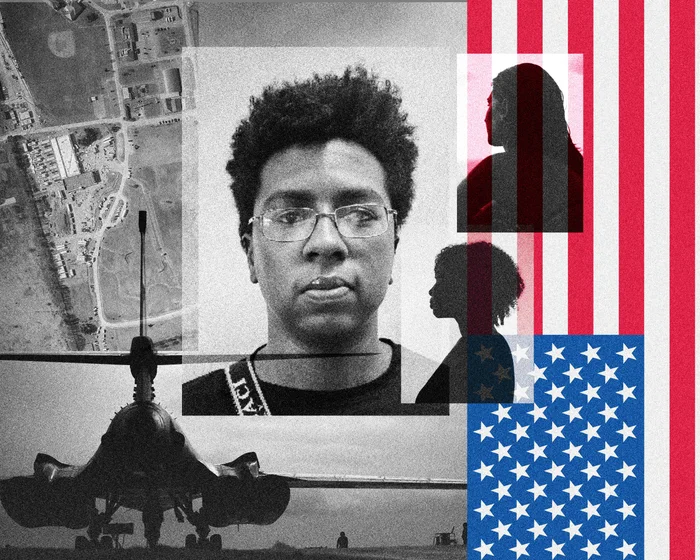
Two women who alleged they were raped by Tyrion Davis in Suffolk had to testify at an invasive court martial on a US base
M inutes after fleeing the home of an American airman, Rebecca called 999 in tears to report that he had raped her. She recalls vomiting at a police station in Suffolk as she described being repeatedly and violently attacked.
Officers took her to a sexual assault referral centre for an intimate examination. There, a nurse measured and photographed her injuries, including bruises and bite marks on her neck.
“I didn’t feel like I was a human,” said Rebecca, whose name has been changed to protect her identity. “I know that sounds really extreme but I genuinely looked in the mirror and I didn’t recognise myself.”
Over the following days, Rebecca, then a 20-year-old British midwifery student, was interviewed by local police detectives. She handed over her phone and laptop as evidence. She was given a crime reference number and appointed an independent sexual violence adviser (ISVA) to help with the legal process she assumed would take place under the normal rules for prosecutions in England and Wales.
Yet normal rules do not always apply to men like Tyrion Davis, who was then a 22-year-old senior airman in the US air force based at RAF Lakenheath, an American military base. Rebecca alleged that he raped her in June 2020, while he was off-duty and at his home in Brandon, a small market town in rural Suffolk.
Twenty days after Suffolk police commenced their investigation, the force decided to cede control of the case to the US air force. That decision meant Davis would avoid the British justice system, and a possible trial before a jury in a British crown court. Instead, he was prosecuted in a military trial, or court martial, at RAF Lakenheath.
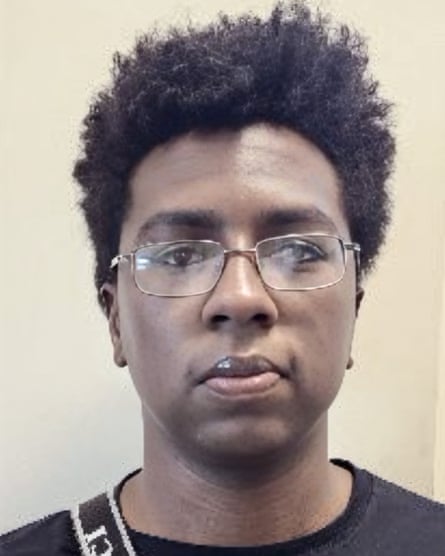
By the time of the trial, in June 2022, the case against Davis had expanded to include similar sexual assault allegations from a second woman: his estranged wife, Emily. Davis insisted his sexual encounters with Rebecca and Emily, both British women, had been consensual.
However, he was convicted of sexually assaulting Emily, whose name has also been changed to protect her identity, “by penetrating her vulva with his penis, without her consent”.
It is unclear why the offence, which involved non-consensual penetrative sex, was prosecuted by the military as sexual assault. In the criminal justice system for England and Wales, such an offence is likely to have been charged as rape.
Davis was acquitted of 10 further counts of sexual assault and abusive sexual contact, and two counts of assault, against Rebecca and Emily.
In interviews with the Guardian, Rebecca and Emily spoke of their horrific allegations against the US airman, and their traumatic experience of giving evidence against him at the court martial.
Rebecca, who now works for the NHS, said she had discovered about a week before the court martial that the jury panel would be composed entirely of Davis’s military peers, rather than members of the public. “It’s like, if I did something wrong outside of work, having all of my nursing colleagues being on the jury,” she said. “It doesn’t make sense.”
‘I thought I was going to die there’
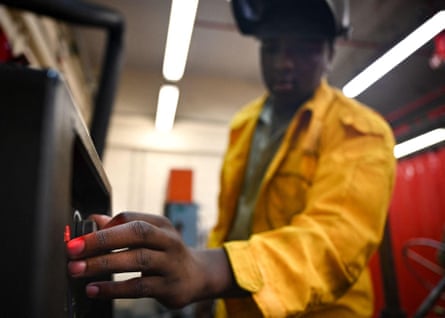
Rebecca met Davis when she was 18, four months after he had arrived at RAF Lakenheath in June 2017. He was an aircraft metals craftsman in the 48th equipment maintenance squadron. In February 2018, Rebecca introduced Davis, who is originally from California, to her friend Emily. Ten months later, Davis, then 20, and Emily, then 18, got married.
The marriage was short-lived and ended when Emily left him in July 2019. However, Rebecca had considered Davis a good friend. He had met her family, stayed at their home and joined them for roast dinners.
In June 2020, at the end of the first Covid lockdown, Rebecca asked Davis if she could stay in one of the spare rooms at his home in Brandon, which is close to the airbase. Her flatmates had moved out of her university accommodation and the wifi had stopped working properly.
Rebecca alleged that Davis smoked marijuana before attacking her within hours of her arrival on 8 June 2020. “I thought I was going to die there,” Rebecca recalled. She said Davis had pulled her on to his bed before assaulting her. “He bit me. I couldn’t see anything because it was just pitch-black and I didn’t know the layout of the room. I just kind of froze. Everything happened. It was rape, sexual assault and the only time he stopped is when I vomited everywhere from stress.”
Rebecca alleged Davis then pushed her into the shower and attempted to assault her before she escaped to a downstairs bedroom, where she barricaded the door shut with her suitcases.
The full horror of the alleged attack, she said, became clear when she saw bruises and bite marks on her neck in the morning and realised “that wasn’t a bad dream”.
Rebecca tried the front door but found it was locked. She messaged a friend to say she needed somewhere safe to stay, while considering jumping out of a window to escape. Then, she alleged, Davis burst into the bedroom and raped her again.
“I begged him to let me go: ‘Unlock the door, please. Just let me go.’ And eventually he did. I was absolutely hysterical,” she said. “He left the room and I was like: ‘What do I grab?’ I launched all my stuff in the car and started driving.”
In the car, Rebecca said, she phoned a friend who encouraged her to call 999. A court martial document described Rebecca as “audibly distraught and overcome with emotion” in the call. The body camera footage of the Suffolk police officer who met her a short time later showed that she was “visibly shaken, agitated, at some points crying, and appear[ed] to be under extreme stress”, the document said.
At a local police station, an officer told Rebecca they had run out of the rape kits used to preserve evidence, owing to a spate of reported assaults. She was taken to the Harbour Centre, a sexual assault referral centre in Norwich, where intimate photographs and swabs were taken and her injuries documented.
Rebecca surrendered her clothing as evidence and left wearing clothes donated by a charity. She returned to the centre a few days later for a formal interview, this time by an officer from Norfolk police, although Suffolk police remained the investigating force. Days later, however, that changed.
The promise of a faster trial
On 15 June 2020, six days after Rebecca’s initial report, she said she received an unexpected phone call from Suffolk police. An officer informed her that the Americans had made a request for the US military to take jurisdiction over the case, and that the transfer would be a quicker route to justice.
Rebecca said a similar argument was made by her ISVA, a specialist who provides advice and support to victims in England and Wales.
“She told me the CPS might not take the case,” Rebecca said of the ISVA. “If they do take it, it’s a minimum of two years until the court case. She then said: ‘The Americans, they want to take it on. They’ve said it’ll be six months [for a court martial]. Which one would you prefer?’”
In the traumatic days after the alleged attack, the promise of a faster trial was compelling. Rebecca had already put her midwifery degree on hold while trying to navigate a complex legal system.
She was told there was a two-year waiting list for mental health services on the NHS, but that the Americans could offer her support more quickly. Rebecca also recalls her ISVA giving her statistics about how few rape cases are prosecuted by the CPS – and how long they take to get to court.
“In my head, I was thinking: ‘OK, if I go the American route, it’s quicker, I can continue midwifery and also they’re going to give me support,’” she said.
Rebecca said she was also warned by her ISVA that Davis could try to leave the UK before facing trial in an English court. Nine months earlier, Anne Sacoolas, an American intelligence official, had fled the UK after killing a 19-year-old motorcyclist, Harry Dunn, in a road collision outside the US military base RAF Croughton.
Rebecca agreed to the transfer and the case was formally handed over to the Americans on 29 June 2020. It was only later, she said, that she realised the full implications of that decision.
The promised six-month timetable for a court martial stretched to two years, forcing Rebecca to drop out of her midwifery degree.
Unlike the hundreds of rape and sexual offence victims who give evidence in UK courts each year, Rebecca could not testify from behind a screen. She would have to do so in a small courtroom at the military base. “So all the questioning would be in front of him,” she said.
Rebecca did not meet her US air force-appointed lawyer until weeks before the trial, when she was invited to the airbase to see the layout of the courtroom. Days before she was due to testify, Rebecca received advice about how she should approach the court martial.
“My legal representation contacted me and said: ‘What are you wearing?’” she recalled. “And I was like: ‘I don’t know, probably just a suit or something.’ ‘Whatever you do, don’t wear red lipstick,’ is what I was told. ‘Don’t wear anything red. Wear black, white; if anything, wear white because it’s more angelic.’”
Rebecca added: “That’s always stuck with me and my family. Why does it matter what you’re wearing? But it obviously did.”
When it came to her court martial evidence, Rebecca, who is shortsighted, took off her glasses so she didn’t have to see Davis, who was metres away.
“It was probably one of the worst days of my life,” she said. “Because he was right there and I thought: if I can’t see, I’m safer. I know it sounds stupid, but I just took off my glasses and answered questions.”
Much of the trial was a blur for Rebecca, who, despite the assurances she had received, had been unable to get any mental health support. “The only way I was getting through every day was trying to ignore exactly what had happened because it had such a massive mental impact on me. And in the court case, I feel like I froze because, in my head, he didn’t exist any more for my own protection, and him being there, I just instantly went into ‘fight, flight, freeze’ and I just froze.”
She added: “In the courtroom, my body just kind of shut down. I think I answered yes, no, and just tried my hardest. But because he was there, I was in shock.”
‘He kept trying. I kept saying no’
Emily’s experience on the witness stand was not dissimilar. Unlike Rebecca, who initially dealt with Suffolk police after they opened an investigation following her 999 call, Emily’s allegations against her estranged husband were handled entirely by the US military.
Emily reported her allegations to the US air force’s office of special investigations in September 2020, after Rebecca had got in touch to explain that investigators were looking into her allegation of rape against Davis.
Emily accused Davis of sexually assaulting her on multiple occasions in 2018 and 2019, including by allegedly forcing her into sexual acts in the presence of others. She also alleged she had once become afraid for her life after Davis, during consensual sex, strangled her until she began to lose consciousness and her vision became blurry. However, it was another allegation that proved pivotal during the court martial.
Coverage from 1 source
Coverage by lean
- Unknown1
Comments
Sign in to join the discussion.
Sign in with SpryLogin