
Rage-giving, innovation and cuts: How public media has survived without federal funds
Rage-giving, innovation and cuts: How public media has survived without federal funds A year ago, President Trump drove a conservative backlash against NPR and PBS straight to Capitol Hill, where Congress stripped public radio and television stations of nearly all federal funding. When his signature turned that bill into law, Trump ended nearly six decades of bipartisan support for funding public media. Since then, more than 500 public media staffers have been laid off, according to a tally by S
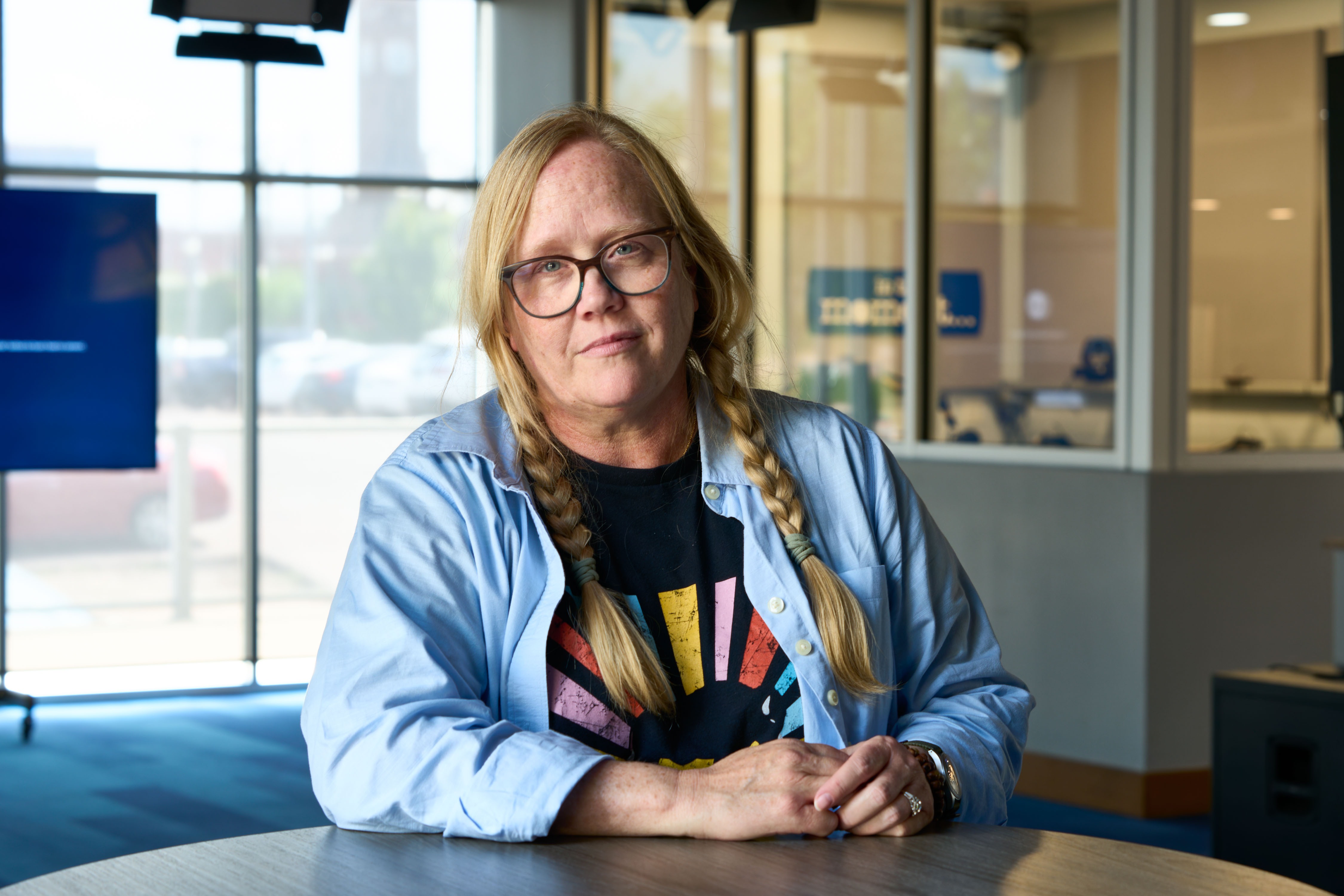
Lori Walsh was laid off and her public affairs show canceled following the loss of federal funding. She's now back at South Dakota Public Broadcasting as a podcaster, thanks to an outpouring of financial support from listeners. Aaron C. Packard for NPR hide caption
A year ago, President Trump drove a conservative backlash against NPR and PBS straight to Capitol Hill, where Congress stripped public radio and television stations of nearly all federal funding. When his signature turned that bill into law, Trump ended nearly six decades of bipartisan support for funding public media.
Since then, more than 500 public media staffers have been laid off, according to a tally by SemiPublic. And yet station officials across the country have reacted with a sense of urgency, hope and anxiety.
Urgency because change is being forced upon them.
Hope because listeners, viewers and philanthropists stepped up.
"All of this exists because of viewers like you," PBS CEO Paula Kerger said at an event at the Chautauqua Institution this summer. "We have said this on the air for many, many years. And I think, until this year, people didn't quite fully realize what that means."
Anxiety because station executives do not know how long that support will last.
A price paid in the prairies
While NPR was the main target of conservatives' wrath, it had received less than 2% of its annual revenue directly from the federal government.
Media
In South Dakota, public media endures a year after federal funding was wiped out
It was a different story elsewhere. Federal funding made up, on average, 8 to 10% of public radio stations' budgets; for PBS and public television stations, the share was even higher. Rural stations, with the fewest donors, depended the most on government support.
South Dakota Public Broadcasting was among the stations that paid the price immediately after Trump signed the law withdrawing federal funds.
For years, host Lori Walsh of the weekly public affairs show In the Moment had set the agenda for the people of South Dakota by interviewing authors, storekeepers, politicians and other state residents in what she called "kitchen table conversations."
Media
A public broadcaster's path after losing U.S. funds: Youth sports and less local news
South Dakota Public Broadcasting canceled the show. It laid off seven of its 11 journalists, including Walsh and her two-person production staff.
"We went through a real grieving period of saying goodbye to beloved staff members and really qualified journalists and professionals," Walsh recalls now.
Ryan Howlett is the chief executive of the private foundation that supports South Dakota Public Broadcasting. Aaron C. Packard for NPR hide caption
Many stations did the same. PBS laid off 15% of its workforce. NPR this year reduced the staff that produces news, podcasts and music by about 4%, mostly through buyouts of its journalists. The Corporation for Public Broadcasting, which had been set up in 1967 expressly to funnel federal money to local stations, went out of business .
In order to keep funding from her state's government, South Dakota Public Broadcasting Executive Director Julie Overgaard had promised to continue devoting gavel-to-gavel, C-SPAN-like coverage to the state legislature, and to continue broadcasting all high-school varsity games and performing arts competitions. That left little choice but to cut the newsroom.
But in that dark moment, a funny thing was playing out: something Ryan Howlett calls "white-hot rage-giving."
Howlett, the chief executive of the private foundation that supports South Dakota Public Broadcasting, says angry listeners and viewers opened their wallets, starting even before Congress passed the bill.
"We found just a bunch of first-time givers in the four- and five-figure range that we had never had before," he says.
That rage- giving led to a record $8 million haul. The station hired Walsh back. She no longer has a broadcast show or producers, but Walsh has stayed true to the spirit of In the Moment through a daily podcast and a extended daily segment on Morning Edition bearing the same name.
Walsh conducts an interview with musician Matt Fockler, as he plays an acoustic guitar. Aaron C. Packard for NPR hide caption
She's covered the race for governor, a street piano for anyone to play in the city of Vermillion and a recent archeological find.
"I do think people miss the full 'kitchen table' experience of In The Moment ," Walsh says. "But now we have — I don't know — a breakfast nook where you start your day with a key conversation that you can carry with you throughout the day."
A sunny surprise in the Southwest
That sense of innovation — driven by necessity — has surfaced at stations dotting the nation.
"We really didn't know how we were going to fare," KSUT Executive Director Tami Graham says. "We had pretty major concerns about whether we were going to need to cut staffing, cut back on some of our national programming, et cetera."
At her rural public radio station in the Four Corners region of southwestern Colorado, the elimination of funds loomed as an existential threat .
KSUT joined NPR and other stations in suing Trump after he first targeted public media funds through an executive order in spring 2025. They called the president's order unconstitutional.
Tami Graham, executive director of KSUT Public Radio in rural southwest Colorado, says the station raked in so much money from donors that it was able to buy solar panels and start its first endowment. Frank Langfitt/NPR hide caption
But the law passed by Congress last July — controversial as it was — went by the book.
"We went to our listeners, our membership, and we were very transparent with them about our situation and that we needed their support," Graham says.
KSUT's audience delivered. The station raised enough money for solar panels, saving $43,000 a year in electricity costs.
It also socked $100,000 into its first endowment.
In March, NPR, KSUT and the other stations that had sued Trump won .
"This is a victory for the fundamental rights of a free and independent press, for the American people, and for the entire public media system," NPR's chief executive, Katherine Maher, said in a memo to staff last month. "We can all take pride in what we achieved here. There has never been a better year to defend the First Amendment than the 250th anniversary of the nation's founding."
So now, federal agencies can legally send money to public media stations if it's authorized by Congress. And lawmakers on Capitol Hill, including some Republicans, made good on promises to restore aid to stations that serve tribal audiences, such as KSUT, through the Bureau of Indian Affairs.
KSUT also received some grants from the Public Media Bridge Fund, a short-term effort financed by a group of philanthropies seeking to help stations find new models of financial sustainability.
"It's really amazing," Graham says. "We know that there's still a possibility there, but we have not had to make any cuts."
That has not been the uniform experience.
A Hoosier hardship
Tim Black, the chief executive of WNIN in Evansville, says the loss of both state and federal funding last year took away nearly half of his budget. Chris Howell for NPR hide caption
In Indiana, the Republican-dominated legislature killed state funding for public broadcasting ahead of the Congressional vote.
The two together were like a $1.5-million punch to the solar plexus of Tim Black, the chief executive of WNIN in Evansville.
"That was roughly half of my budget," Black says.
Coverage from 1 source
Coverage by lean
- Unknown1
Comments
Sign in to join the discussion.
Sign in with SpryLogin