
Shell’s profits more than double after jump in oil and gas prices
Shell more than doubled its profit in its second quarter of the year, as Europe’s biggest oil and gas company reaped the benefits from the jump in oil and gas prices triggered by war in the Middle East. The FTSE 100 company’s net profit hit $9.84bn (£7.4bn) in the three months ended in June, more than double compared with the same period last year. The surge in profit comes as wholesale energy prices have soared because of the conflict in the Middle East, boosting profit margins and activity on
Environmental groups renew calls for windfall tax to support households following Q2 earnings rise to $9.84bn
Shell has recorded its second highest quarterly earnings on record as the energy market surge caused by the Middle East crisis helped to double its net profit to almost $10bn for in the three months to June.
Europe’s biggest oil and gas company reported a quarterly profit of $9.84bn (£7.4bn), more than double the earnings recorded in the second quarter last year and the highest since its record high earnings in the months following Russia’s invasion of Ukraine.
The company behind plans to develop the Jackdaw gas field in the North Sea revealed its historic earnings ahead of a planned meeting between Britain’s new prime minister and Shell’s chief executive, Wael Sawan, who is expected to urge the government to address “these difficult times” by developing North Sea projects.
Sawan told CNBC: “The prime minister’s office has reached out, and we’re hoping to schedule a discussion soon … The biggest thing that can be done at the moment is to continue to support the development of the of the North Sea, to continue to invest in renewables, to continue to provide targeted support to those who need it in these difficult times.”
He added: “These are difficult times, undoubtedly, and I think the government, from everything we pick up publicly, is trying to do what it can to be able to support. And [the] UK is our headquarters, is our home, and we will offer any support that we can to the government as they try to navigate these difficult waters.”
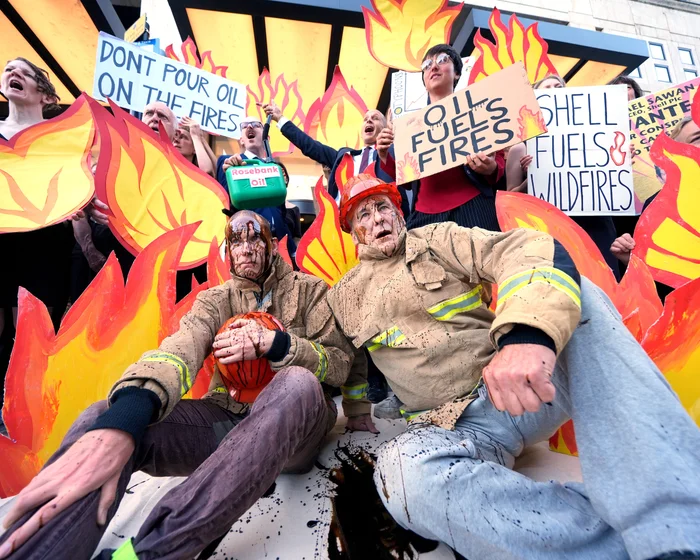
Robert Palmer, deputy director at the campaign group Uplift, which opposes North Sea development, accused Shell of “maniacal behaviour” for “putting its profits ahead of the health of our planet”.
“As families and firefighters across Europe battle devastating wildfires , Shell is cashing in on Trump’s war and doubling down on oil and gas,” he said. “The world is literally on fire and Shell wants to add more fuel.”
The severe disruption in global energy markets since the US-Israeli attacks on Iran in late February resulted in a 30% drop in Shell’s gas production in the last quarter compared to the same period a year ago after its gas-to-liquids plant in Qatar was damaged by Iranian drones.
The company was more than able to offset the lost earnings due to higher global market prices and savvy trading. In its liquified natural gas business earnings grew to $2.7bn in the second quarter, up by 55% from last year. Meanwhile, its chemicals and products business, which is home to its oil trading desk, reported earnings of $2.3bn – up sharply from $118m a year ago and the division’s highest quarterly profit since 2021.
“We have one of the world’s largest and strongest trading capabilities,” Sawan told CNBC, “And that allows us to deal with times like this.”
The global oil price has climbed from about $61 a barrel in January to highs of $126 at the end of April, after Iran’s effective blockade on flows of oil and gas through the strait of Hormuz. The market volatility has included some of the sharpest price swings on record, which traders are able to use to amplify their profits. Brent crude, the international benchmark, was trading at just over $90 a barrel on Thursday.
Shell’s surging profits reignited calls from environmental campaigners for taxes to fund support for the households hardest hit by the rise in energy costs.

Rudy Schulkind, a political campaigner at Greenpeace, said the environmental group was “running out of words to describe the obscenity” of huge profits at Shell.
“Europe is engulfed by apocalyptic wildfires, communities across Asia are reeling from devastating floods, and the UK battles through drought and yet more dangerous heat,” he said. “These aren’t anomalies, they’re the defining story of the fossil fuel age. Shell takes the profits, and the rest of us pick up the catastrophic bill.”
Schulkind called on the government to implement a windfall tax on big oil companies and to use the revenue “to help households with the cost of living, strengthen our resilience against extreme weather, and supercharge the transition to clean, affordable energy”.
Shares in Shell rose 1.5% in early trading on Thursday, to £33.72, the highest since early June.
This article was amended on 30 July 2026. An earlier version misnamed Rudy Schulkind.
Coverage from 1 source
Coverage by lean
- Unknown1
Comments
Sign in to join the discussion.
Sign in with SpryLogin