
New recruits are joining the military in big numbers, but not for reason Hegseth says
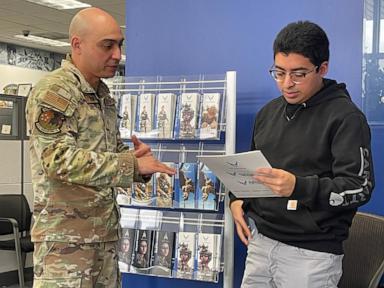
The military’s recruiting rebound is real, but the reasons behind it are far less political than Hegseth’s framing suggests.
The economy is driving young Americans' enlistments, according to Pentagon data.
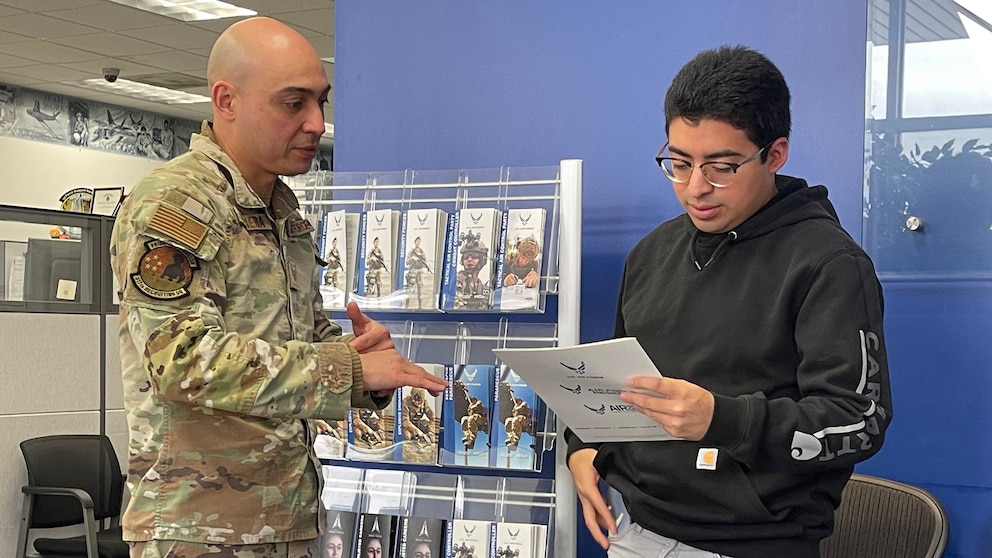
By lunchtime at a northern Virginia high school, the hallway outside the cafeteria buzzed with students finishing homework, joking with friends and playing video games.
Off to the side, Tech Sgt. Omar Herrera, an Air Force recruiter, had arranged his table with the standard fare of glossy brochures, foam model fighter jets and Air and Space Force-branded water bottles students could earn with a round of pushups.
The scene was strikingly low-key, almost at odds with the life-altering decision many of the teenagers wandering past his table were weighing. When they stopped, Herrera answered questions and explained the Air Force's job opportunities with an encyclopedic knowledge of making a career out of the military, which he was passionate about and eager to share.
By the time Herrera met with dozens of prospective recruits, much of the Air Force's annual recruitment quota was already complete. The recruiting business is good after years of shortfalls.
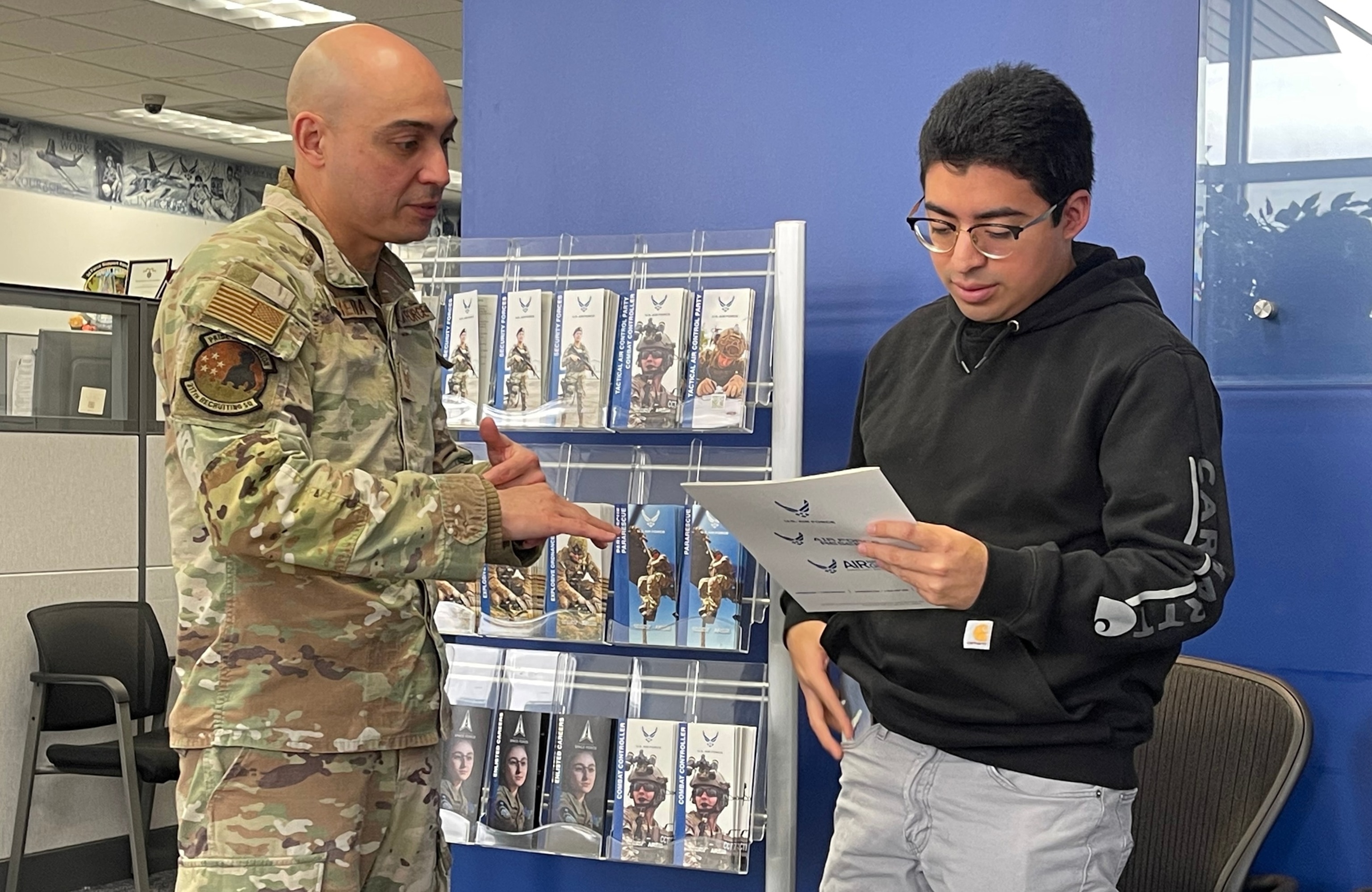
Defense Secretary Pete Hegseth, an Army National Guard veteran, has repeatedly elevated military recruiting successes into the marquee achievement of his tenure and folded recruiting, long treated as an apolitical function of the military, into a broader culture-war proxy.
In remarks to roughly two dozen of the military's top recruiters at the Pentagon in December, Hegseth framed improved enlistment numbers as a reflection of confidence in the administration.
"You can talk about polls, you can talk about money, but men and women willing to serve and put on the uniform is a reflection of the belief they have in civilian leadership and military leadership," he told them.
Pentagon spokesperson Sean Parnell, in a statement to ABC News, shared that same sentiment, adding that, "Americans everywhere are prouder than ever to serve in our unmatched military that prioritizes lethality, merit, and protecting our nation from those who seek to harm it."
Yet the military has been selling effectively the same proposition since the U.S. abandoned the draft and fully transitioned to an all-volunteer force in 1973: job stability and benefits, with a sense of adventure to sweeten the deal. What has changed, however, is the politics surrounding that bargain.
The military’s recruiting rebound is real, but the reasons behind it are far less political than Hegseth's framing suggests. ABC News interviewed nearly 40 recruits and prospective recruits at different stages of enlistment, along with two dozen recruiters across the military and current and former defense officials, and found young Americans are still largely making the same calculation that has driven enlistment for decades: steady pay, education benefits, job training and a direct path to the middle class.
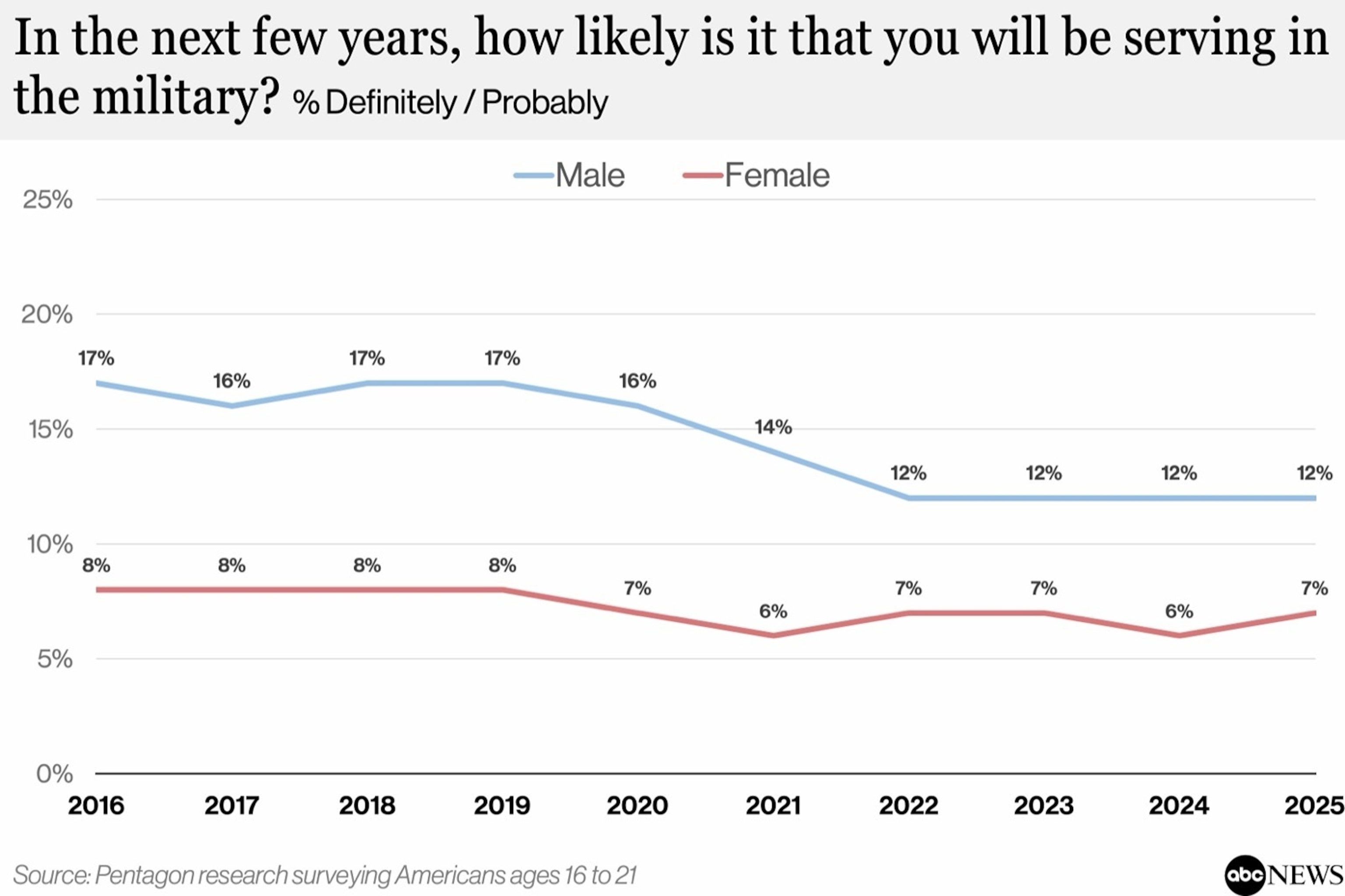
The Pentagon's own data backs that up too, with financial compensation and benefits ranking as a top reason for joining the military.
The recruitment turnaround also began before President Donald Trump returned to office and has been aided by changes under former President Joe Biden to how the Pentagon finds and qualifies recruits. Yet Hegseth has increasingly cast those gains as a referendum on his leadership and conservative overhaul of the military, even as the force depends more heavily on women, minorities and recruits from Democratic-leaning cities -- populations some defense officials worry the Trump administration's culture war could alienate.
To Herrera, the Air Force is a phenomenal product that speaks for itself, and every recruit is an opportunity to make the force even better.
"I don't do sales, I hate sales. I was that kid who couldn't sell a candy bar," Herrera said. "I'm approaching this as more of a mentor."
The students' ambitions varied, but even in this affluent suburb outside of Washington D.C., with access to one of the country's strongest job markets, the conversations kept circling back to careers and economic security.
One potential recruit was preparing to graduate and was interested in becoming a diesel mechanic in the military. Another asked what it takes to be a military lawyer.
One young woman saw military service as a way to pay for college while continuing a family tradition following her father's career in the Army. According to Pentagon data , some 80% of recruits each year have a family member who served in the military, which is why defense officials have long half jokingly referred to the armed services as "a family business."
Beyond career opportunities, recruiters said they tend to hear the same questions from prospective recruits. For some, the prospect of war carries an undeniable appeal -- not because of the violence itself, but because combat has long been viewed as a proving ground and a source of bona fides that can shape a career in the military and after for decades.
Others are just as deliberate about avoiding the front lines, gravitating toward technical or support specialties where the likelihood of direct combat is lower, but translating those skills to a civilian job may be smoother. For most of those who spoke with ABC News, joining the military is a series of career decisions rather than approval or disapproval about the administration in power.
Among the recruits and prospective recruits interviewed, only two said they knew what a secretary of defense is, and neither could identify who currently holds the position. One recruit who had recently graduated basic training only vaguely recalled Hegseth's name. For many junior service members, the Pentagon's senior leadership has historically been largely removed from their day-to-day concerns.
Despite the ongoing war with Iran, recruiters interviewed said the conflict has rarely surfaced in conversations with applicants. Some cautioned that a prolonged war, especially one marred by a steady stream of American casualties and little visible progress, could eventually weigh on recruiting at the margins.
Women considering enlistment are generally more likely to ask practical questions about pregnancy policies, hygiene and whether barracks were coed, recruiters and women currently serving explained.
One Army recruiter recalled the only applicant who mentioned current events wanted to know whether recently released UFO videos were real.
Recruiting woes
During a Cabinet meeting at Camp David in July, Hegseth told reporters that a recruiting turnaround began "on Election Day 2024," tying a rebound from COVID-19-era lows directly to Trump's return to power.
Yet the military's recruiting recovery was already underway. The services met their active-duty fiscal 2024 recruiting goals by Sept. 30 -- more than a month before Election Day. Recruiting was so successful that year, the Army gr e w i t s c a p a c i t y for how many recruits it is able to send to basic training to get a surge of enlistments into the force following its post-pandemic recovery.
The Army, the military's largest branch and by far its biggest recruiting challenge, hit its fiscal 2026 goal, signing 61,500 active-duty soldiers before a Sept. 30 deadline this year. The Navy also met its target with 45,000 sailors, while the Air Force recruited nearly 33,000 airmen.
The Marine Corps is also on track to meet its recruiting goal this year, according to officials, having largely sidestepped the deeper struggles facing the other services. Its smaller size means it needs far fewer new recruits each year, typically bringing in about 30,000 Marines annually. Space Force, a branch still in its infancy, brought in 730 new recruits this year.
This year's recruiting numbers mark the third straight year every active duty military service has met its recruiting goal, a remarkable turnaround from the recruiting bumps that started to manifest in the late 2010s and fully materialized during the COVID-19 pandemic. In 2022, the Army brought in just under 45,000 new recruits when it needed 60,000, while the other branches also endured some of their worst recruiting years in decades.
It's the economy
Military service still offers one of the country's most robust benefits packages with college tuition, generous home loans, retirement savings and a pension for 20 years of service. For many, it marks one of the most direct paths to the middle class. Pentagon data consistently shows pay, education benefits and career opportunities are the primary reasons young Americans enlist.
Khaleed Ajadn, 24, a potential recruit and Nigerian green card holder, studied medicine in the Caribbean and now works as a medical assistant at a civilian clinic in the U.S.
"The end goal for me is to be a doctor in the Air Force," he said. "I just want to be in the military. I want to take care of people."
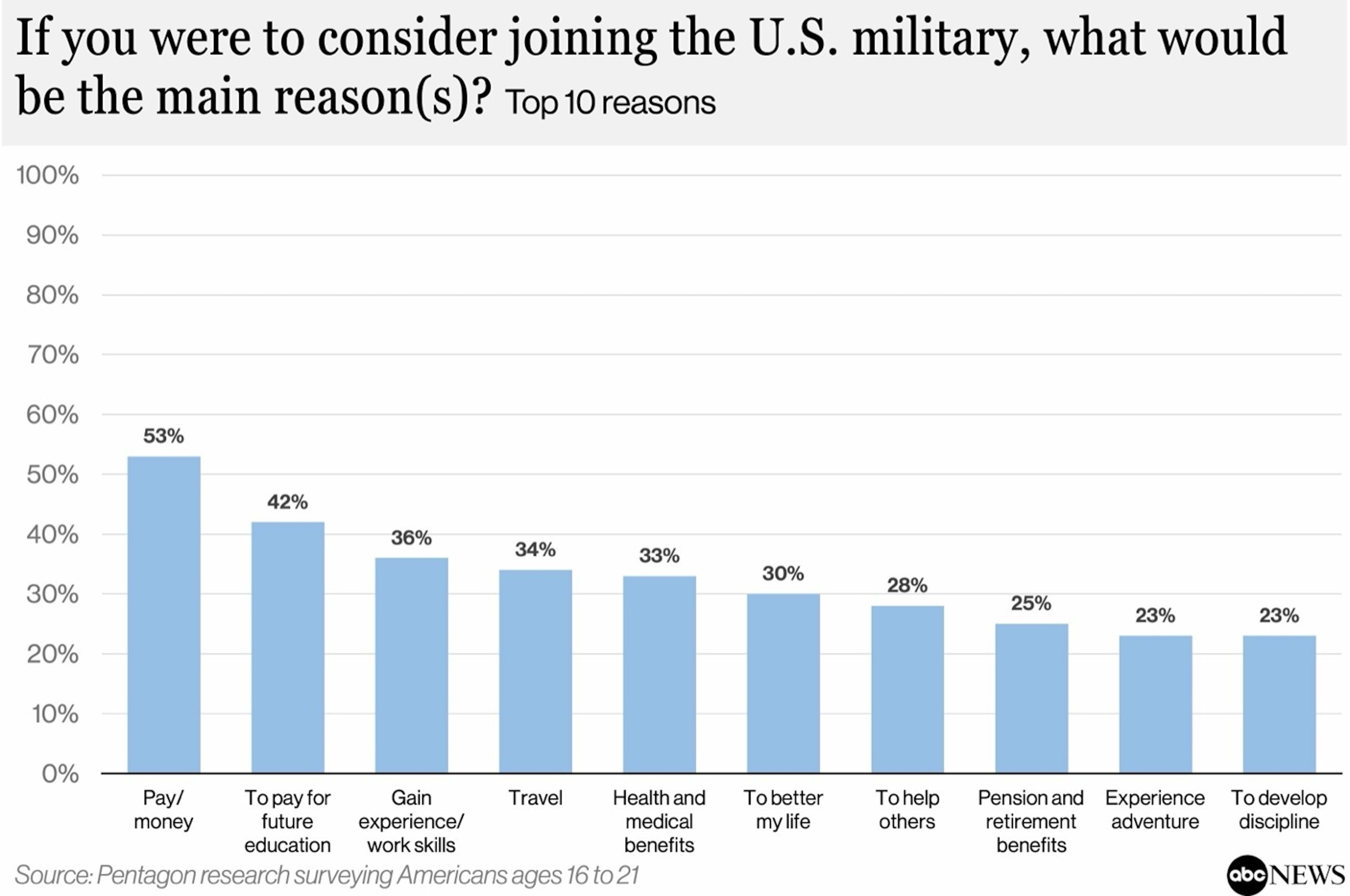
Others join as a response to a shifting economy. The propensity to serve, per the Pentagon's own survey data, broadly aligns with federal data tracking the youth unemployment rate.
"I was really hoping to be an artist, but then AI came along and I needed to find something more practical," Layla Gerstman, 18, said as she prepared to take the military's SAT-style aptitude test, which determines eligibility for enlistment and qualifies recruits for specific jobs.
Historically, the strongest predictor of a recruiting boom has been a weak economy. The 2008 financial crisis, the deepest economic downturn since the Great Depression, saw the Army enlist about 80,500 active-duty recruits. It marked the best recruiting year since the immediate aftermath of the Sept. 11, 2001, terror attack and after years of struggling to fill the ranks as the Iraq War became increasingly unpopular and bloody. Just a few years earlier, in 2005, the service had missed essentially the same recruiting target by 6,600 soldiers.
Why recruiting became political
Coverage from 1 source
Coverage by lean
- Unknown1
Comments
Sign in to join the discussion.
Sign in with SpryLogin