
What we know about deadly Nepal-Tibet floods
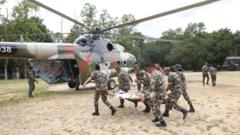
Hundreds have died in flooding and landslides on the border of Nepal and Tibet.
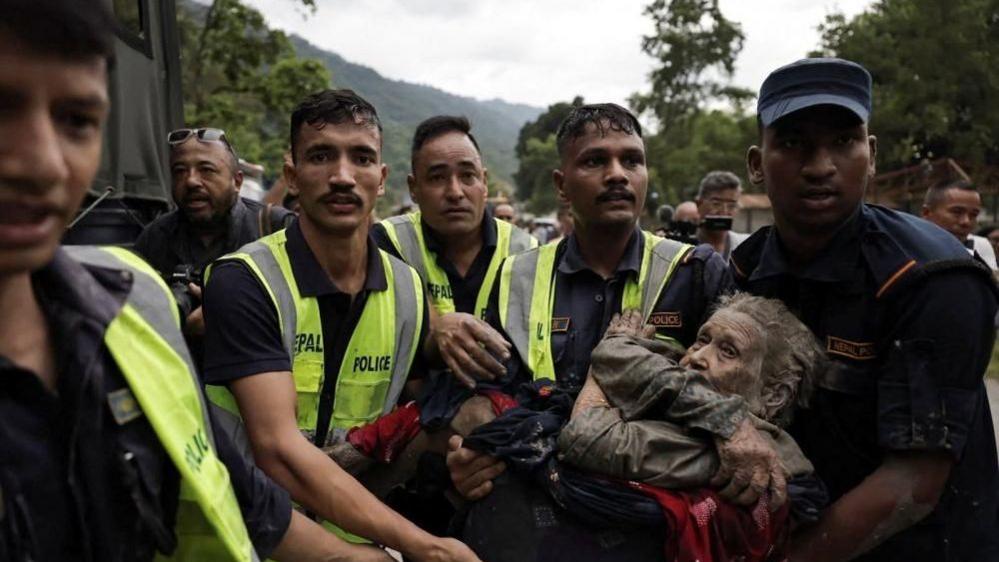
Devastating landslides and flash floods on the Nepal-Tibet border have caused widespread damage and left hundreds dead and thousands more missing.
At least 579 people have been killed and nearly 2,000 people remain unaccounted for, according to Nepal's National Disaster Risk Reduction and Management Authority.
At least five people have died in Tibet, with another 558 reported missing by Chinese state media.
On Wednesday, flood water tore through the border region, sweeping away homes and roads, local officials have said.
Rescue workers say they now face a critical moment to reach remaining survivors as fears mount of further flooding in the disaster's aftermath.
Tracing the deadly path of the Nepal-Tibet flash flood
She was about to cross into Tibet for a long-awaited pilgrimage - then her messages stopped
What caused the landslide?
Initial reports of an earthquake on the Nepal-Tibet border led many to believe that a tremor had caused a landslide, which in turn caused the devastating floods early on Wednesday.
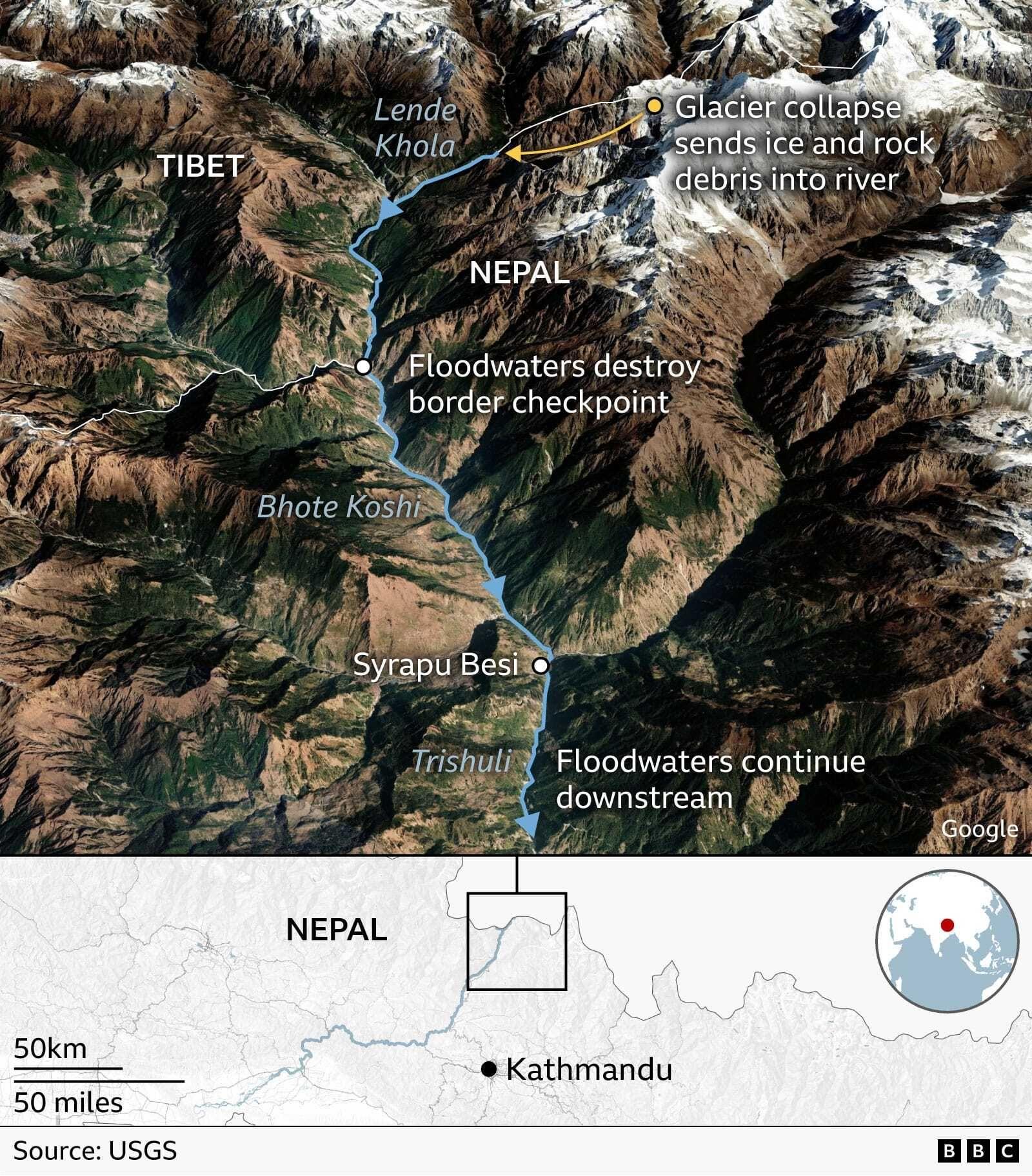
However, the US Geological Survey (USGS) later confirmed that the disaster was caused by a "glacial collapse" - when a glacier or part of a glacier disintegrates.
The impact of the collapsed glacier hitting the bottom of a valley was so powerful that it registered a magnitude of 5.2, according to the agency, causing "subsequent catastrophic impacts downstream".
Powerful flood water and debris travelled some 62 miles (100km) downstream from the Trishuli and Bhote Koshi Rivers, the USGS said, sweeping through towns popular with mountaineering tourists and pilgrims in northern Nepal.
Footage showed a wall of mud and rock sweeping away buildings, roads and vehicles as people fled in the Nuwakot region.
In one video, a towering wall of water and mud was seen rushing down a gorge along the Trishuli River and enveloping the Rasuwagadhi Border checkpoint, a multi-storey building on the Nepalese side.
Gyirong Port, over the border, was also hit. A number of deaths were reported in Tibetan villages.
Scientists are trying to piece together the exact order of events as rescue efforts continue. Mike Searle, professor of Earth sciences at Oxford University, said the glacier could have collapsed "hours or days" before the flooding hit Nepal and Tibet.
"I think the sheer wave of debris suggests there was a landslide first, the water built up, [which] dammed the river, and then it burst in one huge great flood," he told the BBC.
The International Centre for Integrated Mountain Development (ICIDMOD) has warned secondary flooding could occur in the coming days as a result of debris that washed into the river systems.
The ICIDMOD said it was assessing whether the Trishuli River had been temporarily blocked in narrow sections. If this is the case, it is at risk of forming a landslide dam and a second flood.
Separately, China has warned there was a "high risk" a lake that formed after the landslide may burst its banks, causing fresh flooding downstream. As of Friday, an estimated 2.5 million cubic metres of water had accumulated, according to broadcaster CCTV.
State media reported that rescue operations were briefly suspended on Friday after the lake, which has formed at the confluence of the Chhochen Khola and Purepu Tsangpo rivers, overflowed - before water levels dropped slightly. Heavy rain is forecast over the next few days.
But experts have told the BBC that it was possible that the lake could drain naturally over time.
The number of people killed or missing is still becoming clear.
At least 579 people had died as of Friday, according to Nepali police, while the country's disaster agency said at least 1,924 people were still missing.
The government has released a list of more than 517 foreign nationals who have been out of contact since the floods hit, including 33 UK nationals. The missing also include 44 members of the Nepali army and 28 police officers, disaster officials have said.
Meanwhile, five people have died in Tibet and 558 are missing, China's state broadcaster CCTV reports. These figures have not been independently verified.
Tibet, which China annexed in the 1950s, is one of the most strictly controlled regions in the country. It is virtually impossible for foreign media to gain entry there and trying to contact local residents is just as hard.
It is unclear whether any of the missing in the Nepali and Chinese figures have been counted twice.
Brigadier General Rajaram Basnet, a spokesman for Nepal's army, told the BBC that rain and unpredictable weather in the area were making rescue operations increasingly challenging.
Which countries are the missing tourists from?
Tourists from all over the world come to Nepal for its mountains and sacred sites. Reports of those missing include the following:
India - at least 320 Indian nationals are missing, the foreing ministry in Delhi says
China - The Chinese foreign ministry says nearly 100 Chinese nationals are missing in Nepal
US - 90 Americans are still missing, the US state department says
Ukraine - 62 Ukrainian nationals are missing, Nepalese police say
Malaysia - 51 Malaysians travelling with Fishtail Tours and Travels are missing in the floods, officials say
Australia - Australia's foreign minister says 39 Australians are among the missing and there's an "unfortunate possibility" the number will rise
UK - Nepal's police say 33 British nationals are missing
Canada - 30 Canadians and permanent residents are missing, says Global Affairs Canada
Smaller numbers of travellers from South Korea, South Africa, Portugal, the Netherlands and New Zealand are also among the missing.
How are governments responding?
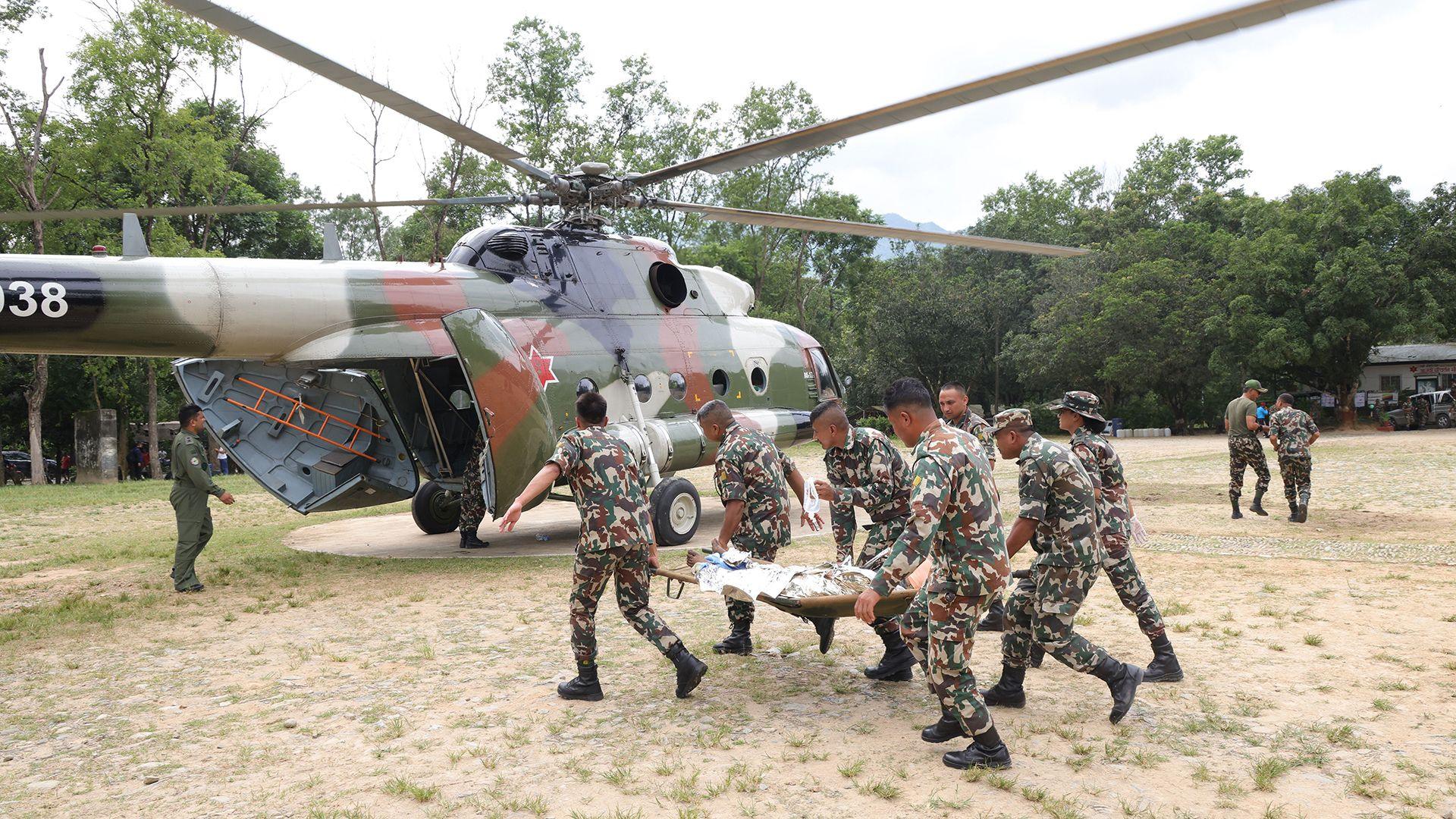
As rescue operations continued on Friday, the office of Nepal's Prime Minister Balendra Shah said "additional" personnel were on the ground to speed up recovery efforts.
It added that a 1,200-strong team has been deployed "along the riverbanks from Rasuwa to Chitwan" and "to all possible locations along the affected areas".
Chinese President Xi Jinping chaired an emergency meeting of officials to co-ordinate rescue efforts, according to Chinese state news agency Xinhua.
Kamal Kishore, special representative of the UN secretary general for disaster risk reduction, urged countries to support response efforts.
The US previously promised $500,000 (£367,982) in aid for communities affected by the floods, while the UK said it had offered £5m.
Meanwhile, the Indian Air Force said that military cargo planes carrying nearly 50 tonnes of supplies had been sent to Nepal.
Coverage from 1 source
Coverage by lean
- Unknown1
Comments
Sign in to join the discussion.
Sign in with SpryLogin