
Colin Kaepernick’s unfinished business
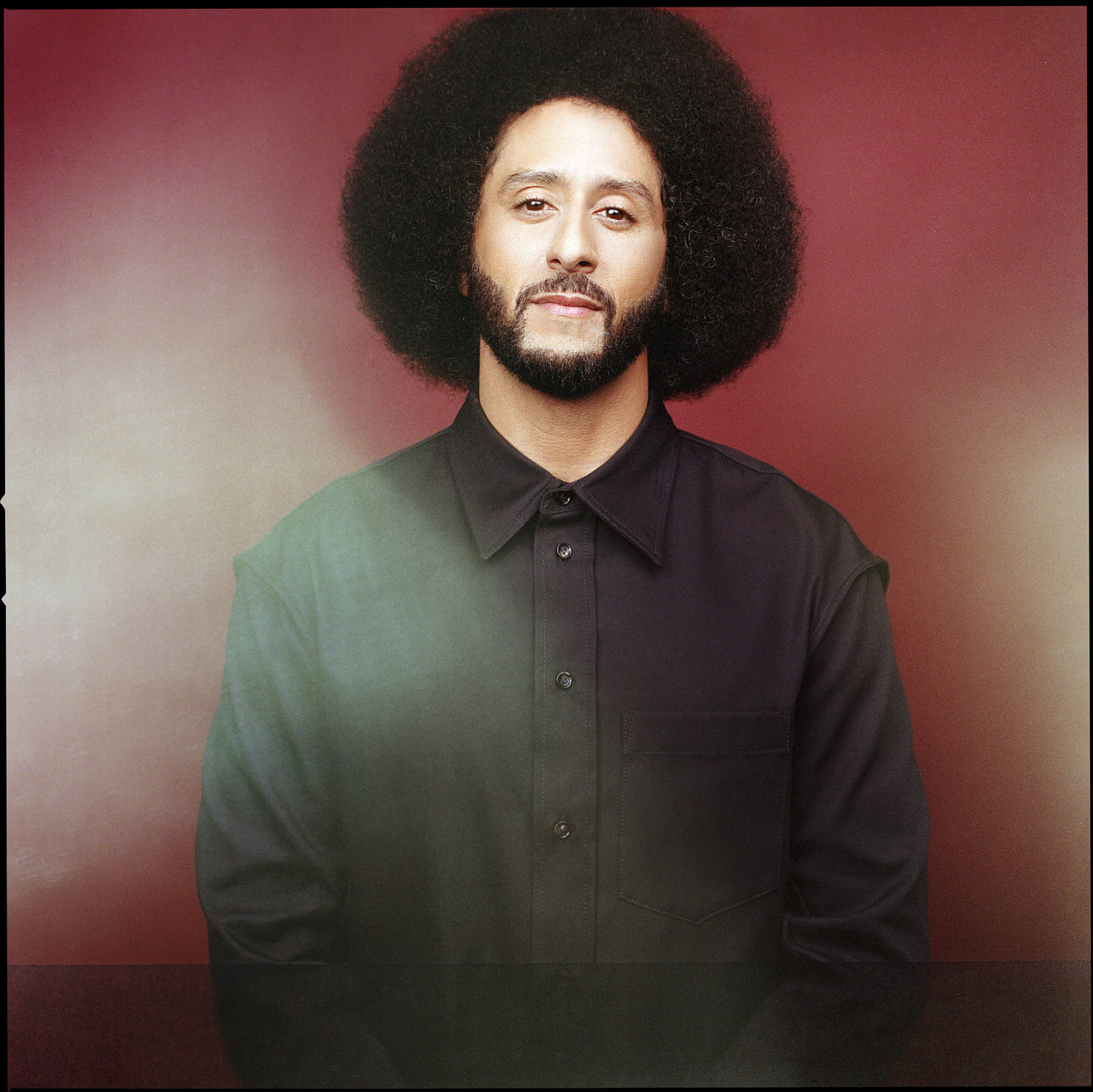
Colin Kaepernick still puts in a workout at 4:30 a.m. most days. His football life may be long over, but his life’s work is not. Ten years after taking a knee to stand against racism and police brutality at great cost to his career and finances, the former star quarterback is stepping back into the spotlight. His memoir, “The Perilous Fight,” comes out on Sept. 15. And in interviews with NBC News, his first time speaking in depth about his protest’s fallout in years, Kaepernick reveals the story
In an exclusive interview with NBC News, the former quarterback opens up about the NFL, racism, politics and the 10 years since he took a knee.
Colin Kaepernick still puts in a workout at 4:30 a.m. most days. His football life may be long over, but his life’s work is not.
Ten years after taking a knee to stand against racism and police brutality at great cost to his career and finances, the former star quarterback is stepping back into the spotlight.
His memoir, “ The Perilous Fight, ” comes out on Sept. 15. And in interviews with NBC News, his first time speaking in depth about his protest’s fallout in years, Kaepernick reveals the story behind how he came to take a knee in 2016, an act that made him both a hero and a pariah, and one of the most divisive figures in the country.
Kaepernick, 38, is now also a father of a 4-year-old girl. That, he says, helped him understand he has unfinished business in his life and cause. Being a dad “increases the responsibility and urgency of the work we’re doing,” he says. He doesn’t want his daughter — or anyone else — to think he stopped fighting or that the fight was not worth it. “I don’t want my community to watch me and have the takeaway be that if you fight for Black folks, it’s over for you,” he writes in his book.
More NBC News coverage of Colin Kaepernick
Much has shifted in American politics, culture, sports and policing since 2016. And much work still needs to be done, Kaepernick says, which is why he chose now to recount the decade-long odyssey that began with a quiet protest during the national anthem.
Though the years have provided perspective, Kaepernick says they haven’t dulled his displeasure with the NFL. The quarterback who once led the San Francisco 49ers on a Disney movie-esque run to the Super Bowl in 2012 says he hasn’t watched an NFL game since he was exiled from the league.
“I’m not gonna support an organization that one, is actively blackballing me, but two, has targeted my brothers who have been protesting as part of this as well,” Kaepernick says. “I watch college football.”
(NFL Commissioner Roger Goodell has said on multiple occasions he doesn’t believe Kaepernick was blackballed.)
On Sept. 1, 2016, Kaepernick and his San Francisco 49ers teammate Eric Reid kneeled during the national anthem before a preseason game. It was not the first time Kaepernick didn’t stand. His protest actually began a month earlier, on Aug. 14, when he sat on the bench during “The Star-Spangled Banner.”
The idea had simmered in the months prior to the season when, he writes in his memoir, he was recuperating from surgeries. He might not have taken a knee if he hadn’t injured it first.
The rehab gave him more free time than he ever had in his life. And in the midst of news of police violence, Kaepernick immersed himself in literature on Black liberation, reading books such as “The Autobiography of Malcolm X” and “Black Skin, White Masks” by Frantz Fanon.
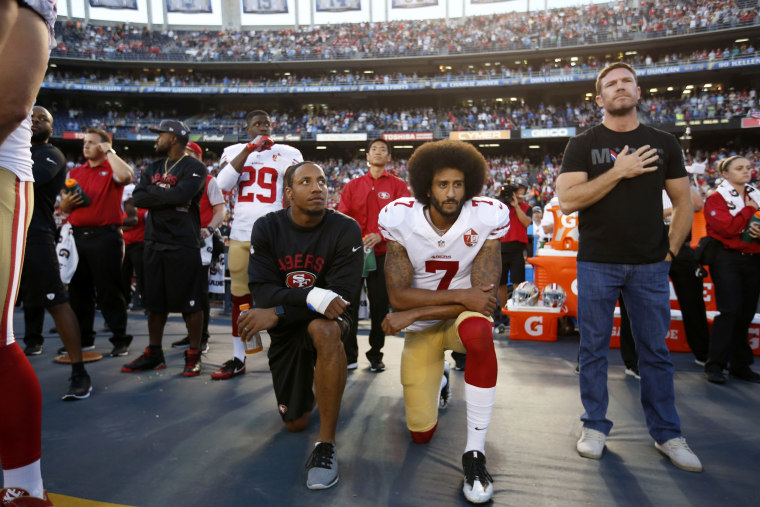
Kaepernick says he hadn’t planned the initial protest in mid-August until he heard the opening of the anthem and felt he couldn’t bring himself to stand. No one seemed to notice him sitting at first. It wasn’t until after the 49ers’ third preseason game that Kaepernick was finally asked why he sat out the anthem.
“I am not going to stand up to show pride in a flag for a country that oppresses Black people and people of color,” Kaepernick told NFL Network’s Steve Wyche. “To me, this is bigger than football and it would be selfish on my part to look the other way. There are bodies in the street and people getting paid leave and getting away with murder.”
Kaepernick was unprepared for the response, he writes in the book. After the game, he called his partner, Nessa, and mentioned the reporter’s question.
“Hmm. Well, what did you tell him?” she asked. “On a scale of 1 to 10, with 10 being the worst, how hard did you go?”
“I don’t know. Maybe a 4,” Kaepernick replied.
The backlash was immediate. Fans burned his jerseys . Current and former players said he disrespected the flag. Donald Trump, then a presidential candidate, said Kaepernick “should find a country that works better for him.”
“This is not a four, man,” Kaepernick recalls Nessa telling him when the news blew up.
Even though the story of the protest has been told countless times since 2016, Kaepernick set the record straight on one key detail: who came up with the idea to kneel in the first place.
Before the Sept. 1 game, Kaepernick was approached by Reid, who wanted to support the protest. It was Reid who suggested the idea to kneel, Kaepernick says. Not Army veteran Nate Boyer, as was widely reported at the time and since.
Boyer, a Green Beret and former Seattle Seahawk, had penned an open letter to Kaepernick in the Army Times, writing: “Even though my initial reaction to your protest was one of anger, I’m trying to listen to what you’re saying and why you’re doing it.”
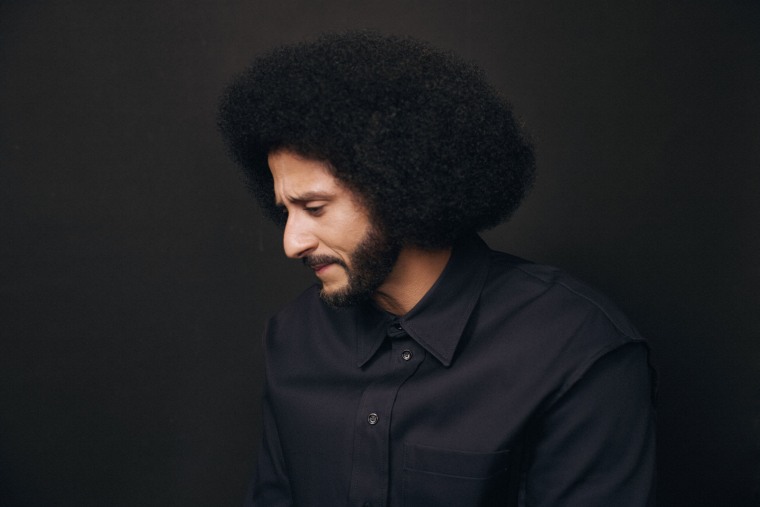
On the day of the game, Boyer met with Kaepernick and Reid and relayed stories about how veterans responded to his open letter. The conversation, Boyer says, then shifted to how the protest could be respectful of the military.
“I think it was Colin specifically that asked it. He said, ‘Well, do you think there’s a way that we could protest that’s not going to offend people in the military?’” Boyer recalls. “And I said, ‘No. No matter what, some people will be offended.’”
Boyer then told Kaepernick he believed sitting on the bench “wasn’t the most inspiring” and that the protest could be more effective if he was next to his teammates, perhaps bowing his head while standing.
“He said no immediately, and I respect that,” Boyer says, and the conversation then logically turned to taking a knee. He doesn’t dispute that the two players may have come to that conclusion before meeting him.
“I remember them nodding their heads and looking at each other,” Boyer says. “Maybe Eric did suggest that, and that’s kind of what that look was.”
After the Sept. 1 game, Reid told reporters “[Boyer] agreed with” the idea for them to kneel. Kaepernick says the notion it was Boyer’s idea appealed to the media because the backing of a white military veteran made the protest seem more “palatable.”
As for why Kaepernick didn’t clear up the misconception at the time, he says he and Reid wanted to focus on their message, not get caught “in a personal back-and-forth over whose idea it was.”
Though Kaepernick and Reid ultimately switched from sitting to kneeling, the protest continued to stoke controversy. Then-Supreme Court Justice Ruth Bader Ginsburg called it “dumb and disrespectful.” Even his parents initially said it was “disgraceful.”
Along with the backlash, there was also a groundswell of support from the people he was protesting for, as well as athletes from other sports who joined the effort.
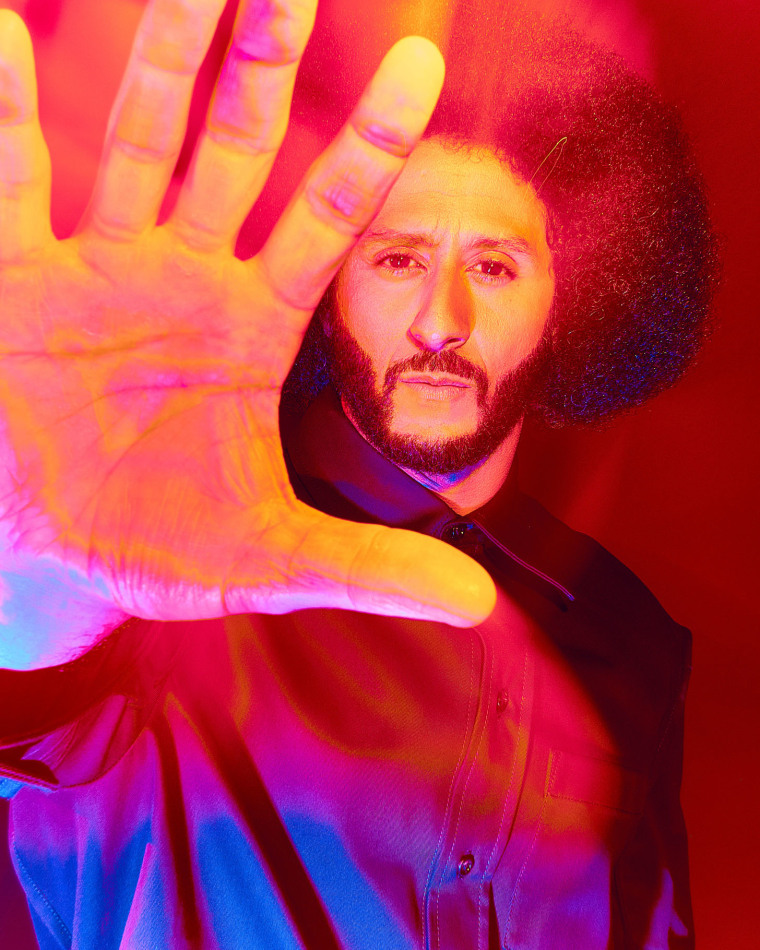
“Oftentimes, we hear a lot of the side of the pushback, but I think what’s disconnected from a lot of that is actually the response directly in communities that we were seeing, and the momentum and the excitement around the effort of no, we’re actually going to change this,” Kaepernick told NBC News during a recent sit-down.
Those who condemned his protest chose to focus on his kneeling during the anthem — as opposed to the police violence that drove him to do it.
“The critique of the method is a way to distract from the actual message,” Kaepernick says. “The conversation that was being had is taking a knee is more problematic than Black people being killed. Just simply put, ‘Hey, we need to talk about taking a knee. This is urgent. We need to resolve this.’ But another Black person gets killed, and it’s like, ‘Oh well, that’s kind of normal.’”
In most of the coverage, Kaepernick’s assertion rang true. The conversation stuck to the red, white and blue, and not the disproportionate number of Black Americans killed by police that the quarterback tried to bring attention to.
As Kaepernick tried desperately to keep his protest on message, the rest of his life was picked apart, from his romantic partner to his clothing choices. When Kaepernick revealed he didn’t vote in the 2016 election, ESPN’s Stephen A. Smith called him “irrelevant” and a “flaming hypocrite.”
Reaction from players was also mixed. While Reid, Kaepernick and five other players kneeled in Week 1 of the 2016 season, many who said they were sympathetic to Kaepernick’s cause disagreed with his decision not to stand for the anthem.
There was a group chat with roughly 100 players from all 32 teams that often grew contentious. In his memoir, Kaepernick writes of a text exchange in September 2016 in which then-Seahawks cornerback Richard Sherman told him he shouldn’t tell players how to protest. (Through his podcast producer, Sherman declined to comment.)
The tension in the group chat was palpable, one former player in the chat who spoke on condition of anonymity tells NBC News. Some suggested Kaepernick was only kneeling for personal gain, even though by then it was clear he’d suffer a professional blow. In 2017, he became a free agent after the 49ers told him they would release him. The summer passed, and beyond a meeting with the Seattle Seahawks, no teams scheduled workouts.
“I thoroughly enjoyed meeting with Colin, we just didn’t get to the next level,” then-Seahawks coach Pete Carroll told NBC News in an email about the meeting. Kaepernick says his meeting with Carroll and general manager John Schneider focused on his political beliefs. (The Seahawks did not respond to a request for comment.)
“Which, in pretty much any environment outside the NFL, would be immediate litigation,” Kaepernick says.
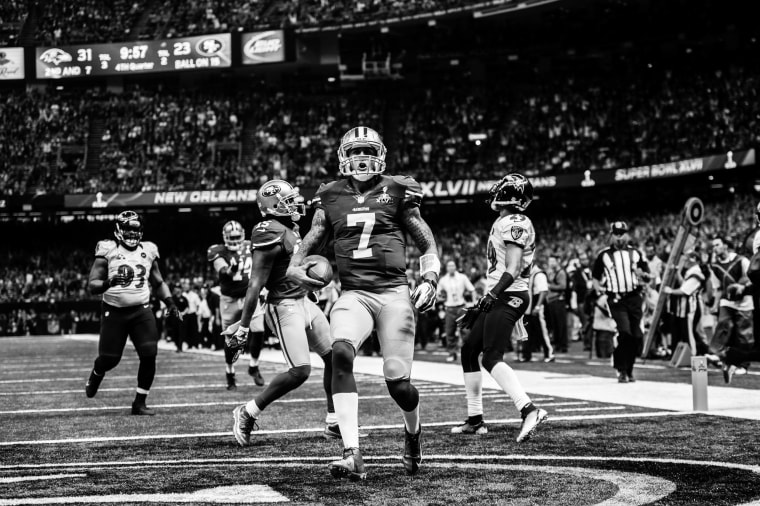
The same league that let Michael Vick play again after he went to prison for dogfighting, and allowed Deshaun Watson to sign a contract for $230 million following accusations of sexual misconduct by more than 20 women (Watson has maintained his innocence), was keeping Kaepernick out.
“There’s not a definitive moment that I would point to,” Kaepernick says about when he realized what was happening.
“Coming on the back of going to a Super Bowl, going to an NFC Championship, setting records, and not a single team would bring me in, even for a workout?” Kaepernick says.
Coverage from 2 sources
Coverage by lean
- Unknown2
Comments
Sign in to join the discussion.
Sign in with SpryLogin