
Avoid making plantar fasciitis pain worse with these sneakers
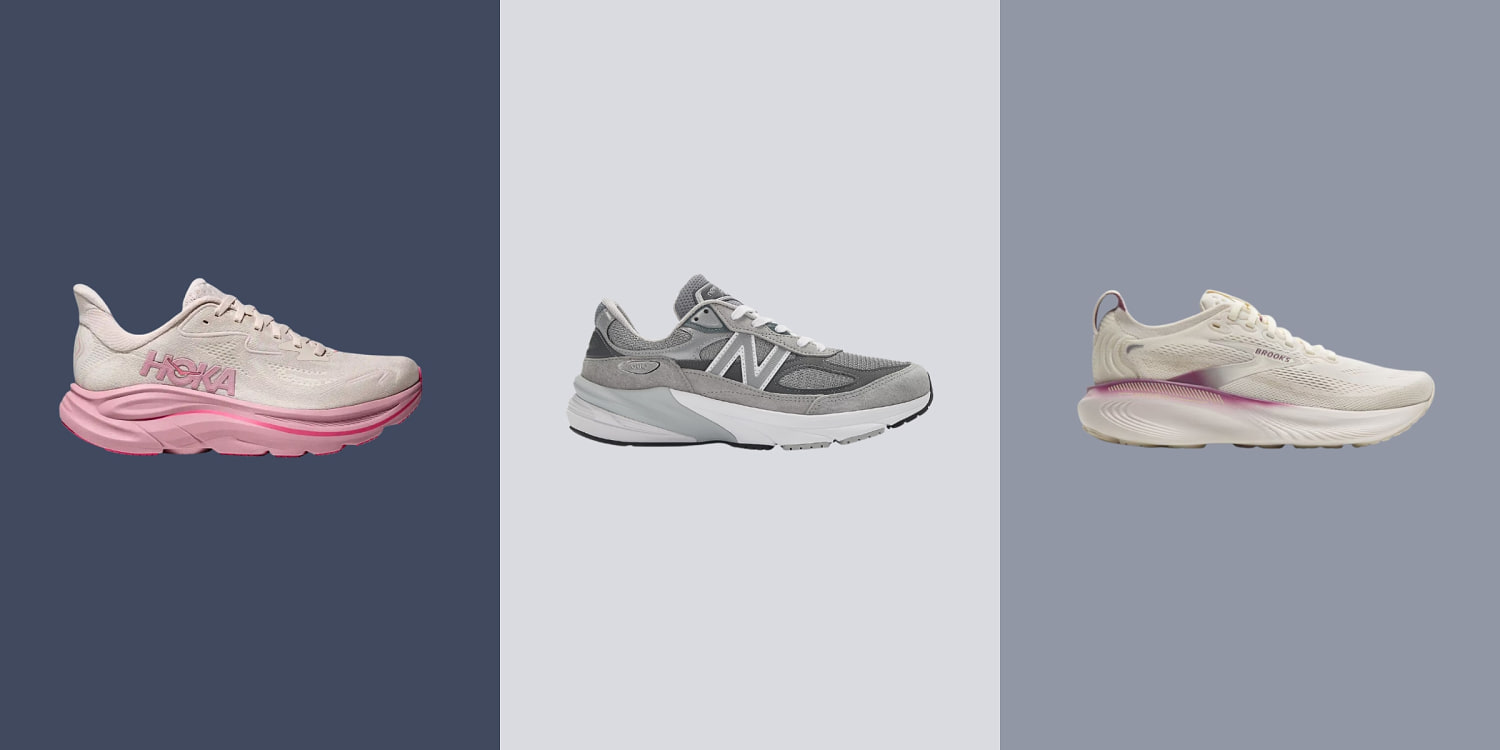
To avoid further aggravating plantar fasciitis, look for sneakers with arch support, shock absorption and flexibility balanced with firmness, regardless of whether you’re wearing them to exercise or for daily activities.
NBC Selected independently determines what we cover and recommend. When you click on or buy through our links, we earn a commission. Learn more .
One of the first things you should do if you’re diagnosed with plantar fasciitis is closely examine your footwear, says Dr. Priya Parthasarathy , a podiatrist at the Foot & Ankle Specialists of the Mid-Atlantic. Wearing supportive, well-structured shoes is part of treating the condition, which causes pain in the plantar fascia, a ligament that runs along the bottom of the foot to support it — in fact, the wrong shoes can make you even more uncomfortable and extend your recovery timeline. If you’re specifically interested in the best sneakers for plantar fasciitis, there’s a few key features to look for, according to podiatrists I talked to: arch support , a deep heel cup, a firm heel counter, a thick sole, a rigid yet semi-flexible feel, a stable base and removable insoles.
Below, I break down how to find a pair of sneakers that make your feet more comfortable rather than aggravate plantar fasciitis. Podiatrists also share their top picks from brands like Hoka , Brooks , New Balance and Skechers , and explain how footwear fits into a larger treatment plan.
Selected. Our top picks
Want more from NBC Selected? Sign up for our newsletter, The Selection, and shop smarter.
What are the best sneakers for plantar fasciitis?
There isn’t one “best overall” sneaker for plantar fasciitis, says Parthasarathy. Everyone’s feet are different, so while certain features make a sneaker ideal for those with the condition, you also need to consider factors like arch type , foot width and general fit and feel preferences. With that in mind, I curated a list of podiatrist-recommended sneakers for plantar fasciitis to browse through, including options for everyday wear and exercise. Each shoe meets the criteria experts say is important to look for while shopping, and is available in men’s and women’s sizes. For more personalized recommendations, talk to your podiatrist.
I noted which sneakers on this list have the American Podiatric Medical Association’s Seal of Acceptance , something shoes earn if they meet specific criteria regarding foot health. Brands voluntarily submit their shoes to the APMA to evaluate — if a pair doesn’t have the seal, it may just mean the APMA hasn’t reviewed them yet, so still consider them if they align with your needs. I also labeled which type of arch support each shoe has: neutral for neutral arches, high for high arches and stability for flat arches.
Best for neutral arches
Brooks Glycerin 23
I’ve tested almost every pair of Brooks sneakers, and the Glycerins have always been one of my top three favorites for easy runs , walking and daily commuting around New York City. Parthasarathy recommends them for people who have plantar fasciitis and neutral arches. They’re comfortable regardless of how long I wear them for and what I’m doing, and their wide base makes me feel extra stable as I move. Brooks also strategically put the most foam in the heel and forefoot (the area under the ball of your foot) — as you land on your heel, the foam absorbs shock, and as you take off, the foam gives you a boost so you spring off your toes. I’m also a fan of the stretchy heel loop and fabric around the collar of the shoes, which makes it easy to pull on and off my feet.
Best for high arches
Hoka Bondi 9
The Hoka Bondi 9 has a pronounced rocker-shaped outsole, which takes stress off the plantar fascia while stretching it, says Pourziaee. It also rolls you forward a bit, causing you to use less energy as you move through strides. The Bondi is Hoka’s plushest, most cushioned everyday road running and walking sneaker, giving it tons of shock absorption, which is especially important if you have high arches, and a soft, bouncy feel. There’s such a thick layer of cushioning that it lifts you off the ground by a few inches, which may make some people feel unstable, says Parthasarathy. She cautions against wearing the Bondis if you have balance issues, and doesn’t recommend them for older adults. Additionally, these sneakers are designed with Hoka’s Active Foot Frame, which some people call a “bucket seat” — your foot sits deep in the midsole (the middle part of the shoe) instead of on top of it, adding stability and preventing the heel from moving around a lot, key for those with plantar fasciitis.
Best for flat feet (low arches)
Brooks Adrenaline GTS 25
If you have plantar fasciitis and flat feet that cause you to overpronate, Pourziaee recommends Brooks’ Adrenaline GTS sneakers. They have the brand’s stability system built-in, hence the “GTS” (a.k.a. Go-To-Support) in the shoe’s name. It’s composed of GuideRails, which are J-shaped strips of stiff material in the midsole that wrap around your heel and toward your arch, essentially acting as bumpers that prevent your ankles from rolling inward too much so you maintain proper alignment. Pourziaee says he typically suggests orthotics for patients with flat feet, but if they don’t want to use them, these sneakers are a good alternative since they’re specifically structured to reduce overpronation. The Adrenaline GTS are a road running and walking shoe, and, like the Glycerins, the soft cushioning is concentrated in the heel and forefoot.
Best slip-ins
Skechers Aero Burst
When I talked to Parthasarathy, she was wearing the Skechers Aero Burst sneakers, which she finds comfortable to wear when she’s on her feet seeing patients all day, as well as when she’s walking and running. The shoes are specifically designed to be easy to slip your feet into, preventing you from having to bend down to get them on and off. They have a thick layer of responsive foam, as well as a very firm heel counter and the brand’s HeelPillow, an extra piece of padding that hugs the back of your heel to make feet feel secure and locked in while you move. There’s also a stabilizing H-shaped, carbon-infused plate in the Aero Burst’s midsole.
Best for walking
Hoka Clifton 10
“The Hoka Clifton is a nice, neutral shoe that works well for a lot of different foot types,” says Parthasarathy. I’ve worn a pair for about a year, and as someone who prefers a highly cushioned sneaker but doesn’t want to feel like I’m sinking into too-soft foam, they’re exactly what I look for. The foam feels balanced (it lands somewhere between firm and squishy) and it’s lightweight, so I never feel like I’m dragging my feet. And while the rocker-shaped outsole is less pronounced compared to Hoka’s Bondi sneaker, it still rolls me forward enough to help me keep my momentum up. I use the Cliftons, which have Hoka’s Active Foot Frame, as walking and commuting shoes, but Hoka says they’re designed for everyday road runs, too.
Best neutral running shoe
New Balance Fresh Foam X 880v15
The New Balance Fresh Foam X 880v15 , which comes recommended by Parthasarathy, is a well-cushioned, basic, no frills running sneaker that I also enjoy walking in. It’s designed to keep runners’ feet comfortable, not impact how they move, so they’re best for neutral arches. The sneakers’ foam is on the softer side, but it has some bounce to it, so I never feel like I’m sinking into the midsole.
Best stabilizing running shoe
Asics Gel Kayano 32
Pourziaee recommends the Asics Gel Kayano 32 for runners with plantar fasciitis, and since they’re designed with stabilizing features, they’re especially ideal for those with flat feet, although the brand says they’re great for neutral arches, too. The sneakers have a thick layer of cushioning and a specialized gel material in the heel, giving them maximum shock absorption — that’s something you need to protect your body from miles of repetitive pounding motion. The Kayanos also have a wide base to reduce excess foot movement, which the brand says can cause injury, especially as your legs get tired across long distances. There’s a heel loop to help you slide the sneakers on and off, and reflective details to make your feet more visible in low light, like when you’re jogging around sunrise and sunset.
Best for everyday wear
New Balance 990v6
The New Balance 990v6 is one of Pourziaee’s top picks for everyday wear, so you can throw them on while you’re running errands, going to work or doing other activities and feel confident that they won’t bother your plantar fasciitis. He says the sneaker’s extra firm heel counter is a standout feature, along with its overall sturdy structure and moderately cushioned midsole. There’s also reflective accents on the shoe, which has suede accents to give it some style. While the women’s version of the 990v6 comes in four widths, which is typical for New Balance sneakers, the men’s version comes in six widths: standard, wide, extra wide, extra extra wide, narrow and extra narrow.
How I picked the best sneakers for plantar fasciitis
To pick the best sneakers for plantar fasciitis, I asked podiatrists to share their top picks, all of which are ideal for those with the condition because they have the essential features I outlined below.
Before you buy a pair of sneakers, podiatrists also recommend thinking about what activities you want to do while wearing them, like running, walking and training. It’s essential to wear the right shoe for the right activity — if you don’t, your feet won’t be properly supported, which can aggravate conditions like plantar fasciitis.
Frequently asked questions
You should replace your sneakers every 300 to 500 miles, says Parthasarathy. Even if they still look like they’re in good condition, they get less supportive over time, so don’t wait until they’re so beat up that they develop holes or you can fold them in half. Replacing your sneakers on time is especially important if you’re dealing with a condition like plantar fasciitis, which is easily aggravated by unsupportive footwear.
Beyond wearing supportive footwear (including slippers at home so you don’t go barefoot), treating a typical case of plantar fasciitis involves stretching, icing and massaging the feet; wearing a night slip while sleeping; and adding inserts or orthotics to footwear, says Pourziaee. Before trying any treatments for persistent plantar fascia pain, consult your podiatrist so they can rule out other issues, help you create a treatment plan and monitor your progress over time.
You should avoid flimsy, unsupportive shoes, as well as flats, flip flops, sandals and very high heels, if you have plantar fasciitis, says Pourziaee. These types of footwear often don’t have a sufficient amount of arch support, cushioning and stability, so they can easily exacerbate plantar fasciitis pain.
Meet our podiatry experts
At NBC Selected, we work with experts who have specialized knowledge and authority based on relevant training and/or experience. We also ensure that all expert advice and recommendations are made independently and with no undisclosed financial conflicts of interest.
Why trust NBC Selected?
I’m a reporter at NBC Selected who has covered fitness apparel and footwear for over five years, writing about topics like women’s walking shoes, women’s running shoes, training shoes , carbon-plated running shoes and running shoes with arch support. For this story, I interviewed two experts about sneakers for plantar fasciitis and rounded up their favorite options. I also test dozens of pairs of sneakers a year across brands to stay updated on the newest models.
Catch up on NBC Selected’s in-depth coverage of tech and tools , wellness and more, and follow us on Facebook , Instagram , Twitter and TikTok to stay up to date.
Storm season is here — grab these Crocs rain boots for 25% off
Coverage from 1 source
Coverage by lean
- Unknown1
Comments
Sign in to join the discussion.
Sign in with SpryLogin