
101+ Latino-owned brands to shop year round
Latino-owned businesses are the fastest-growing segment of small businesses in the country — we spoke to dozens of business owners to learn about their experiences.
NBC Selected independently determines what we cover and recommend. When you click on or buy through our links, we earn a commission. Learn more .
September through November is the busiest time of year for Melissa Gallardo’s candle brand Valorosa . Hispanic Heritage Month is from Sept. 15 to Oct. 15, and Dia de los Muertos — Day of the Dead — is traditionally celebrated on Nov. 1 and 2, so interest in Latino culture skyrockets during these months, as does the traffic to Gallardo’s site. With her candles encompassing nostalgic Latino scents like cafecito con leche, elote and lavender fabulosa, Gallardo’s mission is to celebrate Latino culture and put that representation on shelves.
Latino-owned businesses are the fastest-growing segment of small businesses in the U.S., with over 5 million businesses owned by Latino/a entrepreneurs in the country, according to the Stanford Latino Entrepreneurship Initiative (SLEI). Though Latino business owners have solidified their role as strong contributors to American economic activity, they face a string of unique challenges compared to white, non-Latino business owners.
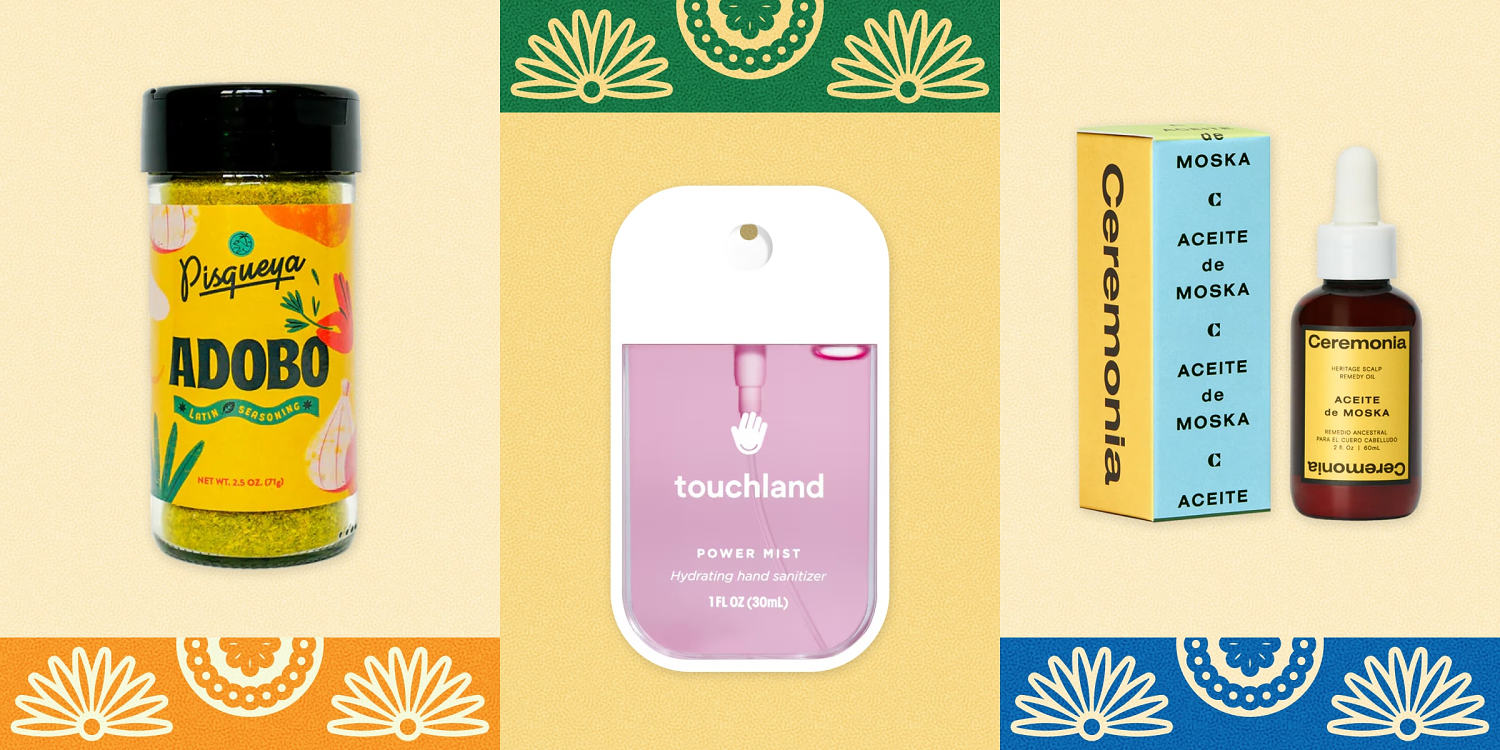
“On one hand, the awareness around multiculturalism in all aspects of life — fashion, culture and food — is higher than ever,” says Maritza Abreu, founder and CEO of food brand Pisqueya . On the other hand, the enthusiasm for Latino culture hasn’t quite translated to more representation in other key markets, she says. That, paired with the lack of access to capital and difficulties staying true to core cultural values while maintaining a strong presence against larger competitors, makes being a Latino business owner both gratifying and challenging, says Abreu.
Receiving support from shoppers is what allows Latino-owned businesses to continue thriving, and despite Hispanic Heritage Month amplifying these entrepreneurs’ voices, it shouldn’t just be one month out of the year, says Gallardo. “The contributions of the Hispanic and Latino community need to be celebrated year-round. I’m a business that celebrates Latinidad year-round,” she says.
I connected with over 100 Latino-owned businesses, many of which are inspired by their heritage and cultivate a sense of cultural appreciation. The list of Latino-owned businesses below gives you a taste of the brands represented in sectors like skin care, home and kitchen and food. I verified that each company featured below is 51% owned by persons of Latino origin, akin to the way the Census defines Black-owned , AAPI-owned and women-owned businesses .
Latino-owned beauty and skin care brands
Ceremonia
Inspired by the beauty rituals she grew up with, Babba Rivera founded Ceremonia to create more Latinx representation in hair care. “Despite us accounting for almost 20% of the population and being the highest spenders in many categories, hair being one of them, I kept asking myself, ‘Where are the brands that authentically speak to the new generation of Latinx folks, and more importantly, where are the category-leading brands founded by Latinx entrepreneurs?’” says Rivera.
The Latinx community’s influence is present in all aspects of Ceremonia’s business model, including Ceremonia’s natural ingredients sourced from Latin countries, photographers, models and even the materials it uses in its accessories, says Rivera. The brand is thriving as a result: Ceremonia opened its first brick-and-mortar store in New York City last year, and became the first Latina-founded hair brand sold at Sephora.
Daybird
Daybird founder and CEO Whitney McElwain was frustrated by beauty brands selling the idea that in order to look and feel your best, you need to cover up your skin with layers and layers of products. Daybird started as a way to dismantle that standard with people of color at the forefront. “We look to create products with women of color in mind and create space for these same women on the shelf and in the media,” says McElwain. Its tinted skin care is what the brand calls a 4-in-1 multi-tasker: a serum, moisturizer and sunscreen all in one.
While she’s proud to be a Latina entrepreneur, McElwain says it’s not easy to get small businesses off the ground. “Latinas less than half a percent of venture funding and this is deeply apparent in every investor conversation we have,” she says. This makes Hispanic Heritage Month even more meaningful to her. “For this one time a year, I truly feel seen.”
De La Heart
Gigi Vogel founded De La Heart after discovering the power of lymphatic drainage, which is a gentle massage that helps drain lymph nodes and targets the lymphatic system just underneath the skin. In 2019, Vogel launched The Body Tool and four body oils to help bring that ritual into people’s homes. Now, the brand has dozens of products across the beauty and wellness space, including dry brushes, body balms and butters, face and body sculpting tools, apparel and more.
Kitsch
Colombian-American Cassandra Morales Thurswell built hair and wellness brand Kitsch around an item most people use daily and often don’t think twice about: a simple handmade elastic hair tie. “That little accessory’s success showed me that hair care was so much more than shampoo and conditioner and inspired me to keep going,” says Thurswell. Kitsch has skin care, body care, sleep and shower essentials that are free of harsh chemicals, cruelty free and come in 100% recyclable packaging, according to the brand.
Ocoa Beauty
After years of using heat and chemicals on their curls and being told they had “pelo malo” (“bad hair”), Dominican Republic-born sisters Cory and Nicol Varona finally embraced their natural hair in 2017. Their curly hair journey involved learning how to treat and care for their curls, but they found most products out there were greasy, heavy and didn’t quite work — so, the sisters launched Ocoa (which is from the indigenous Taino language meaning “a place between mountains) in 2021 as a solution. The brand currently offers a four-step system for healthy curls: shampoo, conditioner, a curl-defining styling gel and a hydrating curl cream.
Reina Rebelde
While growing up in Mexico, Regina Merson’s makeup obsession started by watching her mom get ready and watching the telenovela “Rosa Salvaje.” Merson created Reina Rebelde as a way to reflect her identity as a Mexican woman living in the U.S. with bold, diverse and unpredictable shades and themes. You’ll find a range of makeup products inspired by Merson’s personality and fierceness, including contour kits, eyeshadow pallets, bold lipsticks and liquid eyeliners.
More beauty and skin care brands to shop
What to shop
Daybird 4-in-1 Serum Skin Tint
Ceremonia Aceite de Moska
Kitsch Satin Pillowcase
Reina Rebelde Sol Highlighter
Ocoa Beauty Hydrating Curl Cream
De La Heart The Body Tool
Beautyblender Original Makeup Sponge
Rare Beauty Liquid Touch Brightening Concealer
Latino-owned clothing and accessories brands
Eberjey
Ali Mejia and Mariela Rovito cofounded Eberjey in 1996, a time during which the intimates market was very one-dimensional with designs made predominantly for the male gaze, according to Rovito. “There was a void for lingerie and sleepwear that are both sensual and comfortable,” she says. In addition to underwear and lingerie, the brand offers women’s and men’s pajamas, swimwear, loungewear and more.
Ingrid & Isabel
While expecting her first child in 2003, Ingrid Ocaña Carney, the Mexican-American founder of maternity brand Ingrid & Isabel, struggled finding a pair of pants that actually fit. That’s why she invented the Bellaband, a stretchy fabric that lets moms wear their pre-pregnancy jeans. The success of the Bellaband ultimately led to the creation of Ingrid & Isabel.
More than 20 years later, Ingrid & Isabel is the largest maternity brand in the U.S., creating maternity fashion and postpartum essentials to support women from the moment their pants stop fitting through the third trimester and beyond. This year, the brand launched its new affordable, Walmart-exclusive line, Ingrid & Isabel For Every Belly .
Little Words Project
Adriana Carrig created Little Words Project as a way to create wearable affirmations and reminders of one’s self-worth and self-love in a classic friendship bracelet style. On the brand’s site, you’ll find pre-made bracelets with positive phrases like “Keep Going” and “You Got This,” and you can make your own bracelet with a custom saying.
Min & Mon
When Andrés Felipe Quintero and his wife Carolina Llano moved to the U.S. from Colombia, Llano wasn’t allowed to work due to her visa. So, she developed a fresh concept for unique whimsical and playful handbag designs, which became Min & Mon in 2014. “From that idea stemmed a dear desire to preserve the multigenerational leather tradition in Colombia that was disappearing for cheaper wages due to fast fashion,” says Quintero. Min & Mon offers a range of wallets , bags and small accessories .
Nue
After years of working in fashion, Stephanie Montes knew the secret to going braless under backless styles and plunging necklines was duct tape — but not only did it not look or feel great underneath clothes, it was a pain to remove. She created Nue’s breast tape and nipple covers to solve that problem for women of all shapes, sizes and skin tones. All of the brand’s tape — which comes in a 16.5-foot roll — is stretchy, hypoallergenic and available in four shades.
Saalt
Cherie Hoeger created period care brand Saalt with a mission to provide reusable period care products to those experiencing period poverty, fueled by her family in Venezuela not having easy access to period products while the country grappled with political instability. Six years later, Saalt has donated over 104,000 products that have reached more than 65,000 women and girls in need in 50 countries as part of its 2% give-back mission , which commits 2% of Saalt’s revenue to donating period care to regions with the most need, according to the brand. The brand has a variety of reusable period products, including menstrual cups and discs and leak-proof underwear .
Springrose
Shopping for an adaptive bra that her grandmother, who had chronic pain and arthritis, could easily put on by herself made Nicole Cuervo realize how few functional, stylish and size-inclusive options there were on the market. She began talking to women with a range of injuries, illnesses and disabilities, all of whom said they experienced the same issue her grandmother did. This inspired Cuervo to start Springrose, named after Grandma Rosa, and create the brand’s front-closure bras.
Cuervo collaborated with rehabilitation centers to develop and test iterations of the bra before landing on its final design. “It means a lot to me that I get to work on a business that helps reduce pain and restore dignity and independence, while also creating jobs and opportunity for my community,” says Cuervo, noting that 33% of those who work with Springrose are Latinx.
More clothing and accessories brands to shop
Coverage from 1 source
Coverage by lean
- Unknown1
Comments
Sign in to join the discussion.
Sign in with SpryLogin