
Interactive graphic: Road to a House majority
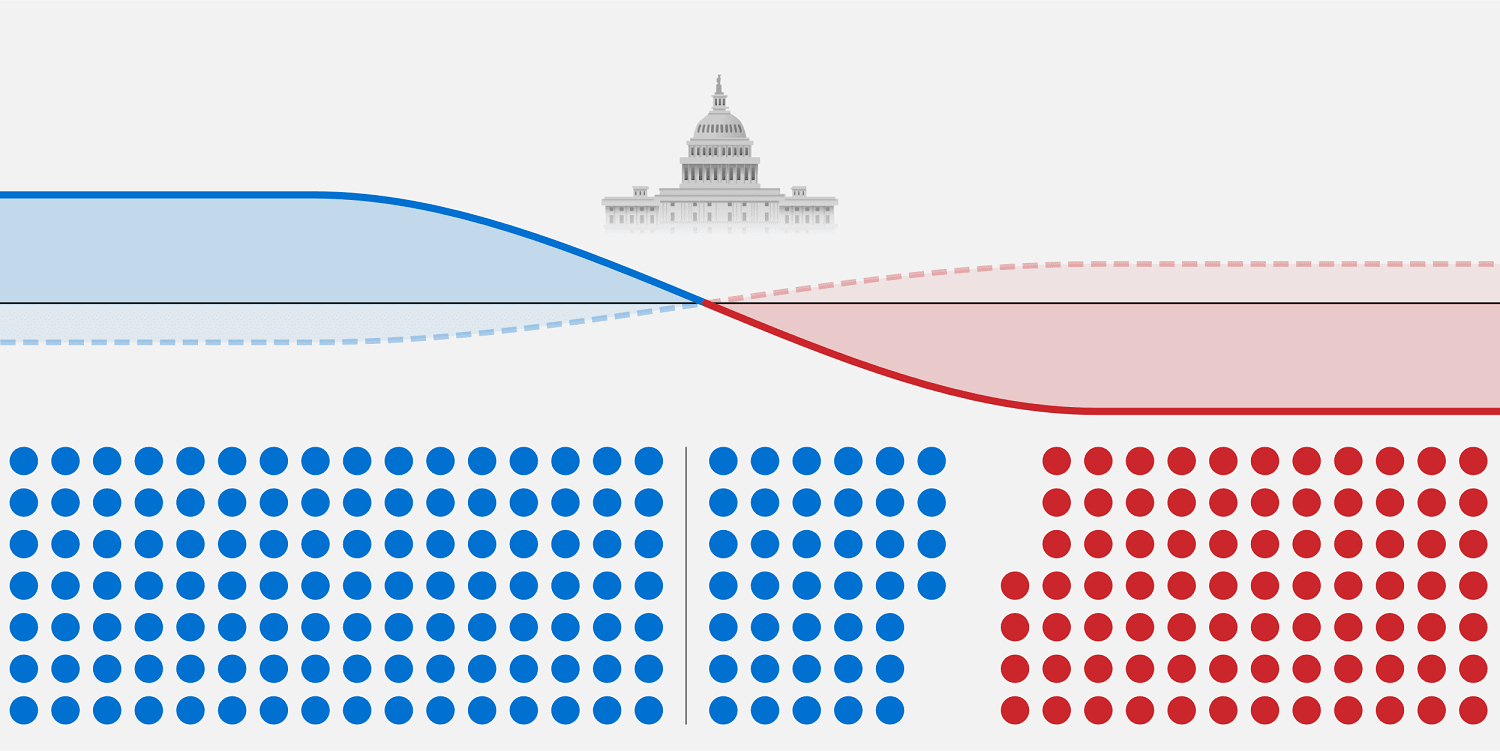
Congressional Democrats could take control of the House or the Republicans could hang on.
Democrats enter the final sprint to Election Day as the clear favorites, polls show, though Republicans have money and geography on their side.
Currently, the Democrats hold 214 seats in the House, compared with 219 held by the Republicans, with two vacant seats. Democrats need to net just three seats to gain the majority; the question then becomes, how big is that majority?
The chances that Republicans maintain a majority control appear slim, but that outcome is still possible. The House battleground runs primarily through states and districts that President Donald Trump won in 2024, and Republicans attempted to shore up their structural advantage last year through redistricting. Those two factors could prevent Democrats from fully capitalizing on the increasingly favorable political environment even if they flip the chamber.
Explore the interactive below to see how Democrats could build a big majority, or Republicans could hang on.
The exact number of seats won by the Democrats and Republicans will be mostly determined by the size of the national partisan shift toward or against the Democrats. If the vote margin in all 435 House districts shifts 4.6 percentage points toward the Democrats from 2024, the party could win 218 seats — a one-seat majority.
For Subscribers
FOR SUBSCRIBERS ‘Practice-changing’ new lung cancer immunotherapy improves survival
FOR SUBSCRIBERS Vivek Ramaswamy campaign switches to shorter version of attack ad featuring Amy Acton’s estranged mother
FOR SUBSCRIBERS She had five siblings, but only she survived childhood with her father
FOR SUBSCRIBERS AI is helping cyber defenders — and hackers — find vulnerabilities at a dizzying pace
FOR SUBSCRIBERS Democrats see an opening in secretary of state races in red terrain
FOR SUBSCRIBERS Records offer a picture of the Oregon school shooter’s tumultuous home life
FOR SUBSCRIBERS Everything was going great — and then he got caught in Lori Vallow Daybell’s crosshairs
FOR SUBSCRIBERS DOJ’s election lawsuits are on shaky legal ground, experts say
FOR SUBSCRIBERS Goldman Sachs CEO David Solomon is optimistic about AI. Most of America disagrees.
FOR SUBSCRIBERS MAHA votes may be up for grabs
FOR SUBSCRIBERS More than 500 ads about Jeffrey Epstein and pedophiles have run this election cycle
FOR SUBSCRIBERS Vivek Ramaswamy supporters criticize his controversial ad
FOR SUBSCRIBERS The FDA says there’s no estrogen patch shortage. Women are struggling to fill prescriptions.
FOR SUBSCRIBERS Netflix bets on ‘La Bola Negra’ for best picture: On the Lot
FOR SUBSCRIBERS Six years and more than a thousand artists: Bringing ‘Wildwood’ to life without AI
A shift smaller than 4.6 points would translate into the Republicans maintaining control of the House. For the Democrats to command a majority at least as large as the one they won in the 2018 midterms — 235 seats — the national shift toward the Democrats would have to be just over 10 percentage points. Of course, national trends don’t mean every district shifts exactly the same amount. Some districts will have a larger shift than the national average and others will have a smaller one. Still, the national trends will largely drive where the race is going on election night.
Coverage from 1 source
Coverage by lean
- Unknown1
Comments
Sign in to join the discussion.
Sign in with SpryLogin