
FDR made it a blue bastion – now it’s Trump’s stronghold in California. Is it forever lost?
A crucial election was approaching and the country was desperate. Despite promises that economic conditions were improving, nearly a quarter of the US was out of work as voters headed to the polls in 1932. It was the darkest time since the civil war, a period so dire that in California’s capital people fought each other for work. In early 1931, a crowd of 200 men scuffled over a handful of temporary jobs moving back-breaking loads of granite, the Sacramento Bee reported. That same newspaper urge
Shasta has embraced the Maga movement with gusto – can Democrats ever win back the rural, working-class voters they once relied upon?
A crucial election was approaching and the country was desperate. Despite promises that economic conditions were improving, nearly a quarter of the US was out of work as voters headed to the polls in 1932.
It was the darkest time since the civil war, a period so dire that in California’s capital people fought each other for work. In early 1931, a crowd of 200 men scuffled over a handful of temporary jobs moving back-breaking loads of granite, the Sacramento Bee reported.
That same newspaper urged its readers to find odd jobs to save fellow citizens from hunger and homelessness. Those who had already lost shelter set up along the banks of the Sacramento River, as unhoused people would do decades later , and were, in some cases, near starvation, according to the Bee.
The situation was often even worse in the remote and rural communities further up north, where opportunities were fewer and relief was slower. In Shasta county, which stretches from the northernmost reaches of the Central Valley to the state’s dense forests, residents were struggling.
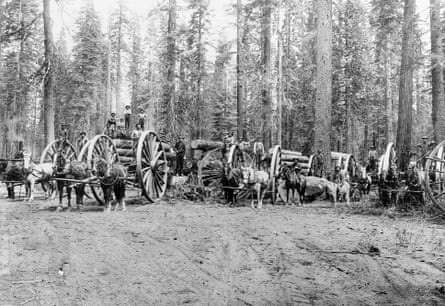
Shasta had been founded in 1850, as hundreds of thousands flocked to California in search of gold. The region became a productive center for gold mining, with newcomers scouring creeks and boring through mountains in search of the precious metal. It was a place of opportunity, a soon to be railroad hub that offered jobs in copper mining, agriculture and the timber industries.
In one mountain town, a group of jobless men were accused of setting a blaze with the aim of being hired to extinguish it.
Desperate people returned to the green hills that once yielded fortunes, hoping to find a bit of gold again. “Not getting rich, but I dug out $18.90 last month,” one young man told a reporter in 1931. “I eat, and that beats being jobless and hungry.”
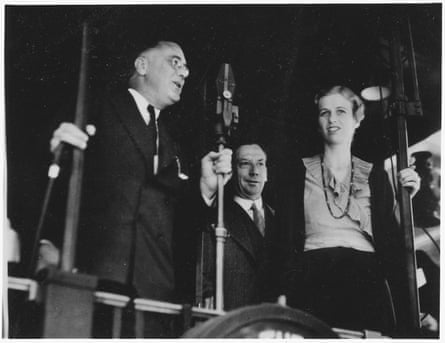
Franklin Delano Roosevelt promised hope and help. He traveled to 41 states during his campaign, making a point to visit small towns and rural areas. When he stopped in Redding, the Shasta county seat, in September 1932, businesses closed and classes ended early so that everyone could see the New York governor’s remarks.
“I am not making this trip a political one. I am making it to learn the conditions and needs of every section of the United States,” he told a crowd of several thousand from the back of a train. “We are not making this fight against the Republican party but against Republican leadership which has brought the country to its present condition.”
His message resonated. Despite Republican insistence that the party would carry California, the state went, as one newspaper declared, “Democratic and progressive with a vengeance”. That was especially true in Shasta, where just over 72% of voters backed Roosevelt.
Nearly a century later, it’s an election result that is difficult to imagine. Shasta is the de facto Maga capital of California, and a center of the US election denial movement. Roughly two-thirds of voters supported Donald Trump in 2016, 2020 and 2024. They took his political philosophy and ran with it, electing officials who promoted falsehoods about stolen elections and frequently clashed with the state.
During the pandemic, the area drew national attention for its hostility to Covid restrictions. The years that followed brought more turmoil that touched all corners of public life, documented in headline after headline – a journalist assaulted while covering a meeting of local conservative groups, a protester who faced jail time for holding a sign calling for the resignation of an elected official during a public meeting.
For more than a year, the Guardian has explored the political transformation that unfolded here over the 20th century. The story that emerged through conversations with longtime residents, historians, and political experts is one of a community that dramatically veered right amid the collapse of its major industries and became a hotbed for radical conservative politics.
And it’s a chapter in the story of the Democratic party. Shasta can be seen as a case study for how the Democrats have struggled to regain a crucial pillar of the base they once relied upon – rural America – even as they appear on track to win back crucial seats this midterm election.
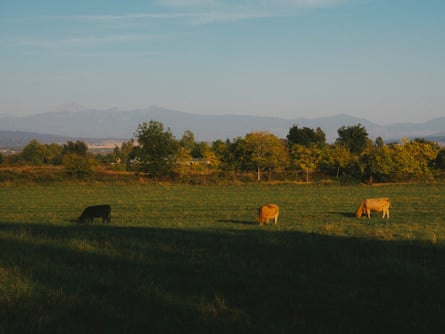
The small settlement of Cottonwood is perhaps best known for its rugged western beauty, nearby fish hatchery and rightwing militia. It is a place of wide open spaces with sprawling cattle ranches and pristine views of the junction of the Sierra Nevada and Cascades.
Even in a deeply Republican county, the community stands apart for its conservatism. Along the roads, underneath majestic oaks, are old signs for measure B, a controversial ballot initiative voters approved in June that would end nearly all voting by mail while requiring voter ID and a hand count. The effort put the county in yet another legal battle with the state – a judge blocked the measure from taking effect as the litigation moves ahead.
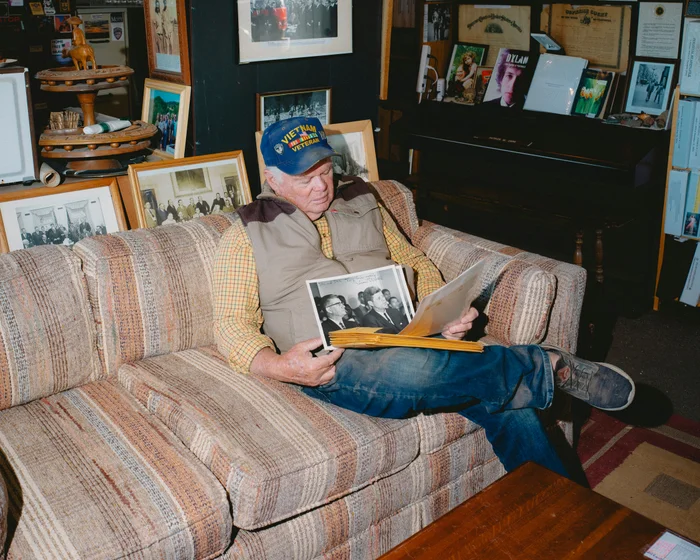
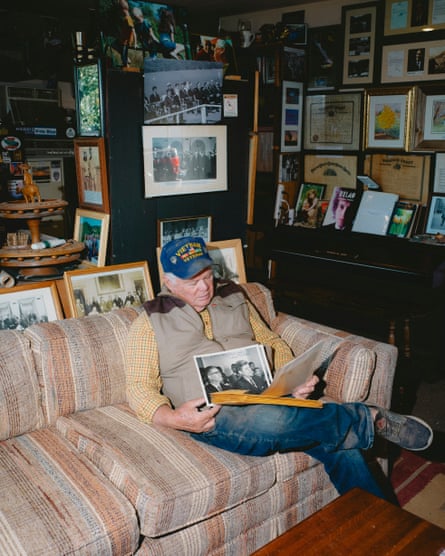
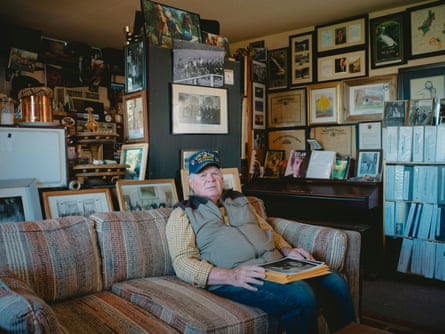
A few miles away, inside a packed home office not far from the Sacramento River, Pat Carr has assembled a sort of museum showcasing a mostly forgotten history. Old photos of local luminaries with Democratic presidents line the walls, along with letters from White House officials and even a supreme court justice.
The documents paint a portrait of a deep blue region built by Democratic policies.
“When I try to explain that to people here now, they’re going, ‘You’ve got to be kidding me. It couldn’t have been like that’,” Carr, 82, said sitting in front of a table crowded with memorabilia. “Those of us that remember a heyday, we’re almost all dead.”
In the 20th century, Shasta residents played crucial roles in state and federal politics. They chaired California’s Democratic party, helped bring major infrastructure projects to the region, and they served in John F Kennedy’s administration.
Carr knows the history well – it was his family’s. In a photo of Roosevelt’s Redding visit, FDR stands alongside Carr’s grandfather, Francis. Carr’s father and cousin managed Kennedy’s Northern California campaign, and his uncle was the undersecretary of the interior department under Kennedy.
“The money was flowing out of Washington into the north state, and the guys that were getting it done were all Democrats,” Carr recalls.
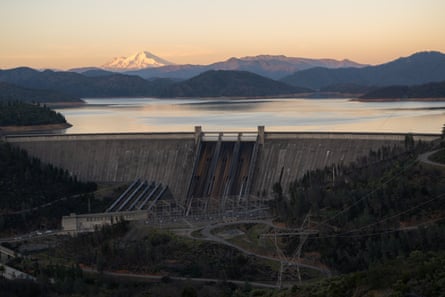
The Shasta Dam is a 600ft tall monument to that era. Constructed with 15m tons of concrete, with a reservoir capable of holding back some 4.5m acre-feet of dark green water, the dam has helped make California an agricultural powerhouse as the keystone of the Central Valley Project.
It sends vast quantities of water from the state’s far north to more arid sections of the Central Valley for farming, and generates enough electricity to power as many as 710,000 homes. The federal government, which manages it, considers the dam critical infrastructure at a level just below the White House and the Pentagon, a tour guide said on a September morning.
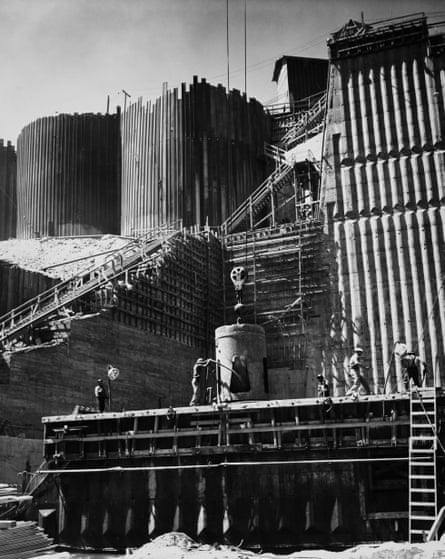
During its construction amid the Great Depression and through the second world war, it provided thousands of badly needed jobs.
Roosevelt came to the White House with broad support and implemented an ambitious agenda that over his first term helped build a powerful coalition of labor unions, African Americans, the working class, liberal professionals and white southerners that became the backbone of his party.
Mere months after he took office, there were work camps established in Shasta county through the Civilian Conservation Corps (CCC).
The president’s administration put millions of Americans to work through programs such as the CCC, which enlisted jobless young men to build campgrounds, cut firelines and construct fire lookouts.
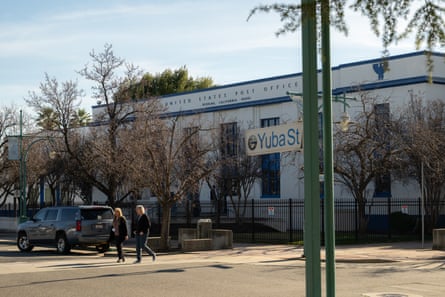
The agencies he created worked in virtually every county in the US, helped bring power to vast swaths of the country, and established much of the local infrastructure we now know. Redding, the largest city in the area, received federal dollars to build a fire station, post office, bridge and veterans memorial building.
“That won over the hearts of millions of ordinary people,” said Richard Walker, a professor emeritus at UC Berkeley and the director of the Living New Deal research project. “They felt that the government cared. Critically, they felt they participated. They were helping their own community, whether it was fixing streets and sidewalks or planting trees or building schools.”
The county had scored the most significant investment in the form of the dam, one of the largest public works projects of the era and one of the most important hydroelectric facilities in the world at the time, Walker said.
Most of California’s water is located in the north, while 80% of the demand lies in the central and southern regions of the state. For decades, California had sought a solution to the imbalance and the winter flooding of valley communities. The state couldn’t afford to finance the project during the depression, but after lobbying from prominent Californians including Francis Carr, Roosevelt’s administration funded it.
“Things are more optimistic than ever before in [the] Central Valley. We are delighted with prospects of immediate work,” state senator John B McColl said in 1937 before construction began.
It employed almost 5,000 people at one time – bringing new residents. Construction was under way 24 hours a day, seven days a week, and was considered so vital that some workers received draft deferments during the second world war. The dam translated into enduring Democratic loyalty, said Bob Mulholland, a veteran Democratic strategist and longtime resident of northern California.
“I think there was a certain amount of that commitment or thanks for years, from the workers themselves and the kids, to FDR and the Democrats,” Mulholland said in an interview with the Guardian in 2025 shortly before his death.
The war brought significant growth in the timber industry, as did surging demand for housing in the years that followed. It was an era of opportunity and expansion in this part of the state, with ample jobs in the mills and unions for wide swaths of workers from loggers to retail clerks to bartenders. It echoed what was happening across the US.
“After the war, the United States experienced the greatest economic boom in human history and moreover, even as inequality was declining, the rich were still getting richer,” said historian Harvey Kaye, a professor emeritus of democracy and justice at the University of Wisconsin-Green Bay. “Everyone was doing better.”
By 1948, when Diane Kinyon was born, Shasta was one of California’s bluest counties and an important part of its Democratic base. Kinyon’s family had migrated to the area in the 1860s and for generations worked in the industries that helped build and feed California, from the railroad to ranching and logging.
Her parents were “diehard Democrats”, she said. Her father, a union man, was employed by the county road department, working his way up after starting as a mechanic, and also owned a pizza shop with her mother. Her father emphasized the importance of unions to Kinyon who later who spent decades as a union organizer.
“We knew we were union. We knew we were Democrats, and we knew what that meant was that you help people,” she recalled. “But I think on the other side, [those were Republican] values too. They just financially had a different way to get there.”
In the 1960s, the construction of Interstate 5, the nearly 1,400-mile (about 2,253km) highway that runs from Mexico to Canada, opened up the county, and brought more tourists, Kinyon recalled. Road work, along with reservoir projects, offered even more jobs.
Coverage from 1 source
Coverage by lean
- Unknown1
Comments
Sign in to join the discussion.
Sign in with SpryLogin